


Wine tourism in Asturias: a journey through wineries, vineyards and festivals
Asturias is also a wine-producing region, with a tradition that has deep roots, particularly in the south-west of the region, dating back to the Middle Ages, and which has been enjoying a revival in recent decades, with vineyards, wineries and lively events.
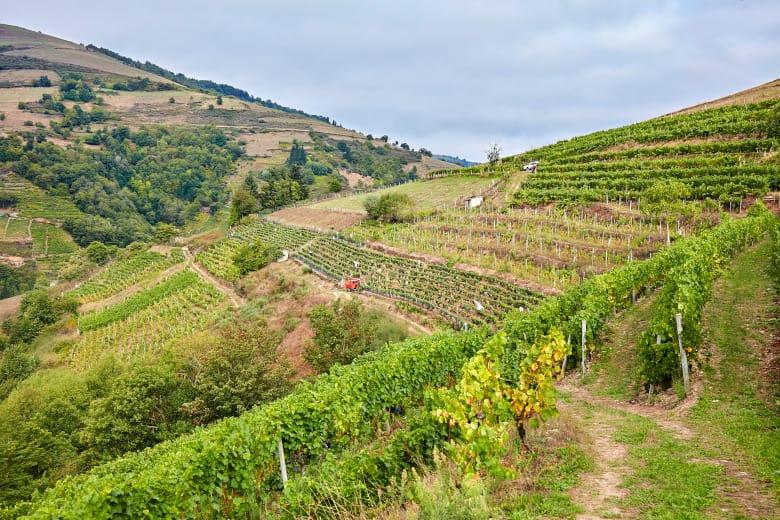
Secluded vineyards, on steep slopes, which require great care and attention. A method of vine-growing that dates back to the Middle Ages and was closely linked to the monks of Corias, remaining today a predominantly family-run activity. The steep slopes and the difficulty involved in cultivating these vineyards mean that the area is classified as ‘Mountain Viticulture’, characteristics that lead us to speak of ‘heroic viticulture’.
Such are the wines of the Cangas Protected Designation of Origin (PDO Cangas), blessed with a favourable microclimate, made from revived indigenous grape varieties and linked to a region of unique landscapes and footpaths.
The production area of the Cangas PDO covers the municipalities of Allande, Cangas del Narcea, Degaña, Grandas de Salime, Ibias, Illano and Pesoz, as well as certain areas within the municipality of Tineo. In recent decades, these wines have undergone a significant process of modernisation, whilst retaining their traditional and distinctive character, with small-scale, meticulously crafted productions.
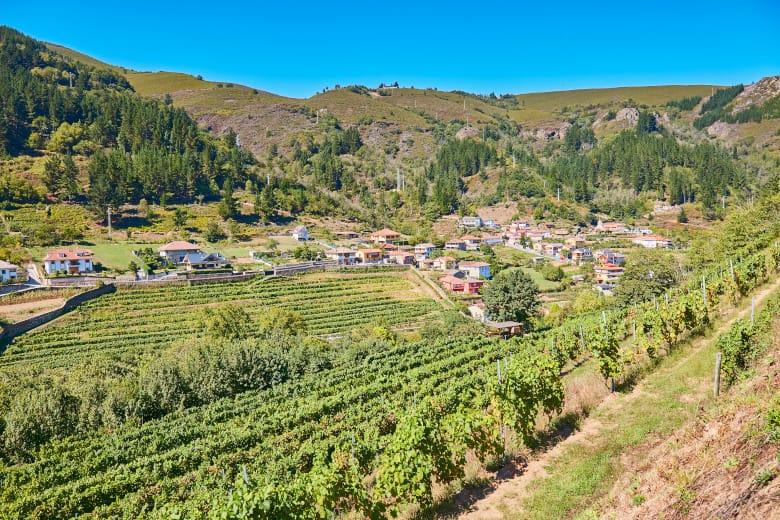
So, what better way to discover this very special wine-growing culture than by visiting some of its vineyards and wineries or taking part in its festivals? Let’s venture amongst the vines and vine shoots of a fantastic Designation of Origin.
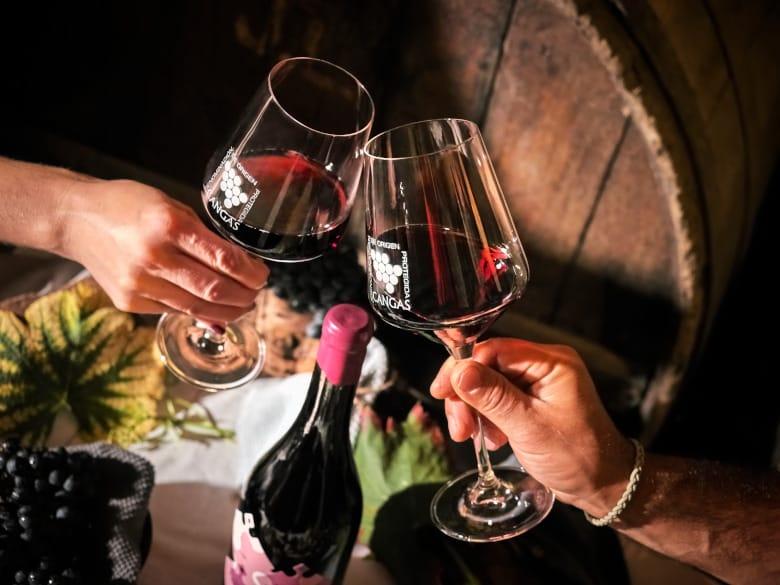
Wine tourism in Asturias
Wine enthusiasts are no longer content simply to taste or buy wine: they seek to delve deeper into its origins. They want to know who makes it, how the process is carried out, and what traditions and innovations are involved. This interest goes beyond simply understanding how it is made; it also stems from a desire to engage with the culture surrounding its production. In this context, wine is a significant cultural expression, a product that enriches our celebrations and fosters a sense of togetherness in places such as restaurants, bars and chigres.
Asturias boasts a valuable wine-making heritage that endures through the seven wineries that make up the PDO.
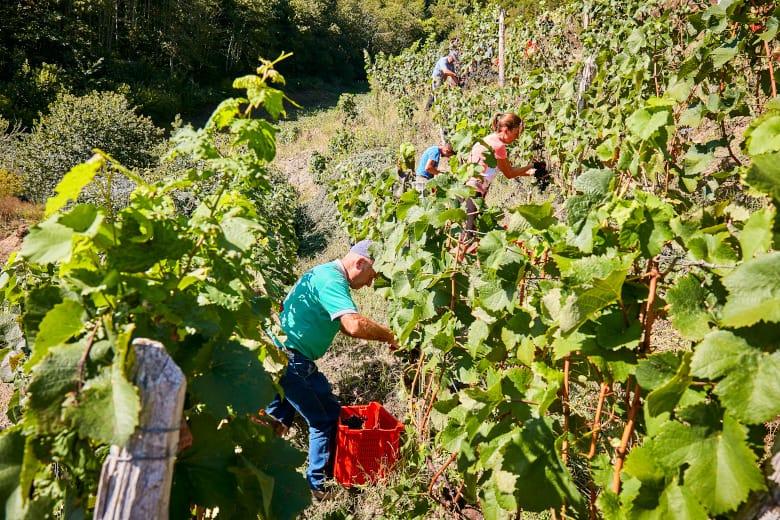
Mountain viticulture, or ‘heroic viticulture’, in the Cangas PDO is also characterised by its native grape varieties. Notable red varieties include Albarín Negro, Carrasquín, Verdejo Negro and Mencía; whilst notable white varieties include Albarín Blanco, Albillo and Moscatel de Grano Menudo.
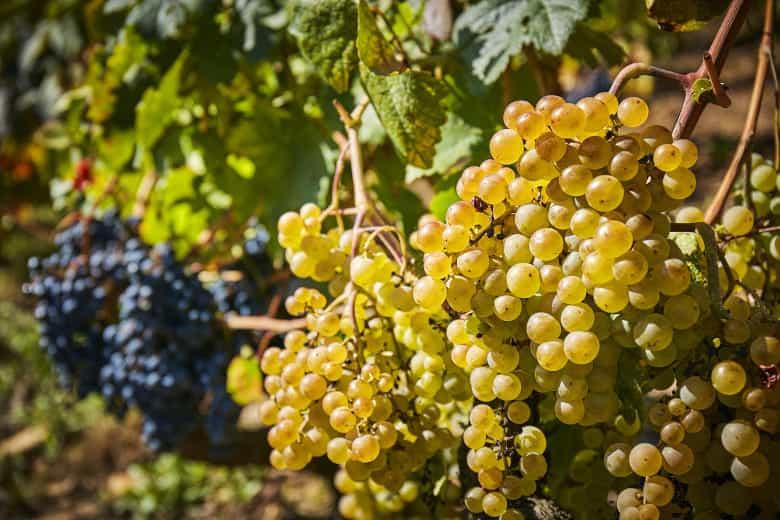
Another distinctive feature is the labyrinthine layout of the vineyards, with small, irregularly shaped plots, often on slopes, which offer wine tourists an exceptional experience. This scattered layout, combined with the geological characteristics of the soil, results in distinctive wines with a unique character, which have received numerous accolades in recent years.
Let’s take a look at the best ways to discover these remarkable Cangas PDO wines.
Wine Museum
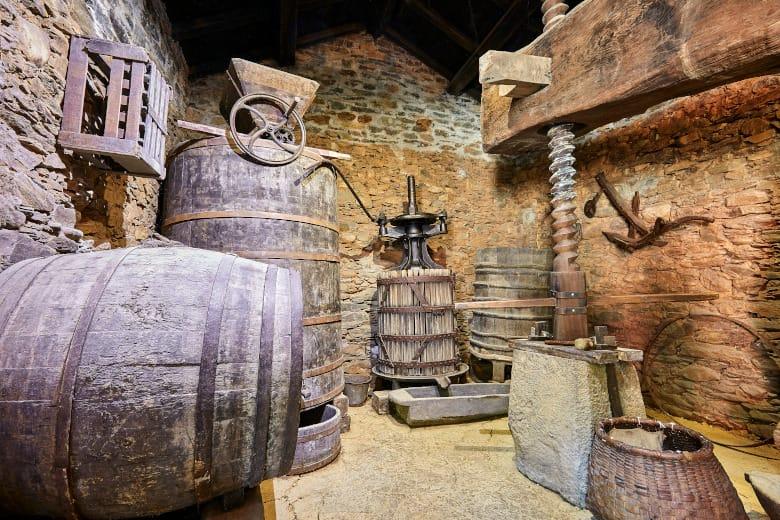
Situated in Cangas del Narcea, in the wine-growing district of Santiso, amongst stone walls and ancient wooden structures, the Wine Museum retains a distinctly traditional feel.
It’s an excellent way to begin exploring the region’s wines, as it features a Roman beam wine press, information panels, guided tours and children’s activities. During your visit, you’ll learn about the winemaking process, from traditional techniques to modern methods, and see how it has evolved.
Visit the wineries of the PDO
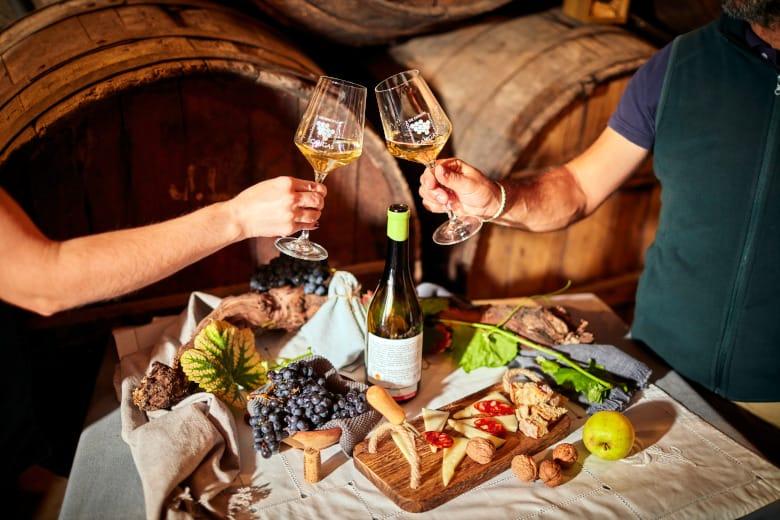
From the museum, the next stop is the Asturian wineries of the Cangas PDO.
- Señorío de Ibias. It has three hectares of its own vineyards set in spectacular scenery, where it cultivates indigenous grape varieties and produces wine using traditional, handcrafted methods.
- Martínez Parrondo. Three generations of winegrowers work in the Las Barzaniellas area, producing fruity, fresh, mineral-rich and elegant wines. They organise tours of their vineyards with wine tastings.
- Las Danzas. It has 3.3 hectares of vineyards in a mountainous landscape and a long history, with a particular focus on white wines made from native grape varieties.
- La Verdea. Small, century-old vineyards in Puenticiella, with low yields but exceptional quality. Some of their vines survived phylloxera and produce no more than one kilo of grapes per plant.
- Monasterio de Corias. This winery has revived Benedictine expertise at one of the flagship wineries of the Cangas PDO. Its vineyards are situated on steep slopes, with gradients of up to 80 per cent. It offers tours lasting around two hours, covering the entire process from cultivation to winemaking.
- Siluvio. It describes itself as “a terroir-focused project rooted in the land, in the style of a French château”. The estate is situated on what was once the bed of an ancient river and comprises 7.5 hectares of vineyards.
- Viña Áurea. It has one and a half hectares of vineyards in San Antolín de Ibias, on the right bank of the River Ibias, on land formed from the spoil heaps of ancient Roman mines, where the ancestors of the family who own the estate used to grow vines. It produces wines from Albarín Blanco —also known as Blanco Verdín and the predominant variety in the vineyard—, Verdejo Negro and Mencía.
Grape Harvest Festival in Cangas del Narcea
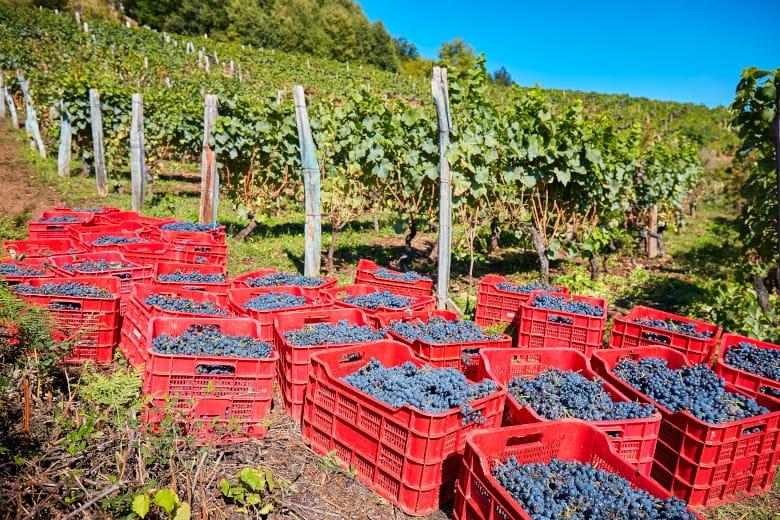
The grape harvest is such a major undertaking that its conclusion is marked by a long-standing collective celebration, with the villages coming together around the harvest to share and celebrate the work that has been done. TheCangas Quality Wine Harvest Festival is another unmissable event on Asturias’s leisure and gastronomic calendar, taking place in the first half of October, coinciding with the Pilar bank holiday weekend.
This event attracts visitors from far and wide, who come to experience the festivities and gain an insight into traditional winemaking processes. Wine tastings, brass bands, dancing, meals, special menus and guided tours make up a comprehensive programme of activities to suit all tastes, highlighting the importance of Asturian wine culture and its legacy. Furthermore, the festival not only celebrates the harvest but also promotes the area’s heritage; it is recognised as a Festival of Tourist Interest in the Principality of Asturias, highlighting the region’s cultural and gastronomic richness.
New Wine Transfer Festival in Cangas
The wine-making tradition runs so deep, and the wine tourism is so authentic, that Cangas del Narcea also hosts a second festive event: the New Wine Racking Festival. It is usually held during the second half of March, coinciding with the waning moon, when the wine is racked – transferred from one vessel to another to remove the sediment from the previous harvest.
Visitors can sample this ‘new wine’, which will continue to develop over the coming months until it becomes the wine of the new vintage.
Ibias Wine Festival
Naturally, this sort of festive event is held in other municipalities where the vine is part of the history and the landscape. In Ibias, throughout May, wineries and wine producers come together for the Wine Festival, featuring tastings, music and various activities linked to wine culture.
Pesoz Wine Festival
A workshop on how grapes are traditionally trodden. A talk on the characteristics a wine must meet to bear the proud seal of the Cangas de Narcea Protected Designation of Origin. An introductory course on how to distinguish the colour, aroma and flavour of an Asturian white or red wine, made from Albarín Negro, Verdejo Negro or Carrasquín grapes. In October, Pesoz also offers its festival packed with attractions for wine tourism.
Avilés Cheese and Wine Fair
What better pairing than cheese and wine? Every year, Avilés hosts a fair dedicated to these two products, featuring cheese makers, wineries and wine merchants. It is a well-established event that brings together producers from Asturias and other parts of Spain.
Wine, in short, is another way of getting to know Asturias. Because gastronomy always reflects the character of the people who cultivate it, rear it, produce it, cook with it, consume it and share it around a table. Or, as in this case, of those who raise a toast with it, carrying on a tradition and ensuring it has a present and a future for generations to come.


