


6 markets full of flavour in Asturias
Markets have always been the driving force behind the social, cultural and commercial life of the villages, towns and cities of Asturias. Market day is a real celebration, and a major event that used to – and still does – fill these places with life.
A stroll through the market to browse the produce, or to do some shopping, whilst chatting with the stallholders, is a true immersion in the everyday life of Asturias, and it’s also the perfect opportunity to enjoy a snack and have a lovely time.
The market is a meeting point for locals and visitors alike, for day-trippers, travellers, pilgrims and curious visitors of all kinds, who find it a source of pleasant experiences that always leave a good impression.
And Asturias is a region with a rich tradition of markets, held throughout the region, showcasing the best of each place and offering you unforgettable moments.
Here are our top 6 markets to visit on your tour of Asturias!
El Fontán, the market of markets
The Fontán Market is one of the markets with the richest history and tradition in Asturias. Its origins date back to the 16th century, and it is linked to a royal charter granted to the city of Oviedo/Uviéu by the Catholic Monarchs themselves.
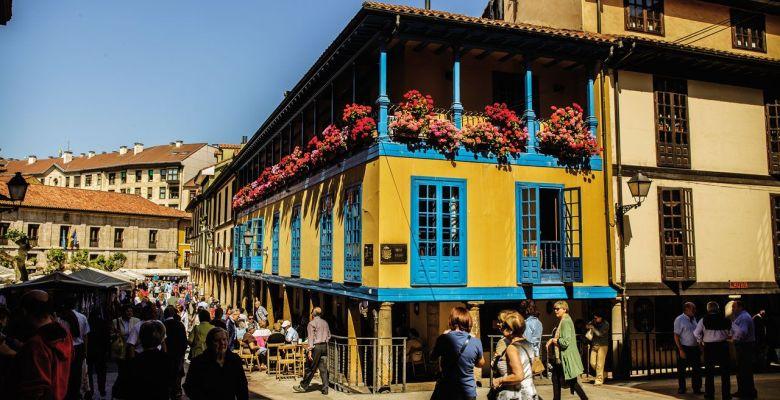
That now-distant concession, which allowed a weekly market to be held on Thursdays, has become firmly established over time right up to the present day. As commercial needs grew, the market was extended to Sundays and the famous Plaza del Fontán was created. The market and the square now form a revitalised complex in the heart of Oviedo’s historic centre, which has a particularly lively atmosphere on Thursdays, Saturdays and Sundays, although the market runs throughout the week.
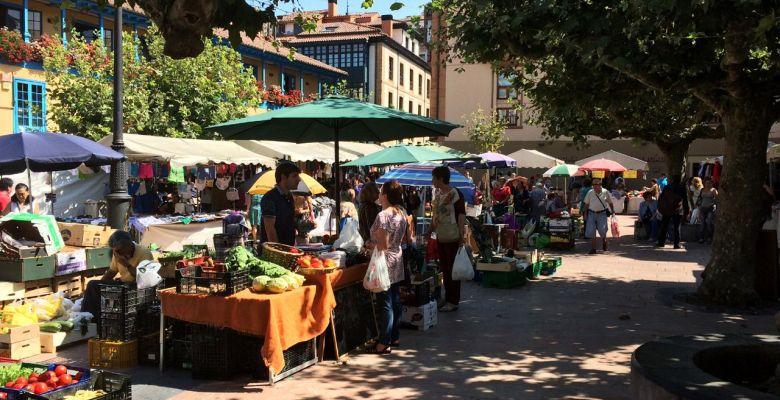
El Fontán is the heart of the Asturian capital, and is an unmissable destination for curious travellers who wish to experience a traditional Asturian market whilst strolling through a flea market and enjoying a bite to eat, a glass of wine, cider, vermouth or whatever takes their fancy.
In fact, the Fontán is a delightful way to wander the streets and connect with the spirit of the city of Oviedo/Uviéu…
Cangas de Onís, the main market in the Picos de Europa
It is one of the most charming places in Asturias and the Picos de Europa region. If you’re heading to CanguesD’Onís/Cangas de Onís, make sure you go on a Sunday, because the atmosphere is incredible. Everything’s open, people are strolling about, having a look round, shopping, enjoying a drink…
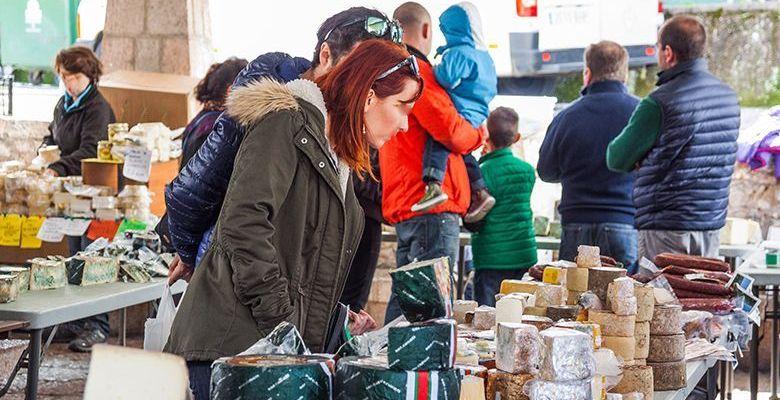
The “Mercau”, as the locals call it, offers a wide variety of products: textiles, general merchandise, hardware, basketry and handicrafts, as well as a large selection of typical products from the Picos de Europa, all at very competitive prices.
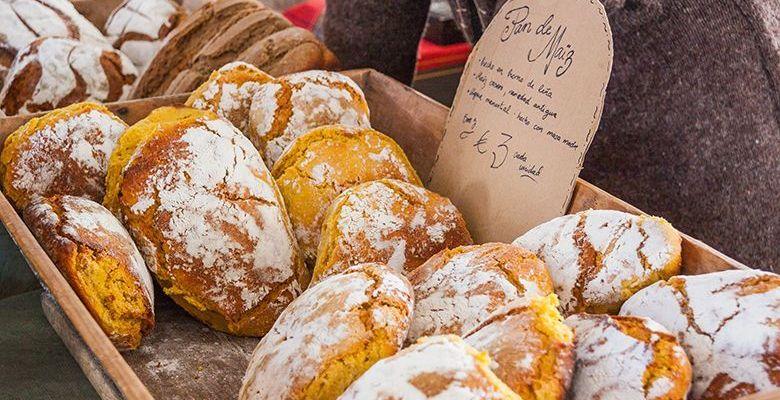
There’s no doubt that the Cangas market is full of flavour, as you’ll find produce brought directly from local villages and sheepfolds by the producers themselves, with whom you’ll be able to chat in person. Broad beans and peas, vegetables and fruit, eggs, hazelnuts, chestnuts, walnuts, butters, jams, honey and all kinds of cured meats – some made from game such as wild boar and venison. And, of course, the region’s cheeses, with Cabrales and Gamonéu reigning supreme.
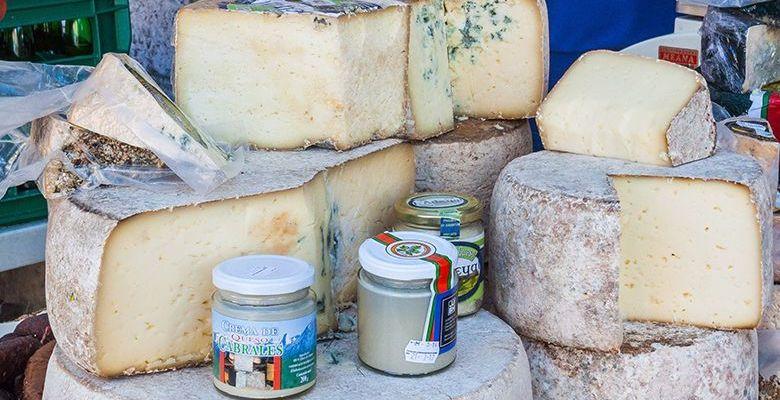
Sounds tempting, doesn’t it? Well, for over two hundred years, every Sunday Cangues D’Onís/Cangas de Onís has been holding its market, always in La Plaza and around the Church of Santa María.
El Tenderete, a market with a happy, hippie-chic vibe
On the second Sunday of every month, an unusual and innovative market has been held in Santolaya (Cabranes), in the Cider Region, for just over five years.
El Tenderete, as the market is called, is a wonderful meeting place to share time, leisure and knowledge, as well as flavours. In fact, at El Tenderete you’ll find local produce as well as second-hand goods, allowing you to unearth that item you’ve been searching for for ages. It also boasts a wide range of high-quality, carefully crafted artisan products.

The location is also rather special: it’s the square in Santolaya, a charming village with lovely panoramic views, where you can have a snack or a meal, as well as go on sightseeing trips, walks or enjoy the local cuisine throughout the surrounding area.

From where you can look out over the market, there are live performances (be it music, magic, theatre, etc.), and the atmosphere is immersive, halfway between ‘hippie’ and ‘chic’, with an immensely cosmopolitan and multicultural feel…
The Gijón Craft and Organic Market, the closest to the Cantabrian Sea
Right in the heart of Gijón’s Plaza Mayor, with the Cantabrian sea breeze blowing through the gaps left by the historic buildings in this part of the city, stands the Gijón Craft and Organic Market, which takes place on the second weekend of every month, with the exception of Holy Week and the Constitution Day long weekend, when the market’s usual date is adjusted to coincide with these public holidays, which attract large numbers of tourists.
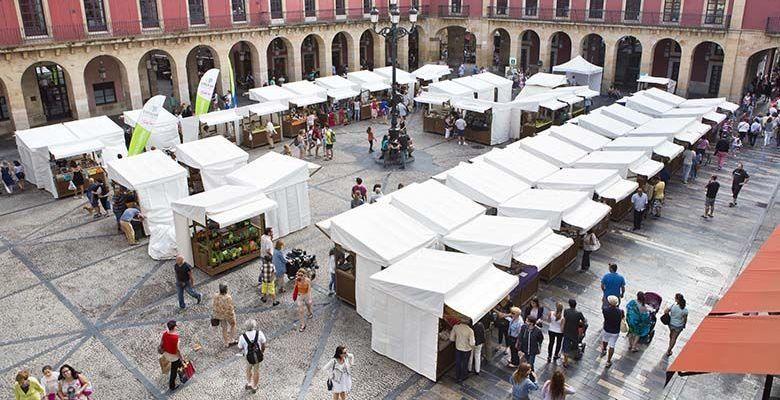
With a history stretching back over 15 years, this market – recently designated a Festival of Tourist Interest – is a true benchmark for the city’s crafts, gastronomy and tourism.
It is a great place to discover Asturian craftsmanship, and the items on offer cover a wide range: from the most traditional to the most avant-garde, and all are exclusive, unique and handmade.
Furthermore, the market showcases a comprehensive range of craft trades, including jet, leather, woodcarving, weaving, embossing, jewellery, glass, stationery, painting, stonework and more.
The food section also plays a major role, featuring organic and traditional produce such as bread, cured meats, cheeses, honey, jams, fruit and vegetables, amongst others.
You’ll also find a wide range of products from cooperatives in the Global South, which respect the social and environmental conditions of their countries of origin, and which find their place and their audience at the Gijón market, founded on a spirit of solidarity.

At the same time, when you step into the market, you’ll feel that it’s the best way to experience Asturian culture – in a participatory, enjoyable and educational way – thanks to the activities, exhibitions and workshops held there.
In short, you’ll find yourself in a market from days gone by, with a modern twist.
A real experience!
Grado, the oldest market and the one most closely associated with the Way of St James
TheGrau/Grado markethas a fascinating history, dating back to the Middle Ages, when King Alfonso X the Wise granted the town charter, back in the 13th century to the town of Moscona. One of the privileges granted by this charter was the right to hold a weekly market, which in this case took place on Wednesdays.
That’s where it all began. And so, by the Modern Age, Grau/Grado had begun to hold two markets, on Wednesdays and Sundays. The reasons for this? Its fertile floodplains and the fact that such crucial transport routes as El Camín Real de la Mesa and the Camino de Santiago passed through the municipality.
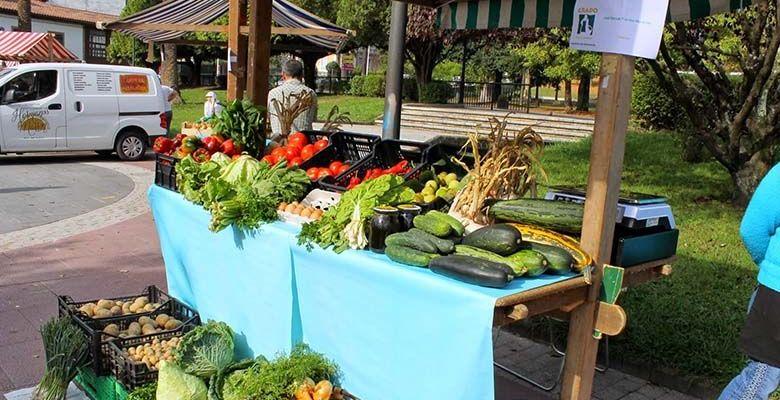
And so it remains to this day. Grau/Grado has been renowned for centuries for its markets and has always been regarded as the great vegetable garden of Asturias; in other words, it was and remains a vast open-air market, with the best supply and demand, and with stallholders who are the lifeblood of the market and renowned for their friendliness and professionalism.
So in Grau/Grado, at its market, you’ll feel right at home. You’ll meet locals, tourists and pilgrims on the Way of St James browsing amidst a lively atmosphere, where the stalls are the best showcase for an open and cosmopolitan town.
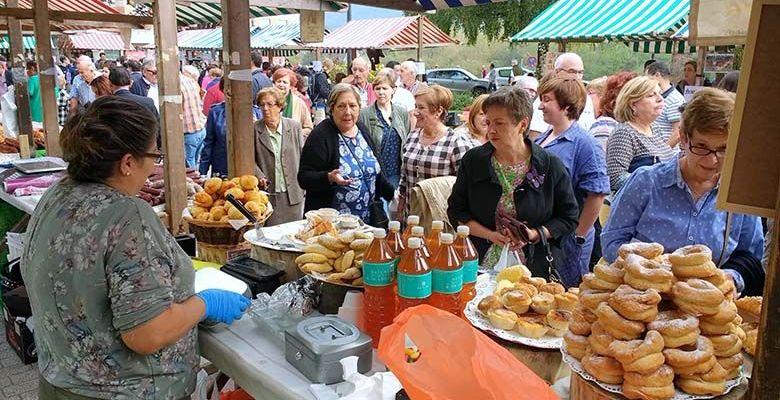
Cereals, pulses, lard, eggs, vegetables, fruit, hazelnuts, strawberries… Everything in abundance and at a good price.
Even Jovellanos himself was captivated by the market in Grau/Grado!
Avilés: all the charm of traditional markets
The market in Avilés is the second oldest in Asturias, after the one in Grau/Grado, and is 540 years old. As with the market in Fontán, Oviedo/Uviéu, it was the Catholic Monarchs who granted this town the right to hold a free market every Monday of the year, “from sunrise until sunset”, as recorded in the texts of that era, and all this because what is now known as the Villa del Adelantado had suffered a devastating fire and needed to recover.
And so it was. Like a phoenix, Avilés rose from its ashes. And so this historic market was held in various locations, as evidenced by some streets in the centre of Avilés (whose names are remnants of the market’s different sites), such as Calle La Fruta – which was then dedicated to agricultural produce –; Calle del Sol, where fish was sold, and Calle de la Ferrería, where handcrafted goods were bought and sold.
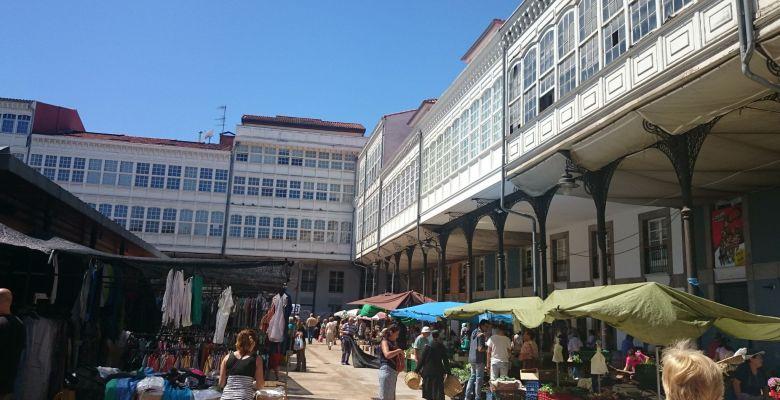
Finally, in the 19th century, a square was built to house it, and thus the present-day Plaza Hermanos Orbón came into being; its rectangular perimeter, lined with white arcades, is a source of admiration for locals and visitors alike.
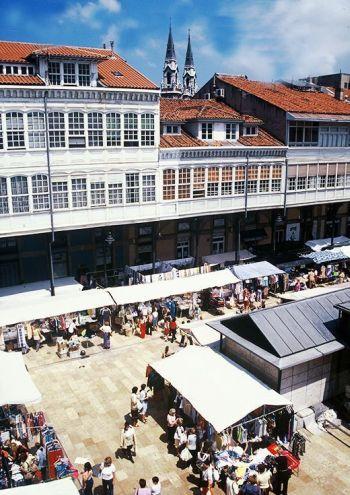
When you visit the market in Avilés, you’ll notice that it retains all the medieval charm of what was once a village of fishermen and sailors, whose down-to-earth people will welcome you with open arms.
Subscribe to our newsletter and take advantage of offers, discounts, and news
Subscribe