


The most interesting waterfall walks to enjoy in Asturias
Asturias offers endless opportunities to enjoy the great outdoors. Here are 6 routes featuring waterfalls, perfect for hiking in idyllic settings.
Asturias offers endless opportunities to enjoy the great outdoors. And in all of them, whether on the coast or inland, water is an ever-present feature, whether in the form of rivers and streams, seas and lakes, fountains, clouds and rainbows, or simply waterfalls…
Water is with you everywhere you go: when you head to the coast, whether for a moment of contemplation or to enjoy water sports, and the same is true of the rivers. And it’s also there when you go for a walk, because many hiking trails pass through landscapes where water plays a central role, embracing you with its murmur and its coolness.
Here we suggest 6 routes featuring waterfalls for you to go hiking in truly idyllic settings!
The Oneta Waterfalls: a spectacular trio
The Oneta Waterfalls are situated in the municipality of Villayón, in an idyllic corner of western Asturias. To reach them, you need to set off from the hamlet from which they take their name: Oneta. On a pleasant, short walk, you’ll discover this natural wonder, which lies just one and a half kilometres from the village.
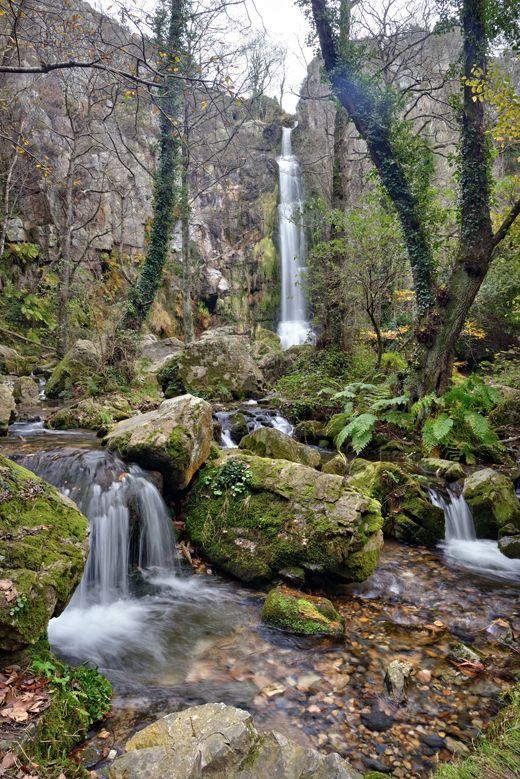
The waterfalls consist of a series of three cascades, each just a few metres apart, which line the River Acebo – one of the untamed rivers of western Asturias that winds its way through a landscape of rocks, pools and Atlantic vegetation.
Amidst these landscapes, you will suddenly discover that the water plunges vertically from a considerable height, creating a waterfall of incredible beauty: the Firbia, the most accessible and impressive of the three. All around it, the abundant rock formations create a cirque against which the waters crash thunderously, producing a powerful acoustic and wind effect – with continuous gusts of air and spray – due to the great drop.
Mosses and ferns grow on the rock face, and the waterfall is surrounded by oaks, birches and chestnut trees.
Below the Firbia are two waterfalls that are lower in height but no less beautiful: the Ulloa and the Maseirua, also surrounded by lush vegetation of ash and alder trees.
A truly spectacular display of nature, all within a simple walk!
The Xurbeo Waterfall – perfect for a leisurely stroll
The Xurbeo waterfall is just one kilometre from the village of Murias, in the municipality of Aller. It enjoys a well-deserved reputation as one of the most beautiful waterfalls in the whole of Asturias, and the truth is that it’s really easy to see for yourself. A short, easy walk takes you to this charming spot, tucked away on the slope of a valley carved out by the River Negro.
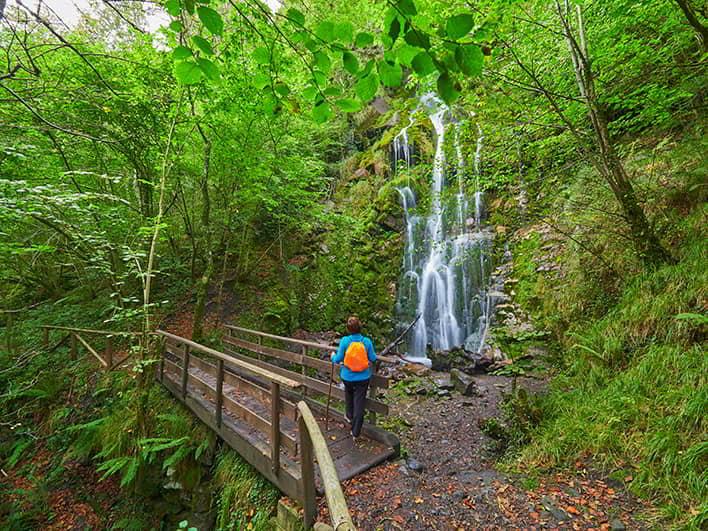
All around, a lush green blanket covers the slopes of the mountains flanking this valley. Meanwhile, the village of Murias, with its family-run vegetable gardens, winds its way down the mountainside in terraces. The route is thus a sort of tunnel formed by oak and chestnut trees, as well as the riverside woodland, which forms another tunnel along the river.
After passing through so many galleries, the waterfall will come into view: wide and open, white, glistening against the dark rock, with small side cascades that widen and embellish it.
A simple stroll leading to a great discovery!
The Guanga Waterfalls: the Cantabrian rainforest just a stone’s throw from Oviedo
Just 14 kilometres from the Principality’s capital, Oviedo/Uviéu, lies this natural treasure, safely nestled in the Trubia Valley.
As it joins the River Trubia, the Guanga winds its way nimbly between the rocks, creating a succession of waterfalls, some of which are double, forming a scene straight out of the Cantabrian wilderness. Here, alongside the murmur of the water, you can immerse yourself in the lushness of the Atlantic forest, teeming with oaks, chestnut trees, birches, ferns and more.
This route is not recommended for children – as it involves quite a steep climb and slippery terrain in some areas – unless you go via Perlavia and return by the same route, as the path is much more stable along this section.
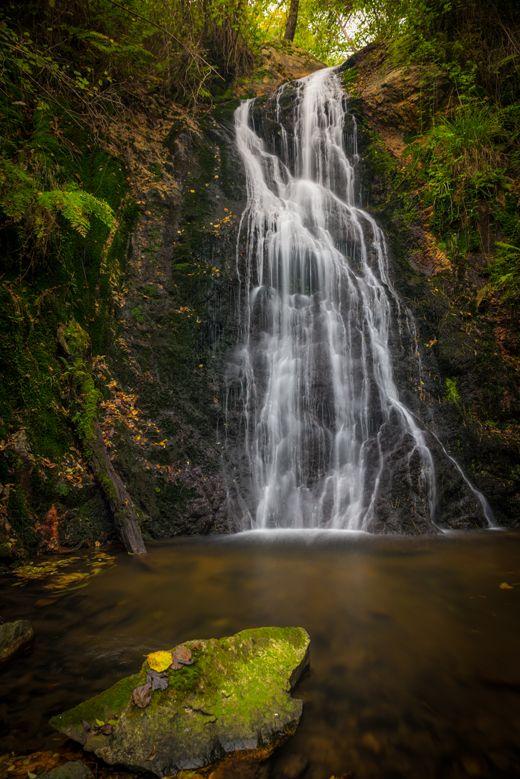
On this route, which can be either circular or linear and is approximately 5 kilometres long, you’ll come across old mills, and in what was once the hamlet of Guanga, there are still a few houses and granaries. In short, you’ll be taking a stroll through the remains of a way of life that has now disappeared.
Very close to the Bear Trail, Trubia with its industrial heritage, and the pre-Romanesque church at Tuñón, the route to the Guanga waterfalls will make you feel at one with history, legend and nature!
The Tabayón del Mongayu, where you can breathe in the air of the Nalón
The Tabayón del Mongayu waterfall is situated in the heart of the Redes Natural Park, within one of Asturias’ seven Biosphere Reserves and very close to the village of Tarna, in the municipality of Caso.
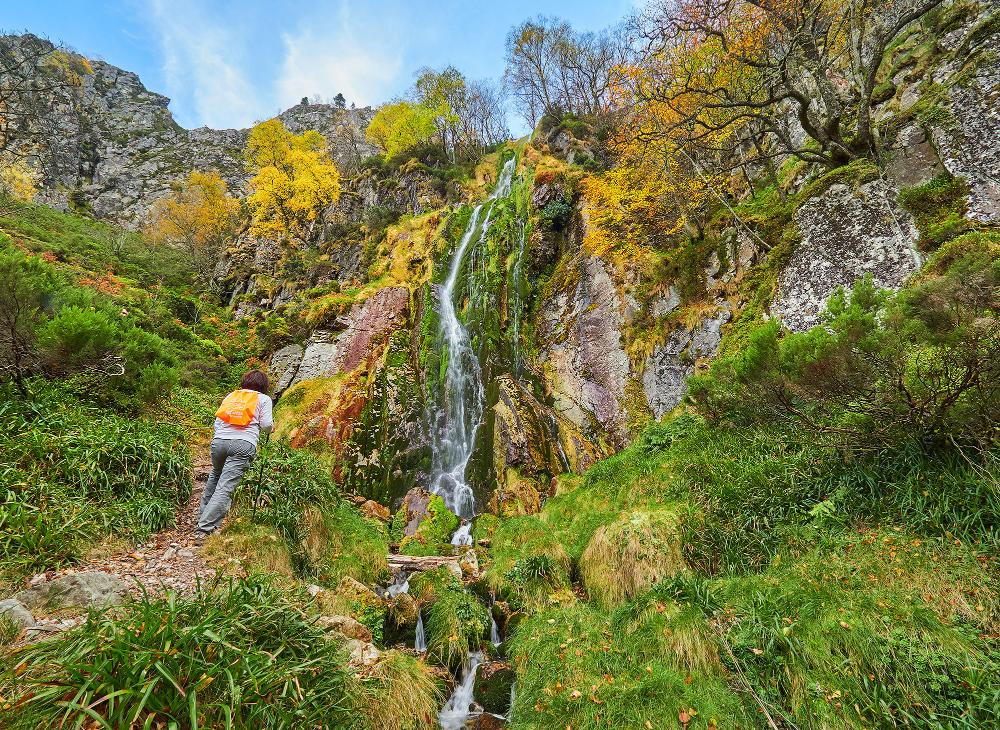
The route that will take you to the waterfall starts right in the village of Tarna and winds its way through a beautiful beech forest, leading you to the foot of this magnificent waterfall in the heart of the mountains, which is no less than 60 metres high.

Your walk to Tabayón will take you through a succession of beautiful landscapes where white heather, beech trees, birches and even some centuries-old oaks abound, whilst you’ll also be able to enjoy the sight of holly trees and unique wildlife.
And ever-present is the mighty River Nalón, which rises in this area – specifically at the La Nalona spring – and, on its 140-kilometre journey to the Cantabrian Sea, treats you to spectacular scenery.
Without a doubt, one of the most popular and beautiful routes in the Redes Natural Park!
La Seimeira, between waters and legends
The landscapes of Los Oscos naturally invite a sense of peace and tranquillity. If we then add to this natural blend a captivating route featuring a waterfall, the ultimate in happiness is guaranteed. This is exactly the feeling you’ll experience on your walk to La Seimeira, a waterfall you reach by setting off from the leisure area situated between Santalla and the hamlet of Pumares.
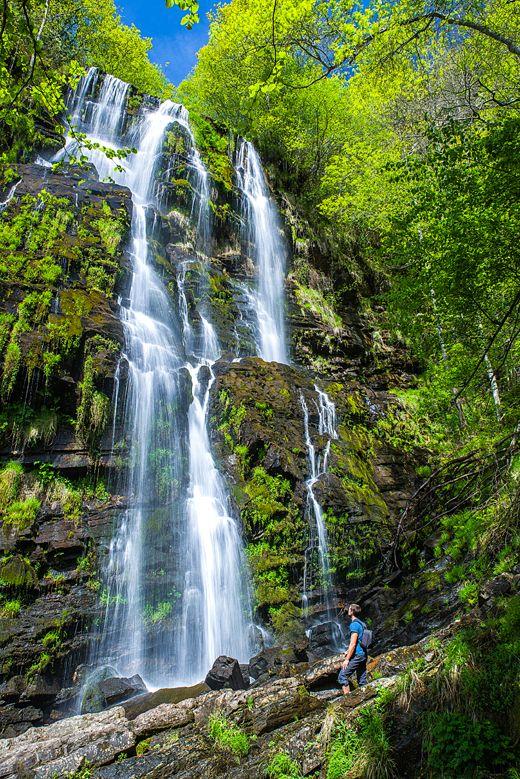
The starting point already gives you a taste of the idyllic landscapes you’ll pass through on this route, which runs alongside the river, and where your arrival at the abandoned village of A Ancadeira adds the first touch of magic to your journey. A touch of magic that is heightened when you reach the Desterrado Valley, a place steeped in history and legend that will completely captivate you.
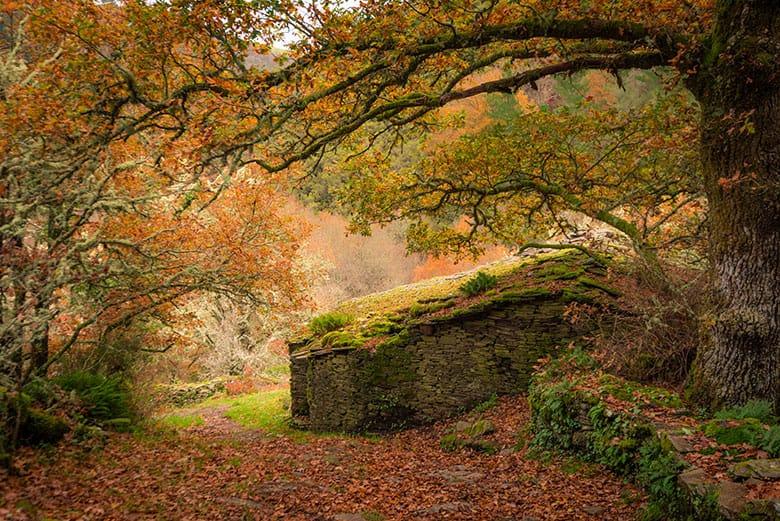
Amidst the sounds of a thousand streams and enchanted forests, you approach La Seimeira, where the river plunges from a height of 20 or 30 metres over a sheer rock face…
If you fancy walking a little further, you can reach the village of Busqueimado and enjoy sitting in the shade of the two enormous yew trees that flank its chapel.
On your return to Pumares, you’ll feel as though you’ve discovered paradise on earth!
The Salgueira Waterfall, a sculpture of water and stone in Taramundi
Taramundi is another of the water paradises you can find in Asturias, and, as you’d expect, it has its own Water Trail, complete with a waterfall.
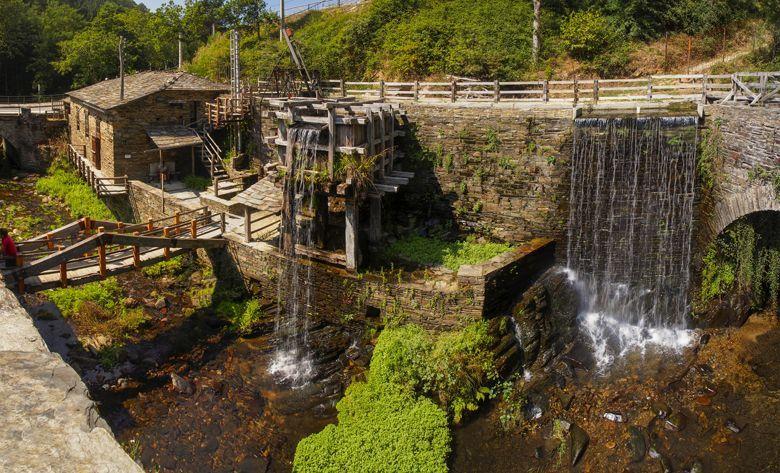
A circular route starting from the council’s capital takes you to the Museum of the Mills, where you’ll be treated to a spectacular sight with all its machinery in operation, before heading up the hillside, and soon reach the Salgueira waterfall, one of the most beautiful in western Asturias.
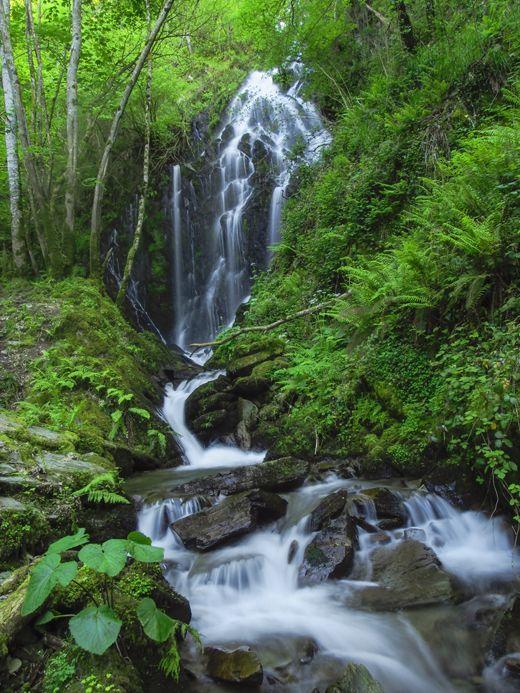
After cooling off for a while in the mist from the waterfall, you can continue on your way to the picturesque village of Os Esquíos. But your journey through these idyllic villages won’t end here. Before returning to Taramundi, the main town, As Veigas and Os Teixois still await you. These are two hamlets of indescribable beauty and a relaxed atmosphere, which will make you feel as though you’re in another world.
The Salgueira Waterfall trail offers so much more than just this magnificent sculpture of water and stone!


