


Easy walks to do with children in Asturias
Asturias is an ideal place for family holidays. So here are some easy routes to help your children fall in love with this natural paradise!
Asturias is an ideal place for family holidays. The tranquillity of its hidden corners, the friendliness of its people, the wholesome natural surroundings and the delicious local cuisine are all key factors in ensuring that both children and adults can enjoy themselves to the full.
Children ‘have a brilliant time’ on these family walks, discovering beautiful beaches or stunning cliffs. Or arriving at that idyllic village, that mountain pasture that transports them back in time. Or where they can cool off in a stream, a river or a waterfall. Or where their parents show them ruins that seem magical, as if taken straight from a fairy tale…
One of the great things about Asturias is that there are routes and trails to suit all tastes and levels of difficulty.
So here are some easy routes to help your children fall in love with Asturias!
The fork in the rivers at Santa Eulalia de Oscos
Los Oscos is a land of friendly people and beautiful landscapes, where everything comes so easily.
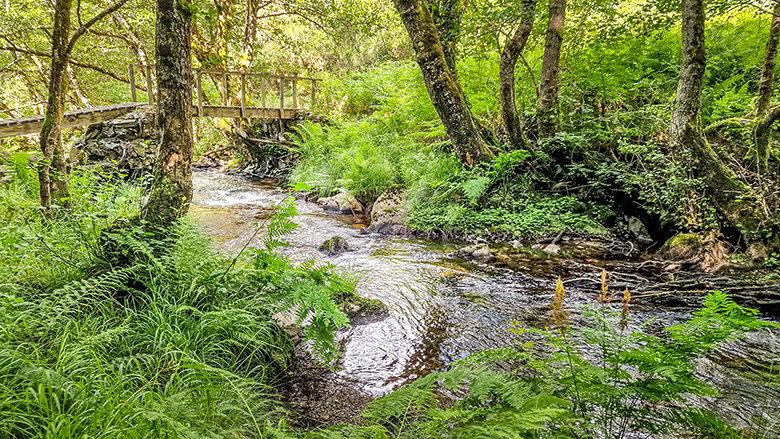
One of the best activities to enjoy as a family in this region is hiking. And one of the ideal routes to do with children is the Forcón de los Ríos trail, in Santa Eulalia de Oscos.
This is a trail where nature and local culture go hand in hand. It is a circular route of almost twelve kilometres, starting next to the community centre in Santa Eulalia de Oscos and ending in Ferreirela de Baxo, where the Birthplace Museum of the Marquis of Sargadelos is located. This museum faithfully recreates the traditional home of the Oscos region, as well as the traditions of rural life in the area.
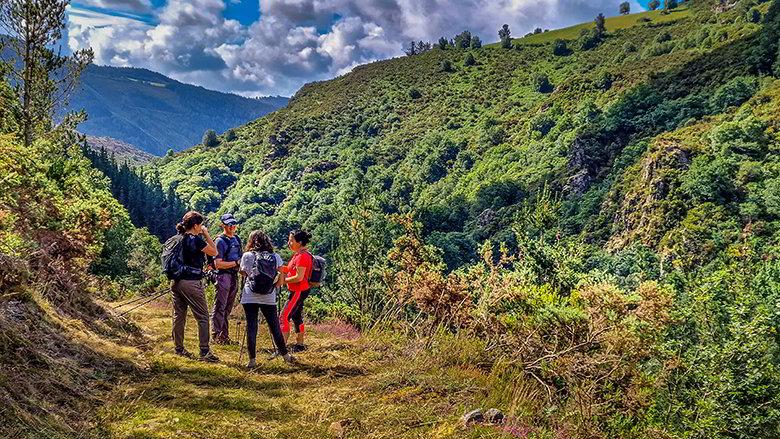
From start to finish, you’ll pass through forests of oak, birch and pine trees, and you’ll see livestock farms such as the one at Millarado. Villages such as As Poceiras, Vega del Carro, A Valía, San Julían, Caraduxe and Ferreirela de Riba lend great ethnographic value to this route, which has a distinctly riverine character, as it takes its name from the confluence of the Villanueva and Barcia rivers.
La Regueirina Trail in Tineo
The La Regueirina Trail will delight you with a three-and-a-half-kilometre circular walk through the heart of the Asturian countryside.
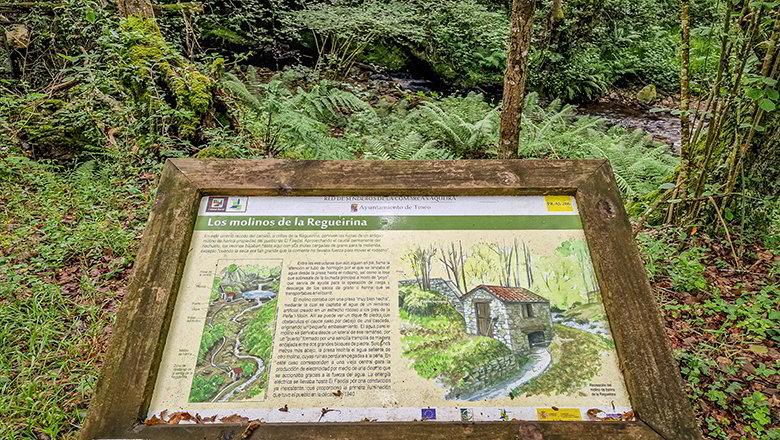
Use the village of El Pedregal, situated between La Espina and Tinéu, as your reference point, and start the route in the hamlet of El Faidal, where you’ll begin your walk next to a chapel. After leaving the track, you’ll walk between stone walls and across a carpet of grass, beginning the descent towards a beautiful chestnut grove.
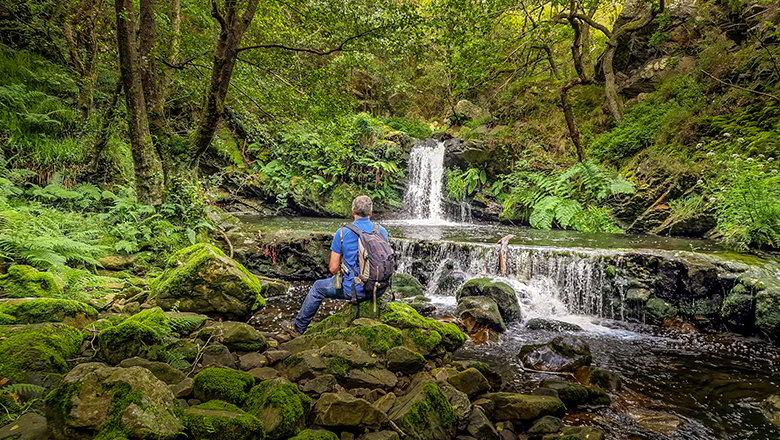
Shortly afterwards, you’ll cross the Regueirina stream, stepping over some stones, and begin a short, gentle climb, reaching the El Faidal mill shortly afterwards. In a small clearing, you’ll find a table and, next to it, the remains of the mill.
Continuing along the route, you will soon reach the highest point of the walk, with a view of Peña Manteca, which lies within the neighbouring municipality of Belmonte. A little further on, following the track, you will be back in the village of El Faidal.
The Cabo Busto Trail in Valdés
A route featuring seven viewpoints overlooking the sea, which will give you a sense of boundless space, peace and tranquillity in abundance.
Beautiful and breathtaking cliffs and rocky beaches are the landscapes that will accompany you along the route.
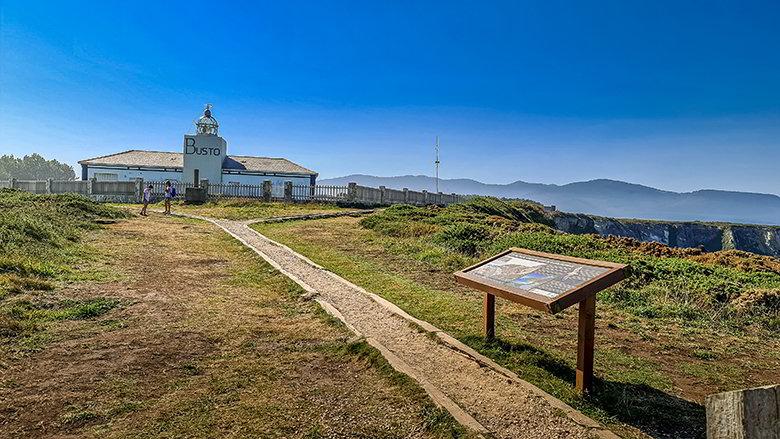
The fact is, this eight-kilometre circular walk really is quite something. It starts and ends in the village of Bustu, and takes you through farmland, pine forests, oak groves, riverside woodland and, above all, along the edge of the cliffs, where you can enjoy the sea and the views, both to the east – Cape Vidio – and to the west, looking towards Luarca/Ḷḷuarca.
From the viewpoints, you can see crystal-clear waters beneath the lighthouse and seabeds of exceptional beauty that invite you to take a dip, whether snorkelling or diving.
Furthermore, the woods along the route are home to jays and sparrowhawks, which you may hear and perhaps even spot, if you’re lucky.
And all this whilst taking special care in the cliff areas, especially with children.
Lluanco/Luanco–Bañugues coastal path in Gozón
The Luanco–Bañugues footpath in Gozón is highly recommended for the beauty of the scenery along the route. We suggest starting the walk in Lluanco/Luanco, near the Yacht Club – next to the beach. There, after climbing some steps, the footpath linking Luanco with Bañugues begins.
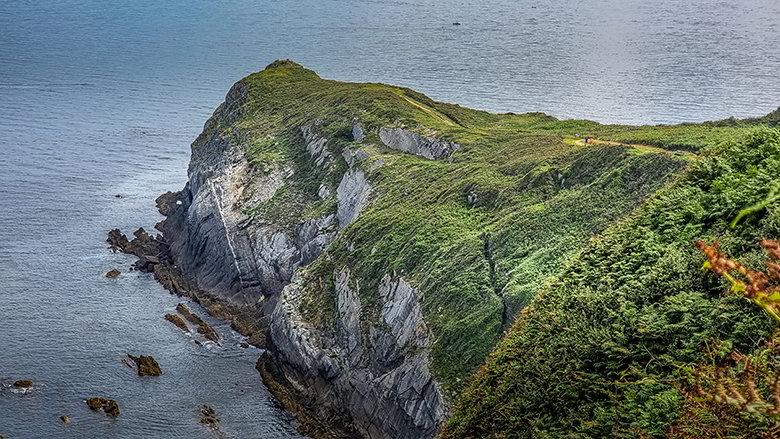
The first part of this route runs through the Sierra de Peroño, offering marvellous views of the Cantabrian Sea and the coastal cliffs. You’ll come across natural vantage points such as Punta de la Vaca, and you’ll soon reach Moniello Pass and its beach, which has a viewpoint and a picnic area nearby – perfect for taking a break and enjoying a picnic. From there, you can also head to Punta Palleya, where there are natural pools for a relaxing swim whilst gazing out at the horizon.
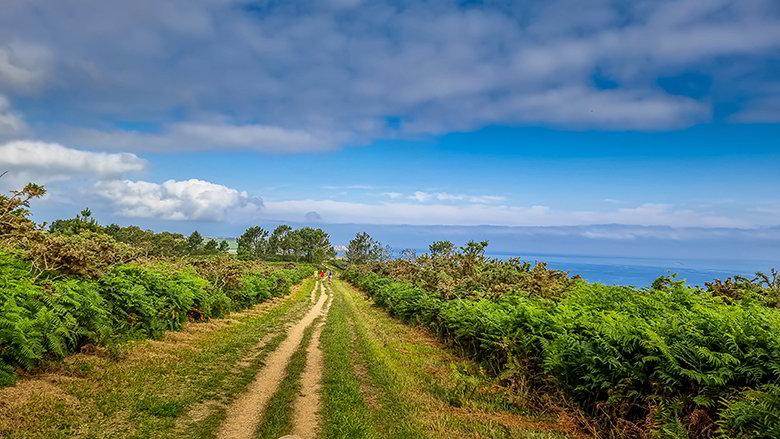
And from there, straight on to the Bañugues recreation area, where the walk ends – though not without first stopping off at a few of the natural viewpoints along the way. In total, the round trip is about twelve kilometres.
The Hell’s Cliffs Trail in Ribadesella
The Cliffs of Hell, in Ribadesella, are the highlight of a simple and beautiful coastal walk. The route starts at the Cuerres recreation area, very close to Guadamía beach – which forms the natural boundary with the municipality of Llanes – and ends near Ribadesella/Ribeseya.
It’s important to note that the route doesn’t follow a proper path as such, but runs partly along tracks and partly across meadows; however , you should always keep your eyes on the coastline, as this is what marks your course.
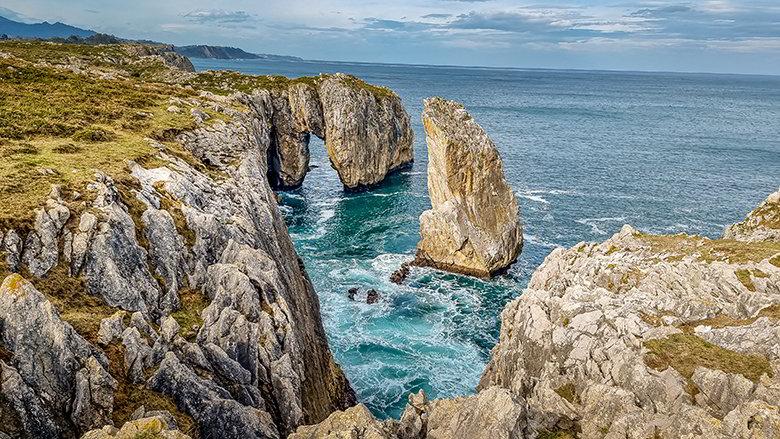
Before setting off on the route, you can stop to admire the bufones – vertical holes or cavities in the cliff face that lead down to the sea – which are located within the first 300 metres of the walk.
Next, after walking for one kilometre, you’ll come to majestic cliffs such as those at Castro Arenas and Tomasón.
A little further on, once you’ve walked three kilometres, you’ll find yourself facing the islet of Palo Verde, which gives its name to the cliffs in the area.
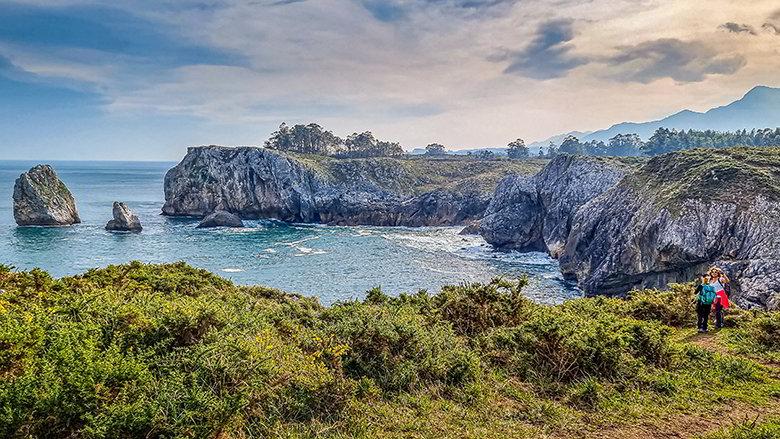
When you’ve walked about five kilometres from the start of the route, you’ll come across thefamous Cliffs of Hell. Half a kilometre further on, as the walk draws to a close, the path leads to a fork in the road: the left-hand branch leads back the way you came, and the right-hand branch leads to the village of Ribadesella/Ribeseya.
And throughout the walk, always take due care, especially with children, as the route runs right at the foot of the cliffs.
The Invisible Valley Trail in Llanes
Another of these trails with a touch of magic is the Invisible Valley trail in Llanes. Along the way, you’ll come across wood and stone carvings, information boards about the area and the history of the village, as well as excerpts from the book *El Valle Invisible*.
It is a twelve-kilometre walk, which you can take at a leisurely pace. The starting point is the village of San Roque del Acebal, just behind the petrol station there.
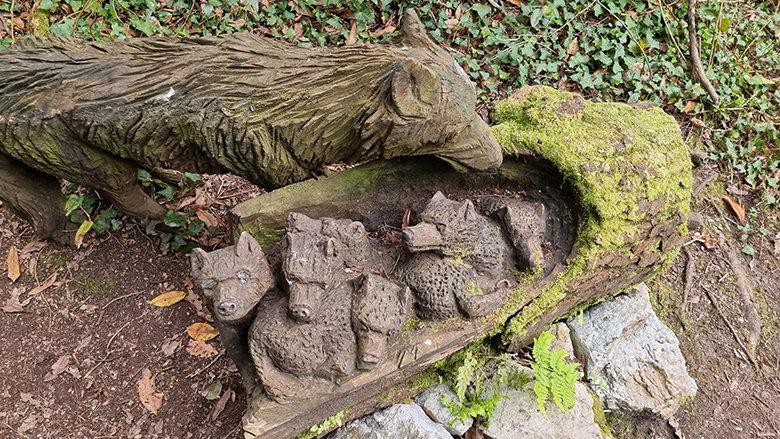
You’ll be right on the Camino de Santiago, walking towards the Cuetos inn and then on to the Malatería de San Lázaro, a hospital that was very important to Llanes. You’ll then head up to the Cuera viewpoint, which offers splendid views of the whole surrounding area. Fountains – such as those at El Casar or El Cagalín – forests and neighbourhoods will pass before your eyes, along with a few wooden carvings, until you reach the mysterious Collubina Cave, which houses another carving.
You will also walk along the Caminu Real and the ever-uneasy Caleya de las Ánimas, where the Humilladero or Chapel of the Souls is situated – a place where pilgrims used to leave alms for the sick.
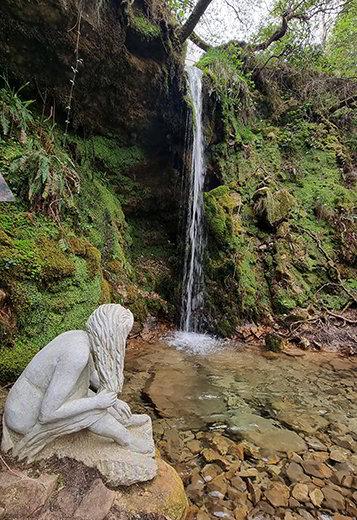
After passing through a holly forest and beginning the steepest climb of the route, you’ll reach a high vantage point from which you can see the entire coastline. Then comes the descent towards the Riega de los Molinos, where you’ll see the remains of seven old mills. You’ll continue along the route, passing carvings and sculptures, one of the most characteristic being that of the xana, which stands at the foot of a waterfall.
And after this idyllic scene, you’ll gradually make your way back to the starting point.
El Pindal Cave and Tina Monastery in Ribadedeva
The El Pindal Cave and the monastery of Tina, both in Ribadedeva, are two unmissable highlights on one of the easiest and most enchanting routes through unspoilt countryside. From this cave, a UNESCO World Heritage Site – whose wooded surroundings and sea views are simply spectacular – it is just a few metres’ walk to the chapel of San Emeterio – Santu Mederu, Santumedé or Santumé in Asturian – another idyllic spot.
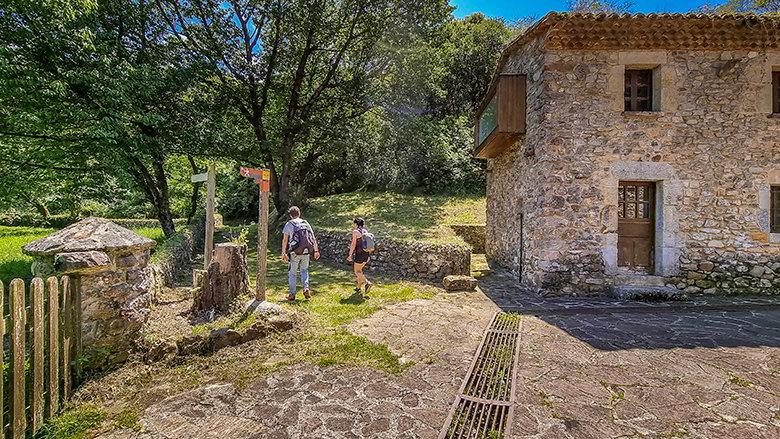
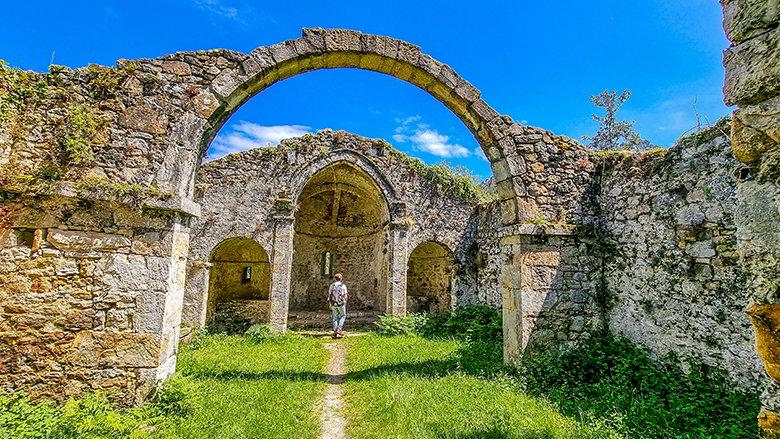
From here, along a beautiful path that forms part of the Camino de la Costa, you can explore the ruins of the monastery of Santa María de Tina, whose origins date back to Christian settlements of the 12th and 13th centuries, and which is a fine example of monastic art and life from the late 12th and early 13th centuries. The total distance, including the return journey, is two kilometres.
You can make the most of the opportunity to visit the village of Pimiango, a beautiful and unique place, where you can enjoy a drink in a café-bookshop – quite an unusual find.
What’s more, the El Picu viewpoint is very close by, and you’ll pass it on your way to the El Pindal Cave. The El Picu viewpoint is unique in Asturias for several reasons: because it offers splendid panoramic views of the sea and the mountains; and because, in a 360° sweep, it takes in the Cuera mountain range, the Picos de Europa and much of the eastern Asturian coastline. Because on clear days, you can see with absolute clarity the great colossus of the central massif of the Picos de Europa: the Picu Urriellu or Naranjo de Bulnes.
And to ensure you can tackle any route safely, don’t forget to follow thesetips:


