


The 10 most interesting things to see and do in Los Oscos
Los Oscos is three in one: Santa Eulalia, San Martín and Villanueva. Three peaceful places offering dozens of ways to enjoy your holiday. Here are 10 irresistible ideas for things to do.
There is a place straight out of a fairy tale, which could well be home to the xanas and the trasgos, as well as the nuberu and the busgosu, and every mythological creature you can imagine. A place made up of peaceful hamlets and gentle mountains, patches of woodland, and small rivers and waterfalls. A place where the green of Asturian nature blends with the black of the slate on its bare-walled buildings, and where fire and iron have found the home of their dreams. That place is called Los Oscos, and amongst many other distinctions and accolades, it holds the title of Exemplary Village of Asturias 2016.
Los Oscos is three in one: Santa Eulalia, San Martín and Villanueva, and all three municipalities bear the surname ‘De Oscos’, which they wear with pride. Three peaceful places where, in addition to the serene beauty of the landscape, the warm hospitality of its inhabitants stands out above all else; they are always ready to make their home your own… The very essence of western Asturias!
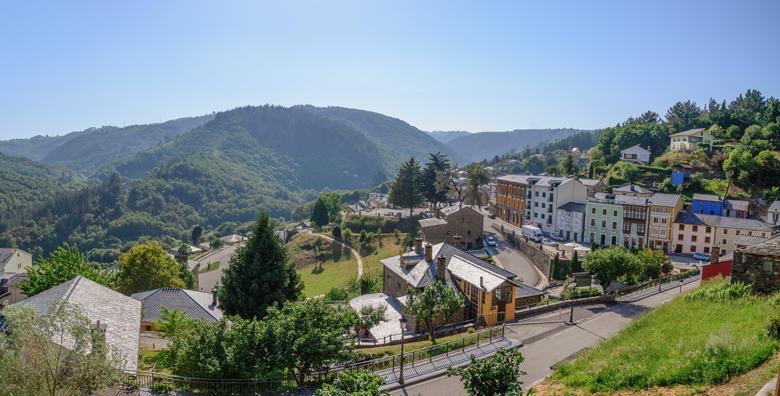
They also form part of the Oscos-Eo Biosphere Reserve, which, of the seven such reserves in Asturias, is the only one that stretches down to the coast, allowing you to enjoy a stay in the mountains whilst having the added bonus of fantastic beaches just half an hour’s drive away.
So there are plenty of things to get up to in Los Oscos. Here are just a few!
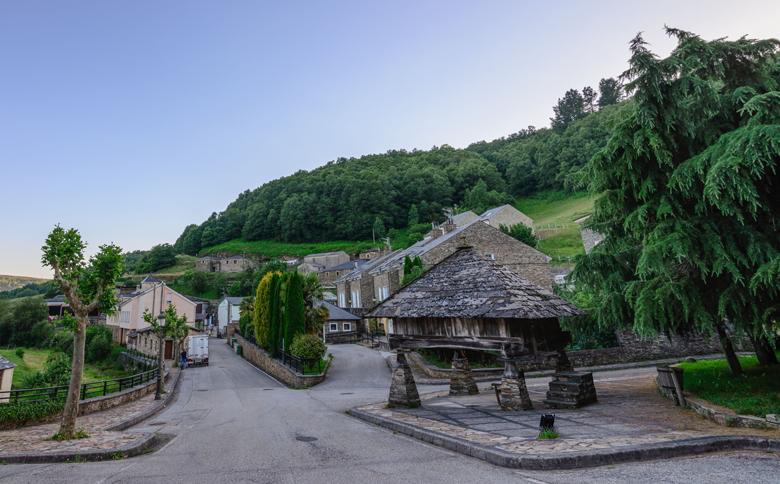
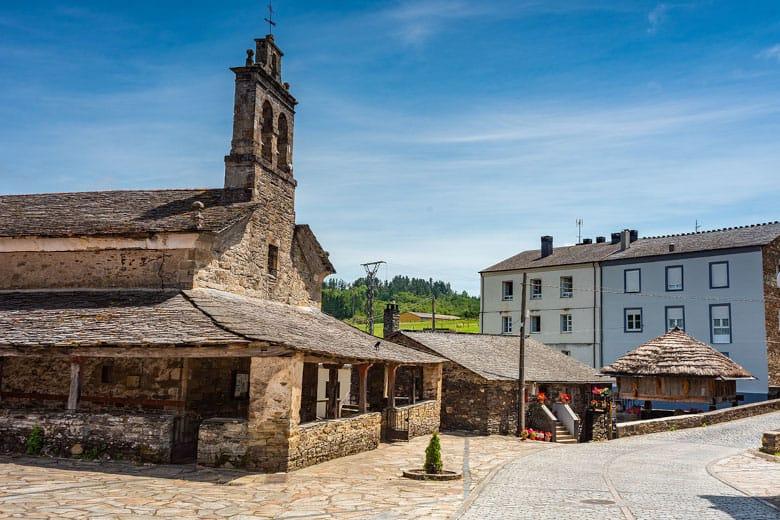
Mazonovo Ethnographic Complex and iron sculptures in Santalla
The Oscos is a world of blacksmiths, or ‘ferreiros’. A world where water-powered machinery, which utilised raw materials such as water, fire and iron, has shaped an entire way of life and an entire era.
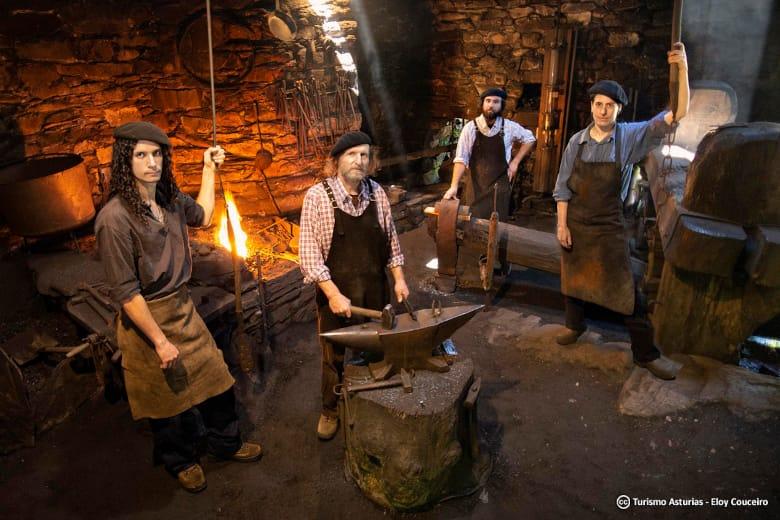
A living testament to this reality is the village of Mazonovo , a secluded and welcoming place if ever there was one, situated in the municipality of Santa Eulalia de Oscos, and home to one of the oldest ‘blacksmith’s workshops’ in Asturias, dating back to the early 18th century.
This ‘blacksmith’s workshop’ is open to visitors and is well worth a visit to see for yourself, with its enormous waterwheel and its ‘banzao’ (water reservoir). Furthermore, the walk down the path is exceptionally beautiful, offering views of the village of Mazonovo nestled beside the River Agüeira.
And undoubtedly another example of artistic expression that confirms this tradition are the iron sculptures , created by various ‘ferreiros’ at the National Meetings organised by the Iron Council, and which are scattered throughout Santalla , the capital of the municipality.
The sculptures depict motifs as varied as a motorcycling cow, a ‘ferreiro’ at work, a giant nail and a bust of the Marquis of Sargadelos. And the truth is that they display remarkable technical virtuosity; it is well worth taking a stroll through Santalla to admire them at your leisure. You can check opening times and guided tours on their website.
Crafts in Los Oscos: looms and handcrafted knives
The people of Los Oscos – the demonym used to refer to those native to the region – are generally friendly, hospitable and humble. Perhaps this has something to do with the fact that they are used to building worlds with their own hands…
The fact is that in this part of western Asturias, there is a rich tradition of craftsmanship which has been kept alive to this day and is even experiencing a resurgence in recent times.
Weaving and knife-making are two of the crafts you’ll come across in Los Oscos.
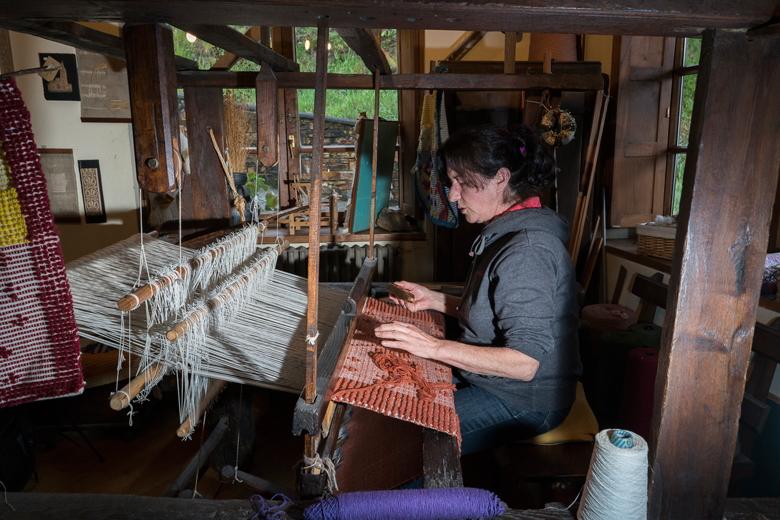
When you meet Irene, the first thing you’ll exclaim is ‘What a loom!’, and that’s because this artisan is determined to revive the spirit of the traditional loom by using natural materials such as wool, silk, cotton and linen. She has one very old loom and another that’s not quite so old, and it’s on the latter that she creates more avant-garde and contemporary garments such as shirts, shawls and scarves; for Irene, tradition blends perfectly with modernity.
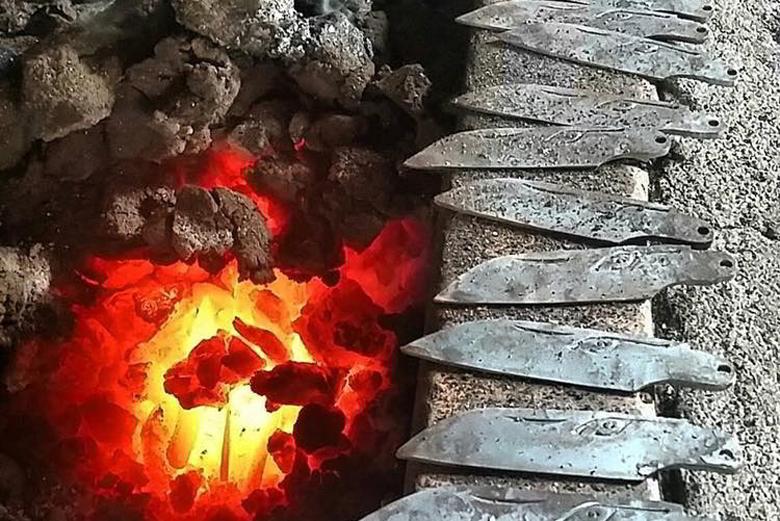
It’s much the same story with pocket knives. A craftsman called Jorge Toquero shapes these prized tools using techniques he learnt in Japan – these are the Hyttoko pocket knives – thereby bringing together Asturian and Japanese traditions and making his pocket knives a unique craft product in Spain.
The craftsmanship of Los Oscos skilfully combines all the knowledge passed down through the generations with modern techniques and styles, and that is what makes it so special – and, above all, different from what you might find elsewhere.
The Marqués de Sargadelos Museum in Santalla
Los Oscos is one of those places where you can step back in time with complete peace of mind and ease. Everything there seems to be focused on preserving traditions and the way of life of days gone by.
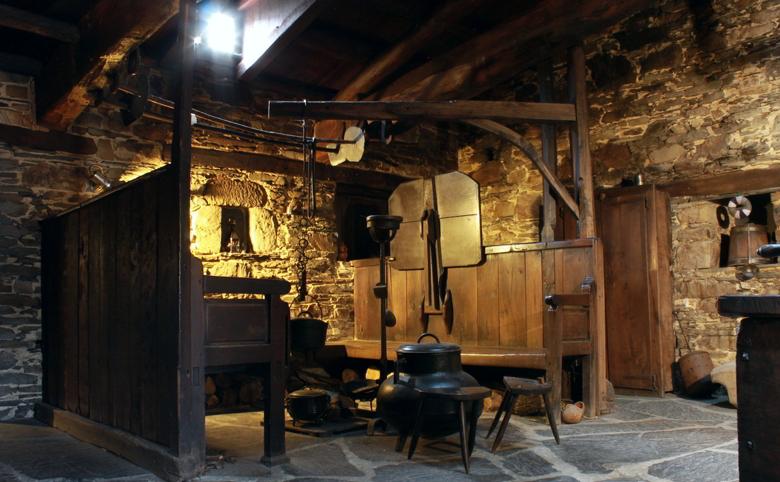
An excellent example of houses that tell the story of the past is the Casa del Marqués de Sargadelos , where you’ll learn, amongst other things, what a ‘polavila’ (a get-together amongst neighbours) is, whilst gathered round an old ‘lareira’ (a traditional local kitchen). And step by step, room by room, you’ll discover what life was like in those days, and that of the marquis himself, Antonio Raimundo Ibáñez, who was born in 1749 in Santalla and was a prolific merchant, industrialist and Enlightenment figure, creating the still-famous Sargadelos pottery in the late 18th century.
In addition, the Marqués de Sargadelos Museum offers guided tours and cultural activities, as well as craft workshops and rural heritage interpretation sessions for children and adults. It is located in Santalla.
Santa Eufemia Bread Ecomuseum
As you approach Santa Eufemia, in Villanueva de Oscos, you’ll realise just how vital bread is in our lives, and that in this village you’ll find a ‘museum-quality’ loaf in the broadest sense of the term.
At the Bread Ecomuseum you’ll learn, in a simple and highly educational way, the entire process of making this food with such a rich history, from sowing the grain to baking, including harvesting, milling – which you can watch in an old 19th-century mill – and kneading.
The Ecomuseum is truly a model of thematic organisation. It comprises three rooms, and everything is very well displayed in each of them. The room entitled ‘From the Field to the Threshing Floor’ deals with sowing and harvesting; the room called “From the Threshing Floor to the Granary” looks at threshing and grain storage, and in the third, entitled “From the Granary to the Table”, you’ll learn about milling, baking and consumption.
In short, you’ll embark on a journey through the world of bread, which leaves no one indifferent – neither adults nor children, who usually have a brilliant time – and all in a welcoming and picturesque setting.
Ferreira bathing area, canoes and swimming pools in Los Oscos
The Oscos region is home to a wonderful spot for swimming in the village of Ferreira, in Santa Eulalia de Oscos. In summer, you can also hire a canoe and enjoy a peaceful paddle along the Agüeira River, surrounded by stunning scenery. It will undoubtedly be one of your greatest discoveries in the region.
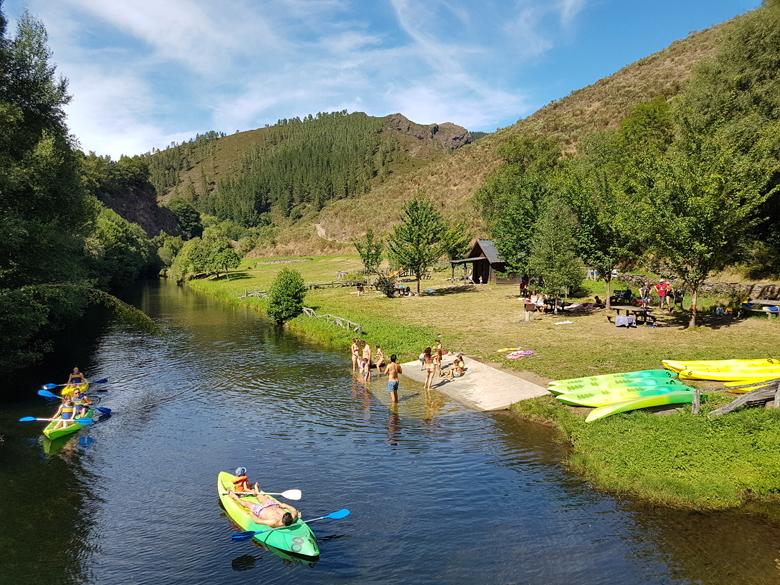
Ferreira is a long, secluded and peaceful hamlet that preserves the finest examples of traditional architecture from western Asturias. Nestled against a gentle mountainside, the River Agüeira pools here to form a natural swimming hole – the perfect spot for a swim, water sports or simply unwinding whilst taking in the scenery.
The area is complemented by a leisure area and a children’s playground, making it an ideal stop for a family day out.
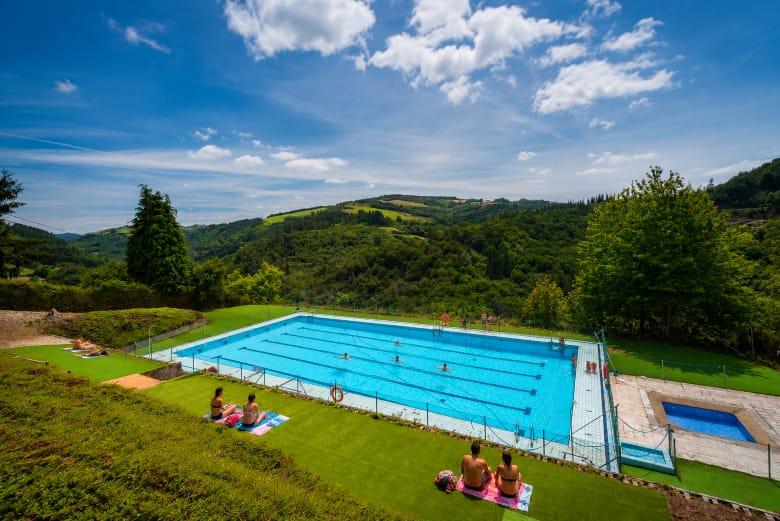
And if you’re left wanting more, Ferreira isn’t the only spot where you can cool off. The Oscos region also boasts three municipal swimming pools, one in each of its municipalities (Santa Eulalia, San Martín and Villanueva), all set in a stunning natural environment, surrounded by forests and mountains and offering spectacular views that invite you to enjoy the summer at a leisurely pace.
Mon Palace: an architectural gem in Los Oscos
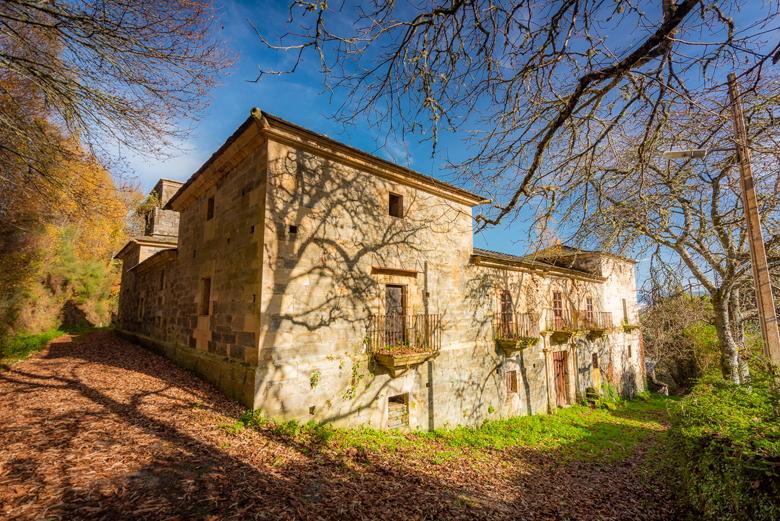
Los Oscos is not just a nature destination. If you’re an architecture lover, you simply must visit the Palacio de Mon in San Martín de Oscos.
Dating from the late 17th to the early 18th century, it retains all the grandeur and charm of Baroque-style civil palace architecture.
Its main façade is particularly striking because it features two coats of arms, which are truly impressive. You’ll find yourself standing before two works of art in a magnificent state of preservation, which tell you a great deal about the history of those who once lived in the stately home before your eyes.
The Palacio de Mon, with its irregular layout centred around a central courtyard and its slate roof, symbolises like no other the stately past of the rural west of Asturias.
What’s more, this palace is the starting point for one of the most beautiful and popular walking routes in Los Oscos: the Mon Route.
Guided tours are available. To book, please make a reservation in advance either by telephone on 615 375 701 or by email at turismo@sanmartindeoscos.es.
Monastery of Santa María de Villanueva de Oscos
Naturally, in a place as evocative and magical as Los Oscos, a monastery was bound to be there…
So when you arrive in Villanueva de Oscos, the first thing to greet you is the Monastery of Santa María, which is very well preserved, having been recently restored, and where, amongst other curiosities, a 17th-century sewerage system has been discovered.
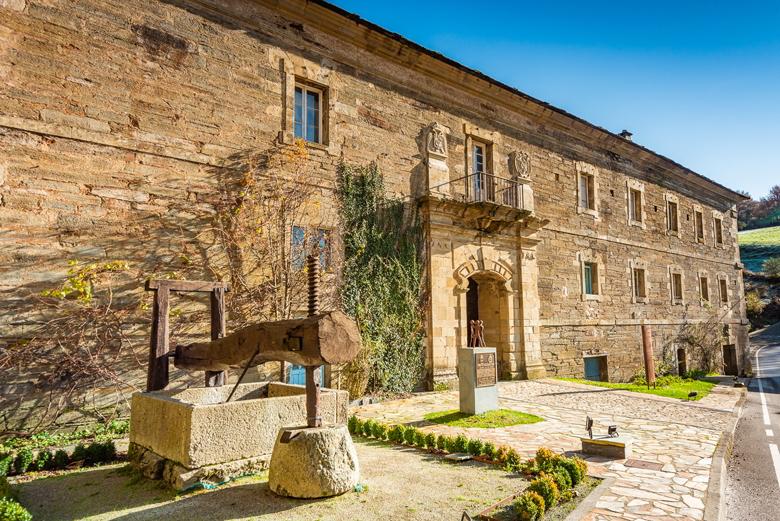
The monastery, with its imposing presence, lends Villanueva a touch of mystery and legend – something that is always welcome in a setting so conducive to fantasy.
Dating back to the 12th century, it has seen Cistercians and Benedictines pass through its walls, witnessed thousands of prayers and rituals, and has seen so much monastic and secular life!
Now, you can take in all those centuries of history by exploring both the exterior and the interior of the monastery, as it is open to visitors.
Active tourism in Los Oscos
Santa Eulalia de Oscos is home to four unmissable experiences for anyone wishing to enjoy nature, local crafts and traditions in a hands-on way.
Artesanamente workshops. One of the most original ways to discover traditional crafts and the resources of the forest through hands-on experiences and workshops for all ages. You can learn how to make soaps, natural cosmetics, baskets, cheeses, craft beer or sourdough bread; discover the properties of medicinal plants; get started in beekeeping; or explore the art of traditional blacksmithing. They also organise interpretative walks and workshops on handmade perfumes and incense.
Bee-tourism with Duxemiel. The family-run company Duxemiel introduces you to the fascinating world of bees. Kitted out like a real beekeeper, you can visit the hives, learn how they work and round off the experience with a delicious tasting of honey and other hive products.
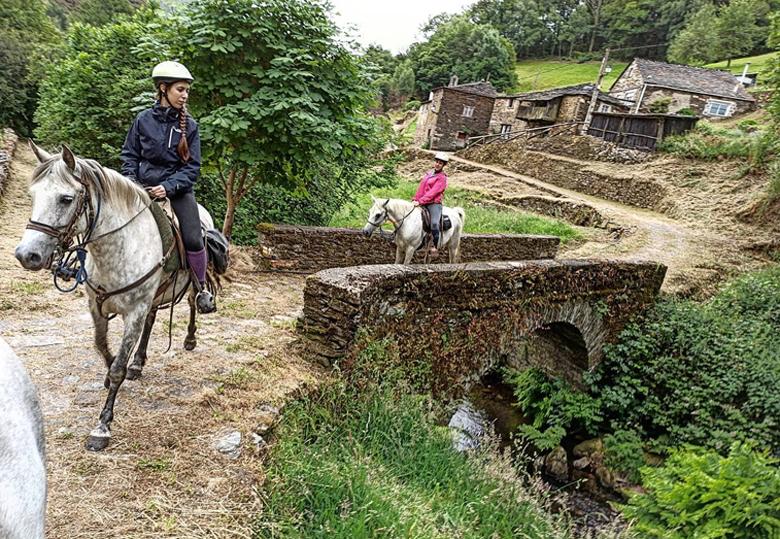
Horse riding trails. Exploring Los Oscos on horseback is a unique way to venture deep into its forests, cross small rivers and discover charming hamlets at the leisurely pace that characterises this region. An ideal experience for connecting with nature and admiring the landscape from a different perspective.
Visit to an organic livestock farm. At Caserío Viduedo, in the hamlet of As Poceiras, you can follow a simple, signposted circular route of around two kilometres around an organic livestock farm. During the walk, you’ll get a close-up look at some of the seven native breeds of Asturias, such as the Gochu Asturcelta pig, the Asturcón horse, the Xalda sheep, the Pita Pinta goat and the Asturian cow, as well as other farm animals. It’s a free experience, perfect for families, offering a chance to discover the landscape and life on a traditional farmstead in western Asturias.
In short, Los Oscos offers a wealth of options for enjoying active, creative and sustainable tourism, perfect for getting to know the region from a different perspective.
Hiking trails in Los Oscos
Everything in Los Oscos exudes tranquillity, and the footpaths are no exception. They are, therefore, a true paradise for leisurely walks – the sort of walks that take you along gentle routes, without steep gradients or rugged terrain.
On every route, you’ll be able to enjoy an idyllic setting of green forests and meadows, rivers and waterfalls, and villages so charming that you’ll want to stay there forever…
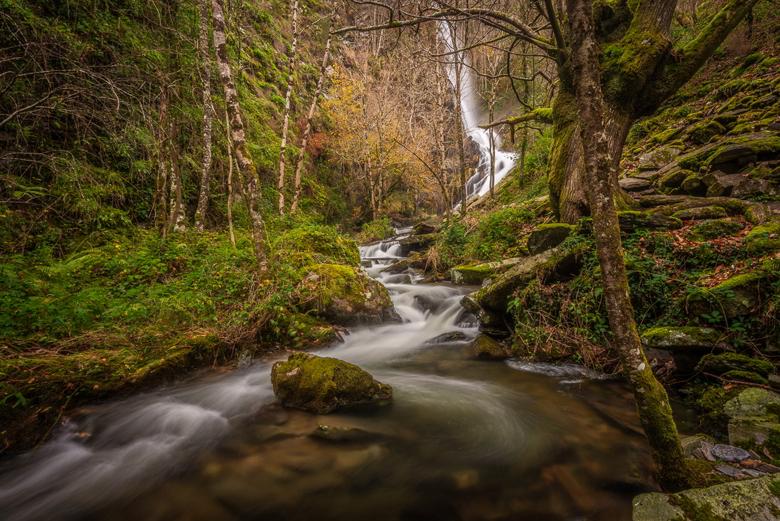
You’ll savour every corner, every stop and every view of the landscape with unusual pleasure.
The truth is that there are many and varied routes – more than 15 throughout the region – that you can follow in Los Oscos: the ‘Silence’ route, the Seimeira Waterfall route or the Mon route, amongst others. Each one is different from the next, but they all have something in common: the boundless charm of Los Oscos…
And amongst them all, there is one that is truly innovative and pioneering. It is the ‘Ruta con Arte’ (Art Trail), which follows the route of the ‘A Mina de As Talladas’ path. This is a 12-kilometre route which, in its first phase, offers walkers a unique experience where art and nature merge. The seventeen works of art, scattered along the PR 203 trail, include a varied mix of paintings, sculptures in wood, iron, stone and wicker, ceramics and poetry in the Fala dialect. These pieces, created by local and national artists, blend seamlessly into the landscape.
Highlights include Keiko Shimizu’s iron animal figures, the giant acorns carved by Eugenio Linares and Cristian Marne’s large stone slug. In addition, the ceramicist Natalia Suárez has created a circle of mushrooms in Ferreirela de Baxo, whilst the poetry in Fala, displayed in methacrylate frames, invites reflection. You can also admire the mural by graffiti artist Diego As and the faces carved by Antonio Martínez in As Barreiras. The installation by Busom and Cid, which combines resin and Renaissance paintings on stacked logs, brings to a close a route that, whilst respecting nature, transforms the footpath into an open-air gallery.
The prettiest villages in Los Oscos
If there is one thing that catches the eye in the Huesca countryside, it is that, suddenly, amidst the greenery and the water, a village appears, as if by magic. In the most unexpected, most unlikely of places, there they are, like eternal companions to a landscape to which they add a touch of black with the slate roofs and their imposing walls.
These are villages with character, which you’ll find to be true oases of tranquillity, with their granaries and wicker baskets, their bridges and streams, their deep-green meadows, and the forest always close by.
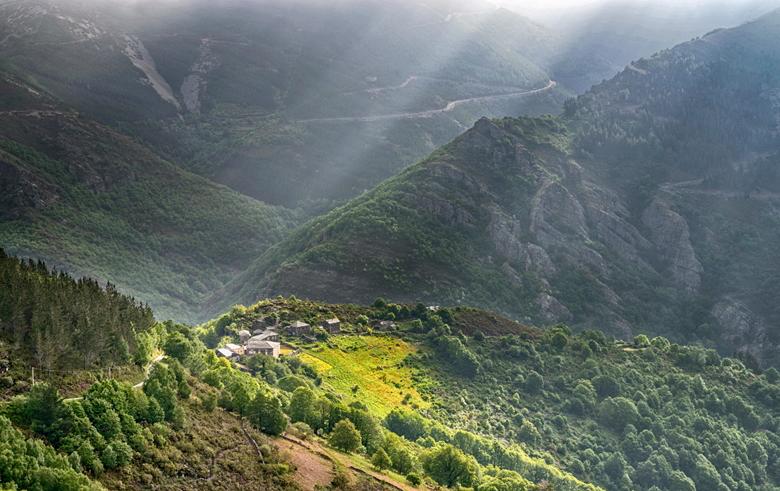
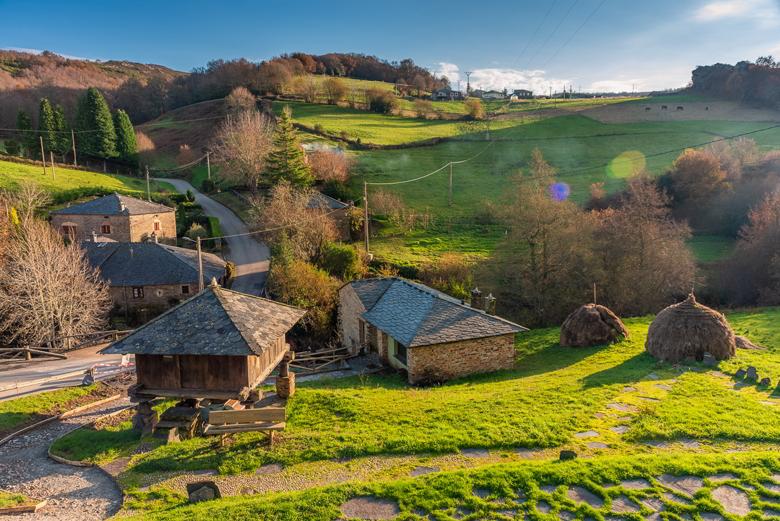
You’ll find the villages of Los Oscos to be quite different, idyllic, as if they’ve been waiting for you with time standing still. Names such as Pumares, Santa Eufemia, San Cristobo, Soutelo and A Valía will remain etched in your memory as unique places to which you’ll always want to return.
As an example of all this, take a look at the cover photo for this post, which is of the beautiful village of Pumares.
Would you like to visit these places?
During this year 2026 you can take advantage of a great discount with the Asturias Rural Tourism Voucher.
You pay 75 € and get 150 €. In addition, each person can buy up to 2 vouchers, so if your partner or companion also buys theirs, you can extend the getaway several nights in a row in the same accommodation.
You can use it from 2 February to 31 December 2026, except:
- 1st May
- Maundy Thursday and Good Friday
- From 1 July to 15 September
Valid in more than 350 rural accommodations throughout Asturias: houses, flats and charming rural hotels ideal for travelling alone, as a couple, with your family or with your group of friends.
Travelling creates memories... and in Asturias, even more 💚


