


Things to see and do in the Redes Natural Park: 10 unique experiences
The Redes Natural Park, which covers the municipalities of Sobrescobio and Caso, is one of the most unique natural, cultural, ethnographic, historical and human reserves in the whole of Asturias.
It is the very heart of southern Asturias, and its eastern-facing location makes it one of the finest vantage points over the Picos de Europa themselves. The Redes Natural Park – which takes its name from a beech forest in Caso – is one of the most unique natural, cultural, ethnographic, historical and human reserves in the Principality of Asturias.
At every turn, a marvel; in every hórreo, a museum; in every nook and cranny, the art of living that bubbles to the surface. A world of water, in the form of springs, streams, rivers and reservoirs. A world of clog-makers and woodcraftsmen that transports us to a past of unique rural inventions, born of an immense determination to survive. And speaking of greenery: footpaths and forests, mountains and valleys, and ever the peaks, descending to the very heart of the earth, as if it were a mother. And all the while, the constant chorus of local cows with their cowbells echoes across the hillsides, through the villages, along the roads, down the narrow lanes and in the sheepfolds.
Caso and Sobrescobio, Sobrescobio and Caso are the two parts of an indivisible whole, where the River Nalón is the lifeblood, and without whose waters—gushing crystal-clear and unassuming from the Tarna Pass—nothing in these lands of eternal passage towards the Meseta and back would be the same…
The Redes Natural Park as such was established in 1996, and a few years later, in 2001, it was designated a UNESCO Biosphere Reserve; so this year it comes of age with this international distinction.
Redes is so inspiring that many travellers, mountaineers, explorers, writers and others find themselves captivated by the powerful allure of a wild yet, at the same time, humanised and humanisable natural world.
To help you unleash your inner spirit of exploration, on this trip we suggest the 10 best things to see and do in the Redes Natural Park.
Let’s get started!
La Nalona: much more than just a fountain
Climbing or descending the Tarna Pass is one of the most authentic and enjoyable scenic experiences you can imagine. Not only will you have the chance to take in an incredible panoramic view of the Upper Nalón, but just as you’re about to reach the top of the pass, right beside the road, a sign will point you towards Fuente La Nalona.

Stop off along the way – it’s well worth it. You’ll find yourself standing before a spring that’s not just another one of those you’ll come across on your travels and hikes. It is nothing less than the source of the longest and most abundant river in the whole of Asturias: the Nalón, which also has historical significance as profound as the very course of Asturians’ lives.
The little spring, with the constant murmur of its pure, cold and crystal-clear water, will seem like a miracle to you, especially when, a few kilometres further downstream, you see it transformed into a great river – one that will remain by your side throughout your stay in the Redes Natural Park.
The surroundings of La Nalona are truly immersive. This is the Tarna mountain pass, a landmark on the Camín Real, which crosses into Castile from Villaviciosa. It is the starting point for numerous hiking trails and a haven for livestock and herders. What’s more, high above this unique landscape, you’ll be able to gaze upon the rugged peak of Remelende, the first landmark of the Sierra del Mongallu, which marks the boundary of the Redes Natural Park and gives rise to one of the most beautiful and iconic routes in this natural area.

So it’s no wonder that the Tarna Pass captivates so many people: cyclists, motorcyclists, walkers… And, of course, it’s also ideal for a drive, with plenty of opportunities to pull over at some of the viewpoints along the winding road.
Three natural landmarks: the Mongallu waterfall, Lake Ubales and Brañagallones
Among the many beautiful sights that Redes has to offer, there are three that are truly extraordinary and unexpected: the Tabayón del Mongallu, Lake Ubales and the Brañagallones floodplain.
There are several ways to reach the famous Tabayón del Mongallu, a waterfall over 60 metres high, with a modest flow but great appeal. You can reach it via the Las Señales mountain pass, or from the village of Tarna, following an easy and pleasant circular route from there, suitable for everyone.

Just a few metres after setting off towards Tabayón del Mongallu from Tarna, you can turn off to your left towards Llanu’l Toru, where you can enjoy the sight of a cluster of ancient oak trees, some of which are truly imposing in size. After this impressive sight, you can rejoin the path towards Tabayón. The trail offers plenty of shade amidst the beech woods, where some trees take on surprising shapes, as if you were right in the midst of a mythological tale. As you walk, you’ll pass wooden bridges, waterfalls, fountains and peaceful spots where you can rest and recover from the exertions of the walk.
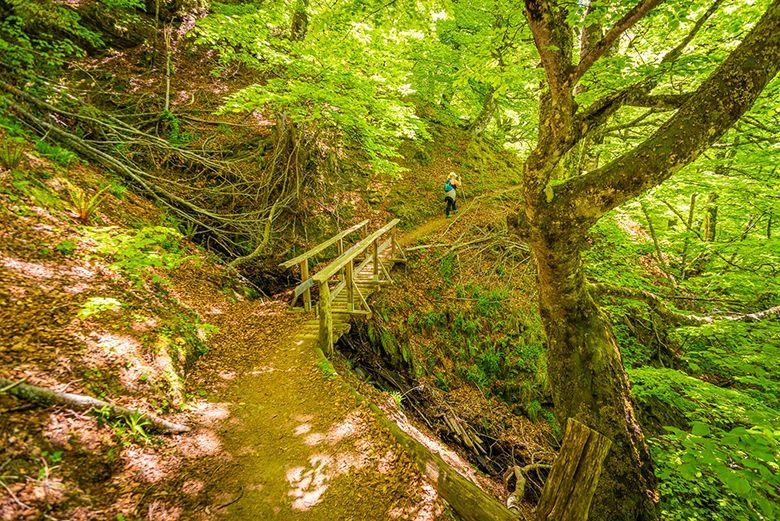
Water is ever-present along this wonderful route, and as you draw closer to the waterfall, the sound of flowing water grows louder. Then, suddenly, the forest thins out and a vast pasture appears before your eyes, where cattle graze. At last, in the background, the Tabayón del Mongallu comes into view.
Little by little, you draw nearer; the final climb, and there it is – the great waterfall, spraying water and bathing a vast landscape of woodland and rock. You can return via the same route, or take another path from the sheepfold that will lead you into the Mongallu River Valley, beneath the slopes of Cuetu Negru, and from there you’ll return once more to the peaceful village of Tarna.
Lake Ubales is, without a doubt, another of Redes’ natural wonders. The route to reach it – climbing up from La Felguerina, passing through La Infiesta and ascending via La Canalina – offers unforgettable scenery. The beauty of the ascent is simply indescribable.

Once in the Ubales area, the lake is impressive not only for its sheer size, but also for the views it offers of all the mountains of Piloña, Caso, Laviana, Ponga, Amieva and the Picos de Europa are absolutely incredible, as is the view of the Brañagallones valley, which appears as a patch of green amidst the dense forest that surrounds it.
The Ubales Lake trail is one of the must-see attractions in the Redes Natural Park!
Furthermore, if there is one meadow famous throughout Asturias for its beauty, tranquillity and natural charm, it is Brañagallones, which takes its name from the ‘gallones’ – cocks or capercaillies – which once had several lekking grounds there (places where the males displayed during the breeding season).
Brañagallones will be the meadow of your dreams, and a privileged spot to enjoy the native flora and fauna, surrounded by vast beech forests. If you cast your mind back in time and close your eyes, you can picture the glacier that once covered the area and shaped it into what it is today, and you can still hear the voices of the families who made their living from the livestock that grazed there.
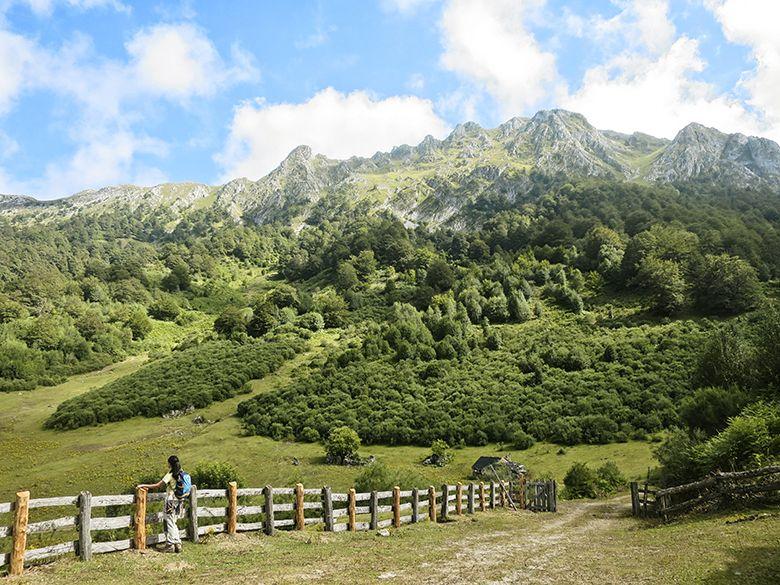
Brañagallones is also the destination of a route that starts in Bezanes, on the banks of the River Nalón, and which, after a winding, uphill path, takes you to the valley that lies before your eyes. A route offering spectacular views, where you can stay in one of the best mountain refuges in Spain and, from there, go mountaineering in the surrounding area. Or you can simply make a day trip, enjoying an unforgettable day out.
Sobrescobio, or the omnipresence of water
Even the name of Sobrescobio is striking, derived from the resonant Latin term ‘super-escopolum’, a direct reference to the rugged terrain of this area of gorges and steep slopes, shaped and moulded by the geophysical features of the River Nalón.
Equally striking are its villages, which seem designed to be the setting for mythological tales, where imaginary beings blend with real ones.
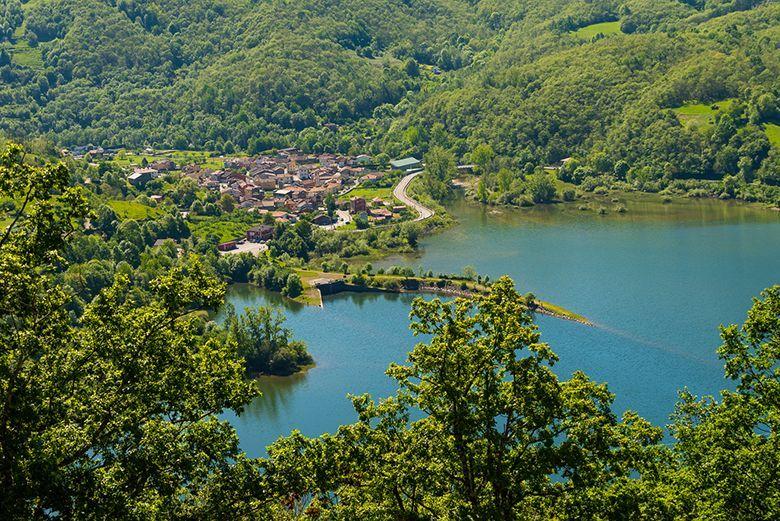
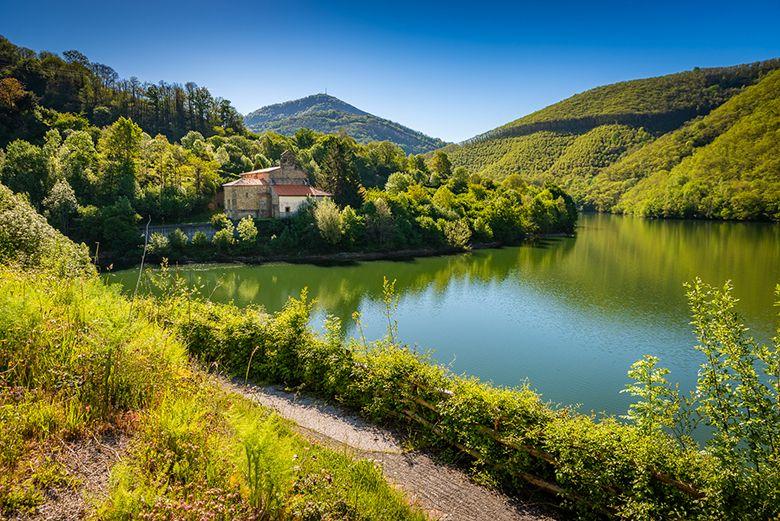
The capital of Sobrescobio itself,Rusecu/Rioseco, is deeply inspiring, particularly as it lies on the banks of a reservoir where various species of waterbirds nest, and where, depending on the changing light throughout the day, the water reflects magical hues, as if painted by a meticulous artist. Furthermore, the area around the reservoir offers spaces to enjoy the landscape and nature, such as a footpath, a viewing platform, rest areas and a sensory park for children, making this spot an ideal place for a family stroll and a day out.
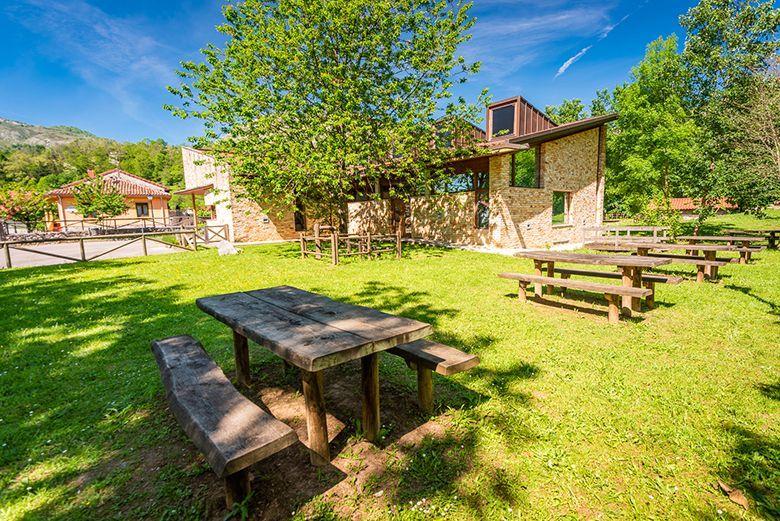
It is therefore no coincidence, given the omnipresence of the flowing waters of the River Nalón, that Rusecu/Rioseco is home to the Casa del Agua, a unique space that combines tradition and innovation, both in its design and in its construction and exhibition elements. A space to learn about and explore the uses of water, and its connection to and influence on nature. Another very interesting place to visit is the Wildlife Rehabilitation Centre, situated on Mount Isorno. This facility demonstrates how the rescue and rehabilitation of wild animals is carried out; it also features video cameras that monitor, in real time, the animals being cared for at the centre and the flight enclosures for birds of prey, which can be observed from a specially designed viewing area.
The villages of Sobrescobio: pure rural lyricism
A few kilometres from Rusecu/Rioseco, a handful of villages are scattered across the valleys or cling to the hillsides, lending an air of authenticity and even a touch of rural lyricism to this iconic municipality within the Redes Natural Park.
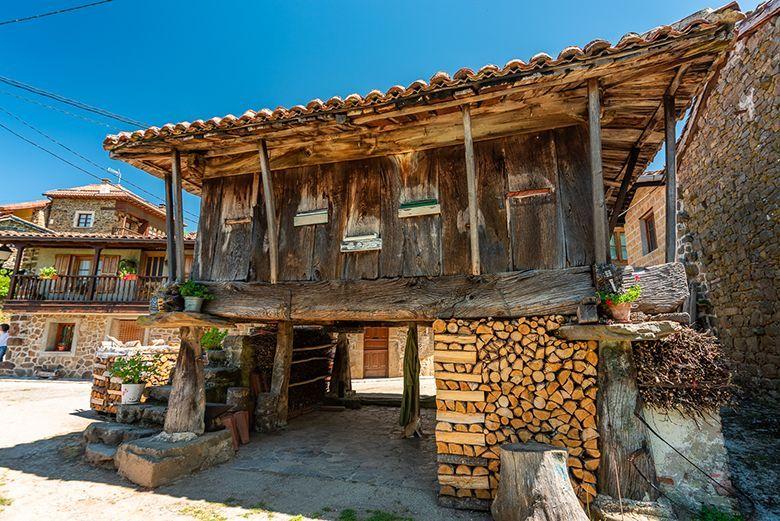
Villages at the bottom of the valley, such as Soto or Villamoréi, or perched high up, such as Llaiñes/Ladines or Campiellos. Villages where rural scenes abound: livestock in the cattle tracks, granaries, and very old houses. Villages where mills or wash houses still stand, or where there are huge yew trees near their churches.
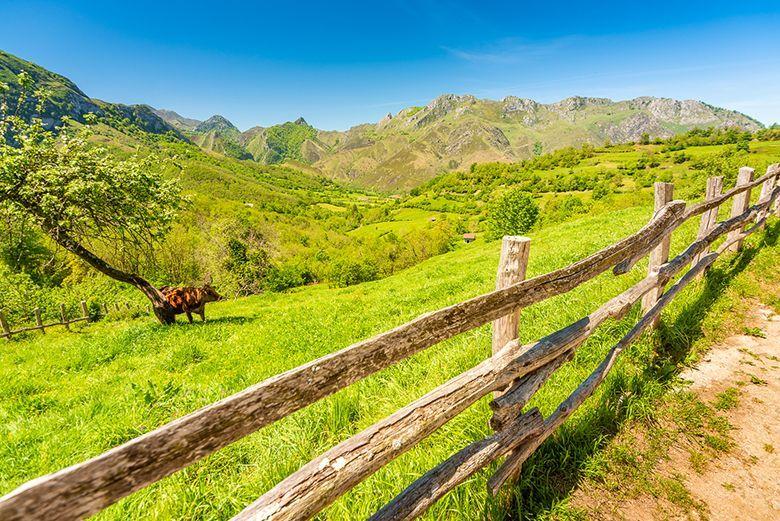
Villages such as Llaiñes/Ladines, where the views of the Redes mountains are spectacular.

Or take Campiellos, where the panoramic view of Rusecu/Rioseco and its reservoir takes your breath away, and where there are specially adapted paths allowing you to enjoy the scenery, whilst also offering ideal conditions for stargazing on clear nights…
And as if that weren’t enough, to add a touch of mystery and legend, the village of Villamoréi is home to a watchtower (which you can reach via a walking trail) that still stands, despite the passing of the centuries and many vicissitudes. Suddenly, you’ll find it blending into the watery landscape, its face gazing out over the reservoir and telling us that it has been the sentinel of the Nalón River gorge for an eternity, thus controlling the passage of the Tarna as it flows towards the El Condao Valley and La Pola Llaviana/Pola de Laviana.
Soto, the gateway to the Ruta del Alba
Soto is the perfect place to experience the atmosphere of mountaineering. As the starting and finishing point for the popular Ruta del Alba and the Llaímo Gorges, it is a village that is always bustling with the thousands of walkers who, whatever the time of year, come here to enjoy this beautiful and enjoyable route.
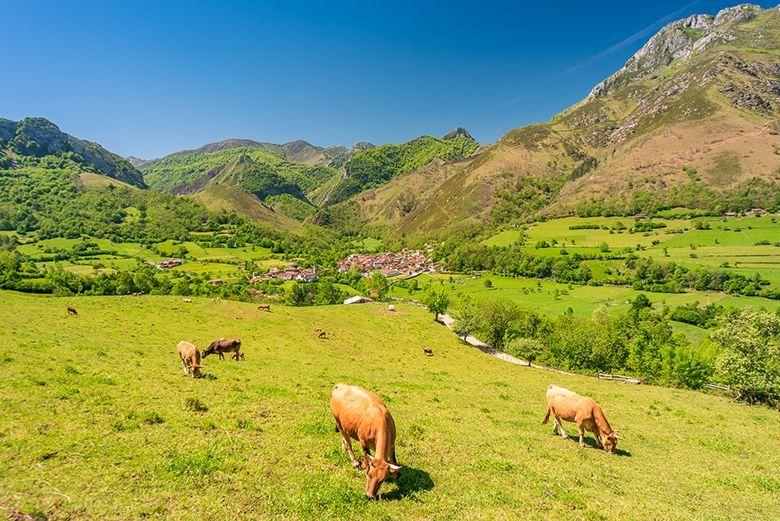
The village retains all its authentic charm, with traditional houses and cobbled streets. Chapels, washing places, squares, granaries, and, running through the centre of the village, the river, harmoniously linking one bank to the other.
Swimming in the river, fishing and local cuisine are activities that complement the hiking experience in Soto.
The view of this village from the road leading up to Llaiñes/Ladines – with livestock in the foreground, grazing peacefully, and in the background, down in the valley, the ever-welcoming Soto – offers an idyllic scene that you won’t want to forget.
Caso and his historic Tercias
To speak of the Redes Natural Park is to speak of heritage, antiquity, ancestral roots and traditions preserved for centuries upon centuries, which will come to you, the traveller, intact, like a newborn baby to its parents.
One of these defining features, deeply rooted in the memory of times gone by, is the ‘Tercias’ – a rural organisation comprising several parish hamlets that shared the burden of paying their tithes or taxes to the Church.
In Caso, there were two ‘tercias’ that still preserve customs and memories of bygone eras. Together, these two ‘tercias’ comprise six villages, whose uniqueness, beauty and traditional character will give you a true sense of what life and culture were like over the centuries in this part of Redes.
One of these tercias was that of Tanes, comprising three villages: Tanes, Prieres and Abantro. Together, they form an utterly idyllic route.
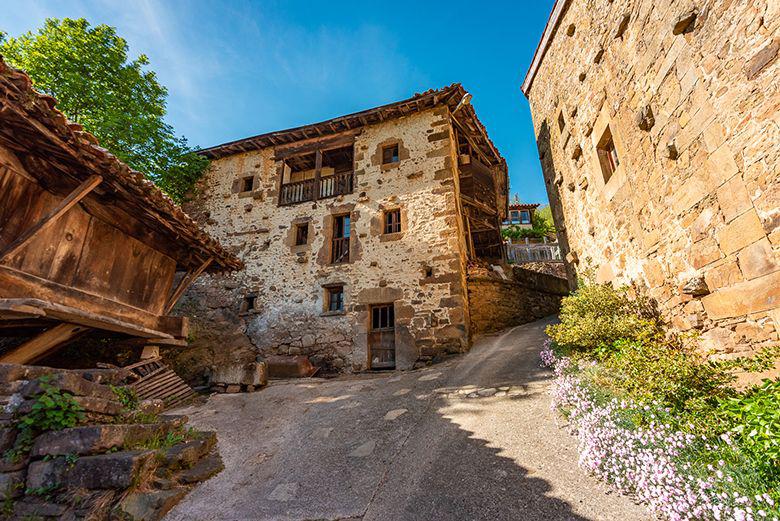
In Abantro, time seems to have stood still. Its imposing stone houses, with their impeccable stonework, tell the story of a time when craftsmen were devoted to their craft. Its hórreos, its steep streets, its bell summoning the ‘conceyu’ that seems to reach for the sky, the neighbours’ gatherings, and in the background, winding through the greenery, almost blending into the landscape, the River Nalón once again.
And what can one say of Prieres, climbing towards the mountains, framed by greenery, or of Tañes, with its granaries adorned like veritable ethnographic museums, and its collegiate church peering out, with mystery and discretion, towards the waters of the Nalón…
The Bueres district comprises this village, together with those of Gobezanes and Nieves. These are three further hamlets with their own distinct character and personality, where the traditional farmhouse architecture, the atmosphere of local craftsmanship and the native livestock also stand out. Furthermore, in Nieves, the Chapel of Los Dolores is a magnificent example of rural Baroque architecture and is notable for its square floor plan, its semicircular arch at the entrance and its mural paintings.
But the interesting and charming hamlets of Caso are not limited to the Tercias. Orlé, Coballes, La Felguerina, Soto de Caso and the council’s capital itself, Campo de Caso, amongst others, are all places well worth visiting.
Deboyu Cave, a magical hideaway on the River Nalón
Very close to El Campu, you’ll find theDeboyu Cave, situated almost right beside the road and featuring a lovely picnic area where you can enjoy the proximity of the River Nalón, which, at this point in its course, flows into a cave of spectacular shapes and proportions.

The gentle, serene flow of the river here brings you a sense of infinite peace. It’s a kind of totemic place, where nature becomes welcoming to humankind.
Deboyu Cave is a magical haven on the banks of the River Nalón!
Caliao, the gateway to the Arrudos trail
Like other villages in the Redes Natural Park, Caliao is the gateway to a classic hiking route in Asturias: the Arrudos Gorge, which is clearly signposted and famous for its many steps. In fact, this route is very appealing; it is a fascinating trail that winds through beautiful beech forests and pastoral sheepfolds, and where water, as one would expect, is ever-present, given that this gorge is one of Asturias’s great river canyons.
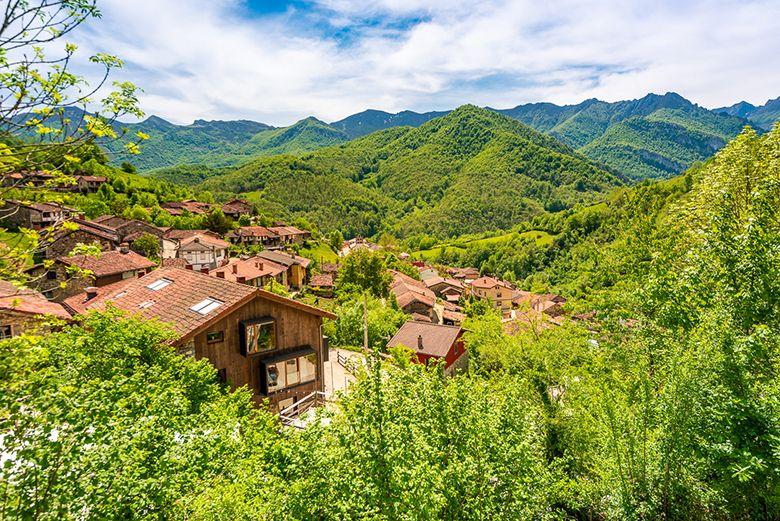
So Caliao is another of those villages where hikers from all over the world ‘get lost’ in order to find themselves, amidst the vast, lush Redes Forest.
It’s also the perfect place to go for a stroll, enjoy a leisurely lunch or dinner, or spend a few days relaxing.
Caliao is the very essence of Redes!
Veneros, an ode to woodcraft
If there’s one thing that stands out in Veneros, it’s its devotion to woodcraft, and a fine example of this is the charming and well-documentedWood Museum, where, during a leisurely visit, you’ll discover all the secrets of woodcraft and the art of making clogs, bearing in mind, too, that the municipality of Caso is one of the world’s leading centres for clog-making.
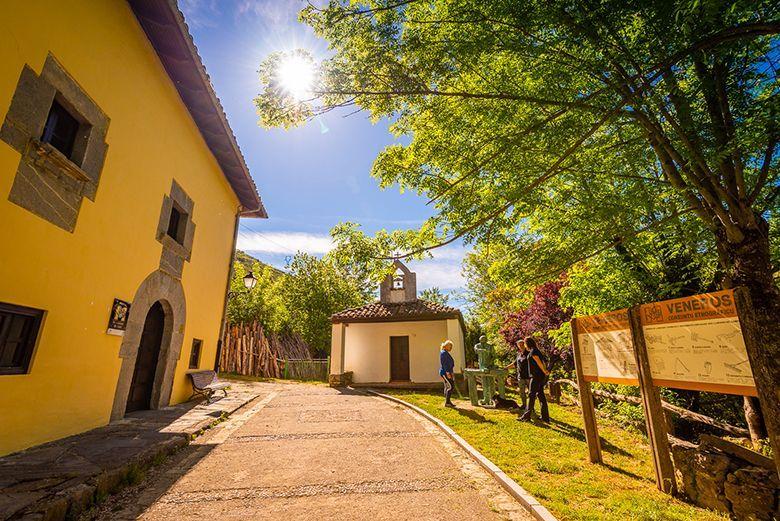
The museum’s exhibits take visitors on a journey through the entire history of wood and the inventions crafted from it in this region, which remains one of Spain’s foremost centres of ethnography to this day. Outside, a beautiful sculpture paying tribute to one of the last ‘madreñeros’ (woodworkers) from Veneros lends a special and moving atmosphere to this spot, which you’ll find very pleasant.
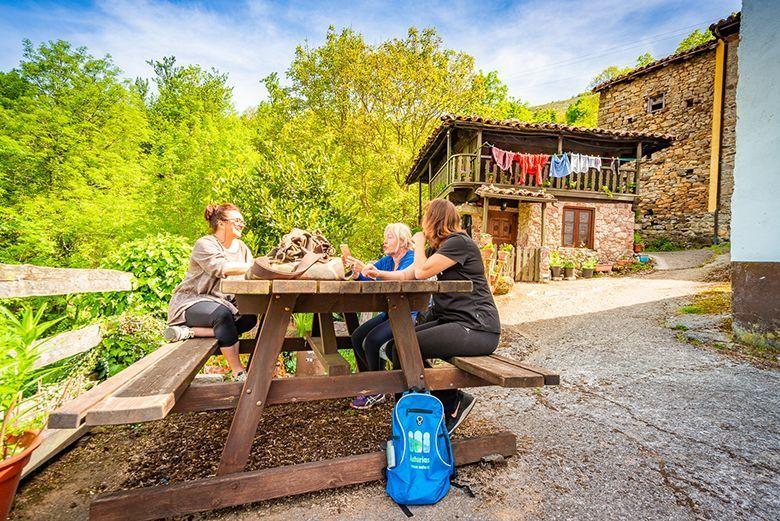
When you take a stroll around Veneros, you’ll experience first-hand all the charm of tradition, with its steep streets, its nooks and crannies where you might suddenly come across a hórreo, a chicken coop or a table – the perfect spot to stop for a picnic whilst gazing at the surrounding mountains.
A land of cheese and spit-roasted lamb
In a place like the Redes Natural Park, where livestock is an ever-present feature of daily life, culture and traditional heritage, the local cuisine is another of its many virtues that deserves to be highlighted in full.
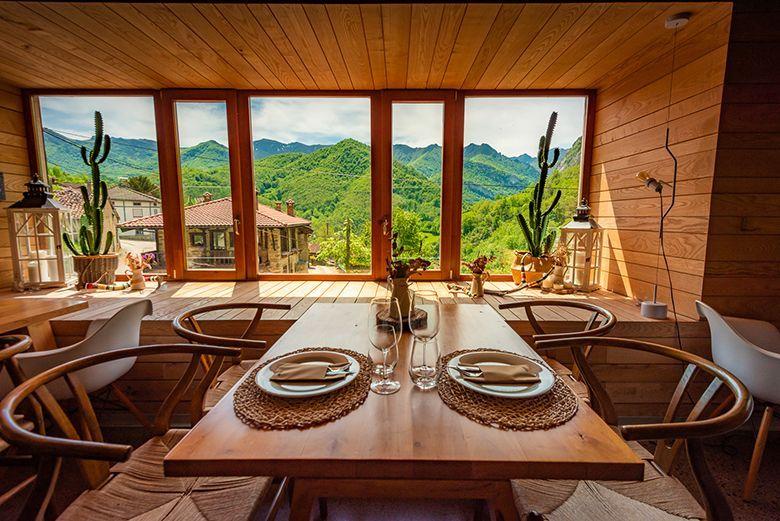
So when you’re there, you’ll realise that for the locals, food is of paramount importance, as is sharing moments of culinary delight with family and friends, as well as with travellers passing through, because the warmth and hospitality on offer are among the undeniable charms of this marvellous place.

And it is precisely in Redes that you’ll have the chance to discover one of Asturias’ artisan cheeses:casín. One of Spain’s oldest cheeses, it is produced using a complex process and an unusual technique, as the curd is kneaded in a ‘rabilar’ machine. With a strong and slightly tangy flavour, casín is as rustic as it is traditional, and it certainly won’t leave you indifferent.
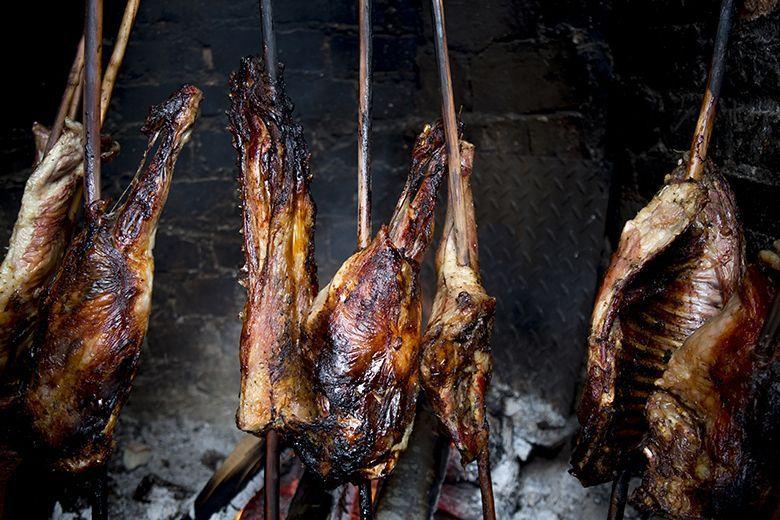
Furthermore, another of the Alto Nalón region’s specialities is spit-roasted lamb, a tradition introduced by an emigrant returning from Argentina just over a hundred years ago, who gradually popularised it throughout Asturias. Connoisseurs of the area say that the secret lies in excellent ingredients – lamb from Alto Nalón – oak or ‘faya’ firewood from the local forests, and plenty of patience…
So… don’t miss out on these delicacies!
Guided kayaking trips on the Tanes reservoir
In Redes, the River Nalón shapes one of the area’s most iconic landscapes: the Tanes reservoir. Surrounded by mountains and Atlantic forests, this vast expanse of water has become one of the park’s most photogenic and peaceful spots.
There’s a very special way to explore the reservoir: by taking a guided kayaking tour. Paddling across its waters allows you to discover the landscape from a completely different perspective, reaching spots that can only be seen from the reservoir itself.
Don’t miss out on this fantastic experience!
Special activities for summer 2026 in Redes
As well as exploring its trails and landscapes, during the summer the Redes Natural Park offers a wide range of activities to help you discover the area in a different way. You can take part in pottery workshops, visit exhibitions, explore the Beekeeping Museum and the Wood and Madreña Museum, discover artisan cheese-making workshops, or join in with outings and culinary experiences. Check the full, up-to-date programme of activities on the Redes Natural website.
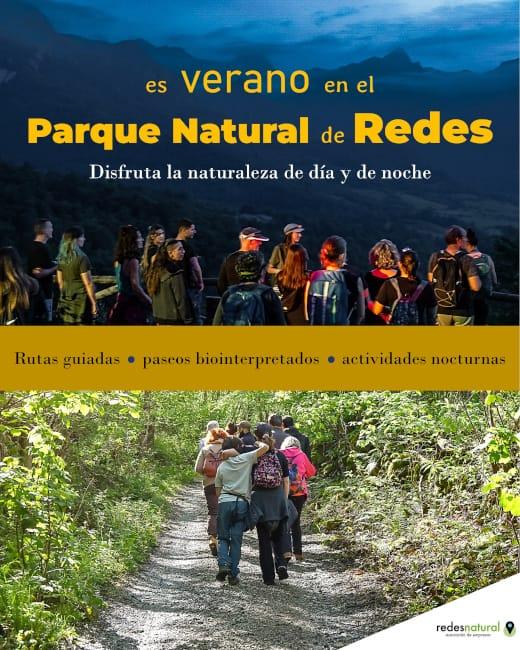
Would you like to visit these places?
During this year 2026 you can take advantage of a great discount with the Asturias Rural Tourism Voucher.
You pay 75 € and get 150 €. In addition, each person can buy up to 2 vouchers, so if your partner or companion also buys theirs, you can extend the getaway several nights in a row in the same accommodation.
You can use it from 2 February to 31 December 2026, except:
- 1st May
- Maundy Thursday and Good Friday
- From 1 July to 15 September
Valid in more than 350 rural accommodations throughout Asturias: houses, flats and charming rural hotels ideal for travelling alone, as a couple, with your family or with your group of friends.
Travelling creates memories... and in Asturias, even more 💚


