Route of the Lancers
- Caserio Nora, Valsera Central Asturias
- Distance: 14 kms
- Difficulty: Moderate
- Cumulative difference in altitude: +346 m
- Cumulative difference in altitude: -346 m
- Maximum altitude: 295 m
- Minimum altitude: 119 m
- IBP index: 47
- Modality: Hikers
- Type of route: Circular
- Route type: Mountain
- Return by Train: No
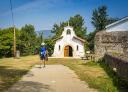
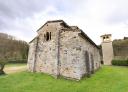
The route begins at the church of San Pedro de Nora, a jewel of 9th century pre-Romanesque Asturian architecture, rebuilt in the 1940s after its destruction in the Civil War. From there, the route advances towards Campanal, crossing a rural landscape shaped by human labour: orchards, mowing fields, pastures and large corn plantations coexist with Atlantic holm oak groves and chestnut groves of the Valduna variety, known for the quality of their fruit.
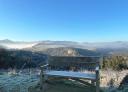
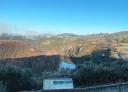
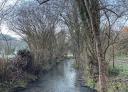
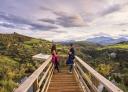
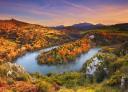
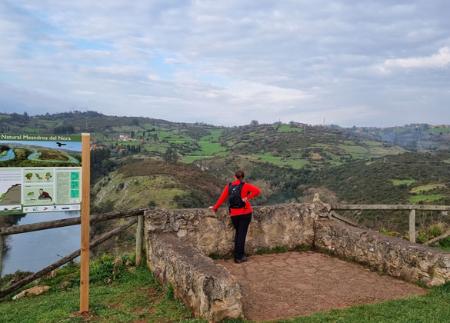
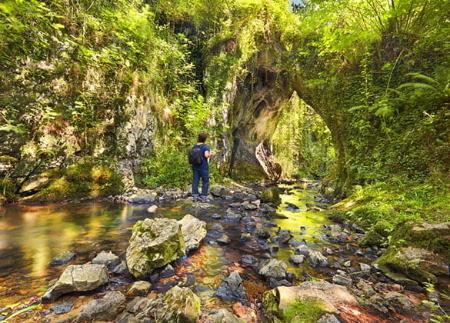
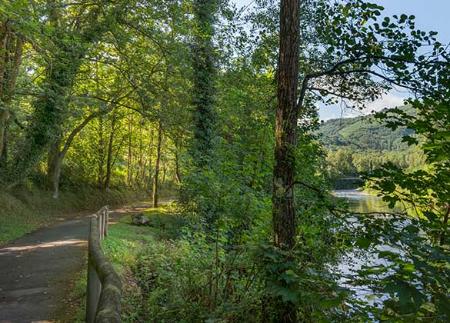
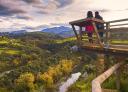
The next section leads to Rañeces, where we find the turn-off to one of the great attractions of the route: the viewpoints over the meanders of the river Nora, a natural spectacle in which the water meanders between bare limestone and green riverside forests. From the Lladera viewpoint and the nearby Cueto Rañeces, with the Monsacro silhouetted against the horizon, one of the most impressive views of the centre of Asturias is obtained, with the meanders of the Nora drawing shapes that look like enormous aquatic snakes glistening in the sun.
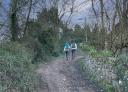
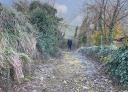
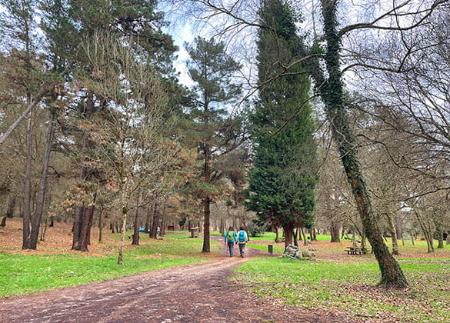
After enjoying these panoramic views, the route continues to the village of Taoces, where we can visit its traditional fountain-washing place in the area of Mareo. From here, the route continues along rural paths until it joins a stretch of the Primitive Way, the first route to Santiago de Compostela, which accompanies us in the direction of Valsera. In this section it is possible to take a detour to visit the perfectly preserved Molín de Picarín, an example of the important legacy of milling activity in the area.
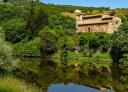
In Valsera, heritage is once again the protagonist with the presence of a traditional Asturian palace and the hermitage of the Virgen de Fátima, a small temple that invites us to pause and contemplate. From there, the path turns again towards Rañeces, completing the circle. The return to Campanal and the church of San Pedro de Nora brings this itinerary to a close with a last look at the rural landscapes and the traditional buildings that dot the surroundings.
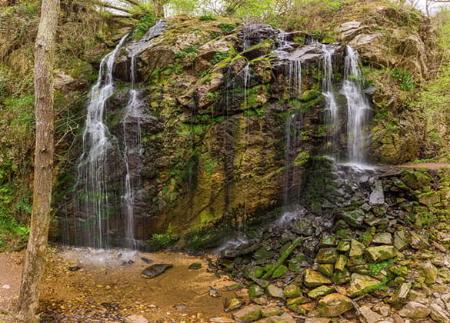
The Route of the Lanceros is a quiet and suggestive walk, a route without steep gradients but full of content, which allows you to discover the history, ethnography and nature of Las Regueras. Each section tells a story and each viewpoint offers a new perspective on the link between land, river and memory in one of the most beautiful corners of central Asturias.
- PR-AS 172
- This route partially coincides with the Way of St. James.
Basic tips before going into the mountains
- If you go with a dog, always keep it on a leash.
- Avoid approaching livestock.
- If you find mastiffs protecting livestock, do not approach them, do not pet them and do not feed them. Do not allow them to follow you or stray from their herd. They are working.
- Don't leave a trail. Collect all your waste, including organic waste. Nature is not a dumping ground.
- Act with prudence. Plan your route well, take everything you need and make sure it is adapted to your physical capacity.
 More recommendations for planning your route