Yernes to Cuevallagar
- Yernes y Tameza Central Asturias
- Distance: 14.91 kms
- Difficulty: Moderate
- Cumulative difference in altitude: +701 m
- Cumulative difference in altitude: -701 m
- Maximum altitude: 1216 m
- Minimum altitude: 700 m
- IBP index: 62
- Modality: Hikers
- Type of route: Circular
- Route type: Mountain
- Return by Train: No
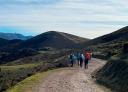
The Cuevallagar Route, also known as Cuallagar, is a circular route that crosses one of the most unique and least travelled mountain landscapes in the centre of Asturias. Between high-altitude meadows, livestock herds, shepherds' shelters and open panoramic views, this route takes you into the heart of the Yernes y Tameza mountain range, a territory deeply linked to the cow-herding tradition and livestock activity.
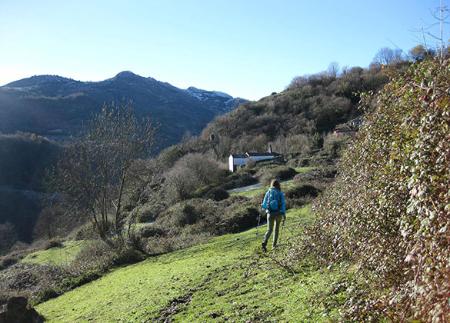
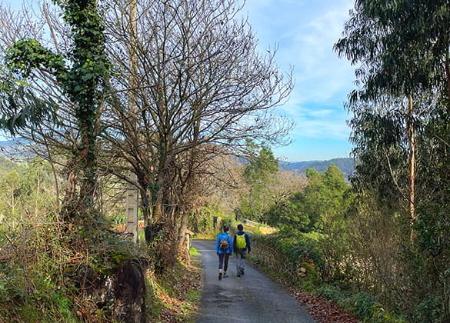
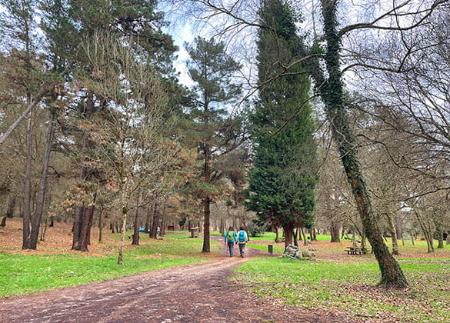
The route starts in the village of Yernes, where the traditional buildings and the irregular layout of its streets reflect the past linked to shepherding that has shaped these lands for centuries. From the first ramps, the track offers an elevated view of the hamlet, which is soon left behind as the path enters a landscape of meadows and patches of autochthonous trees.
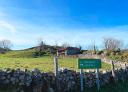
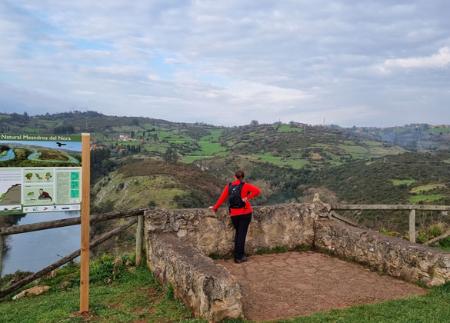
The path climbs gently up to the Braña de Senra, where the old stone huts and watering troughs bear witness to the livestock farming activity that gives the area its character. As you gain height, the horizon opens up over the neighbouring sierras, with the silhouette of Collado Fancuaya as a reference point.
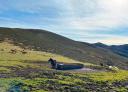
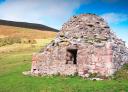
From there, the path advances towards Pico Loral, crowning its summit before descending to the Collada de la Cadavina, where it joins the PR-AS 260. This stretch leads to the Cuallagar or Cuevallagar field, a wide mountain esplanade where the unique shepherds' refuge stands out, built in stone in the shape of a pyramidal trunk, perfectly integrated into the landscape.
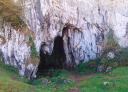
The name of the Cuallagar valley comes from a large hollow located at its southern end, the cave of Cuallagar or Cuevallagar, a natural shelter where livestock usually "moscar" on hot summer days, i.e. to protect themselves from the heat and the bites of flies. In addition to its role as a livestock farm, this area has a fascinating historical past: in prehistoric times it was frequented by human communities that left traces such as the lithic complex of Fuente Cimera, the shelters of Peña Blanca and the burial mounds of the Alto de Sograndio.
In the centre of the plain there is also a traditional square-shaped corro, a unique construction in the region that has become a reference point in the council of Yernes y Tameza.
Every year, on the last Saturday in August, the Cuallagar or Cuevallagar field hosts a popular pilgrimage, an essential event in the local calendar where locals and visitors celebrate amidst nature, tradition and livestock.
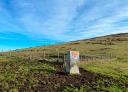
The place is also home to one of the most curious legends of the council: the old dispute over grazing land between the people of Proaza and Tameza, resolved by the fight between two bulls at the Fuente Cimera. The Proaza people brought a very big one, ratín. The people of Tameza were going to oppose him with another, also very big, from Ca Ramón de la Casona but, on the advice of a servant of the house, they decided to take a smaller but very strong, red, villainous bull. The fight began in La Veiga de Cuallagar, at the Fonte Cimera, where they clashed by the horns and the Tamezano bull pushed the Proaza bull to the Cantu la Flecha, where he knocked him to the ground, the boundary being marked there with a black finxu (boundary marker). The episode is depicted on the Tameza coat of arms, where the two bulls are shown facing each other.
After exploring this enclave, the return journey takes the form of a circular route that skirts Pico Loral and takes a detour to the Aula Vital, an educational space that promotes knowledge of the environment, renewable energies and a connection with nature.
The route finally descends to the Focea Fountain, where it is possible to refresh oneself before returning to the centre of Yernes, thus closing a journey that combines landscape, history, pastoral architecture and the living memory of the Asturian mountains.
- It runs partially through the Caldoveiro SCI and partially through the ZEPA Ubiña-La Mesa of the Natura 2000 Network.
- Part of the route coincides with PR-AS 260
Basic tips before going into the mountains
- If you go with a dog, always keep it on a leash.
- Avoid approaching livestock.
- If you find mastiffs protecting livestock, do not approach them, do not pet them and do not feed them. Do not allow them to follow you or stray from their herd. They are working.
- Don't leave a trail. Collect all your waste, including organic waste. Nature is not a dumping ground.
- Act with prudence. Plan your route well, take everything you need and make sure it is adapted to your physical capacity.
 More recommendations for planning your route