Texeo Mines
- Distance: 9.2 kms
- Difficulty: Difficult
- Cumulative difference in altitude: +864 m
- Cumulative difference in altitude: -864 m
- Maximum altitude: 1223 m
- Minimum altitude: 626 m
- IBP index: 84
- Modality: Mountaineers
- Type of route: Round trip
- Route type: Mountain
- Return by Train: No
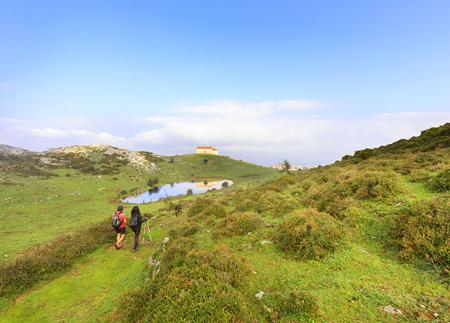
The route to the Rioseco Mining Village and the Texeo Mines, in the council of Riosa, is a fascinating journey that combines industrial heritage, prehistoric archaeology and spectacular natural surroundings.
This is a linear route that starts at Collada Arganosa, and can be divided into two distinct sections.
Section 1: From Collada Arganosa to the Mining Village of Rioseco
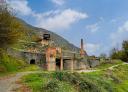
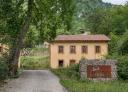
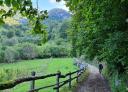
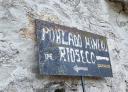
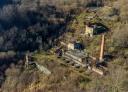
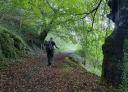
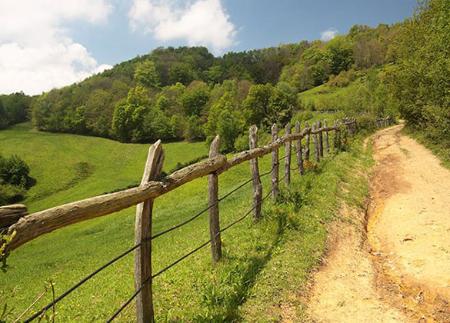
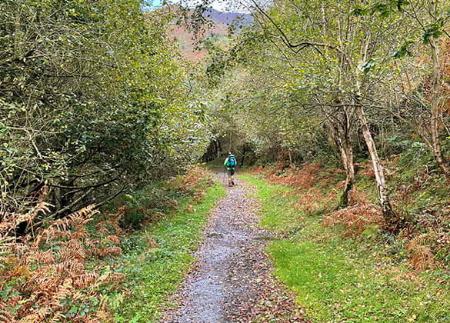
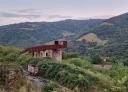
The path descends through Atlantic vegetation along a comfortable track, with views over the Riosa valley. After about 1.5 kilometres you reach the Rioseco Mining Settlement, a group of buildings constructed at the end of the 19th century by the English company The Aramo Copper Mines Ltd. The remains of the miners' dwellings, the commissary, the forge, a stable, and the Engineer's House, located in a higher place as a symbol of social hierarchy, are still preserved.
The complex offers a clear example of industrial paternalism, where the company provided not only employment, but also housing and basic services. At the back of the settlement are the remains of the ore processing plant, with structures such as hoppers, concentration tables, vats and a shaft leading to the haulage gallery that connected directly to the mines. In 1954, the first ammonia leaching plant in Europe was installed there, a technical milestone for the time.
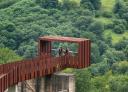
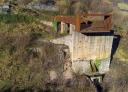
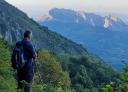
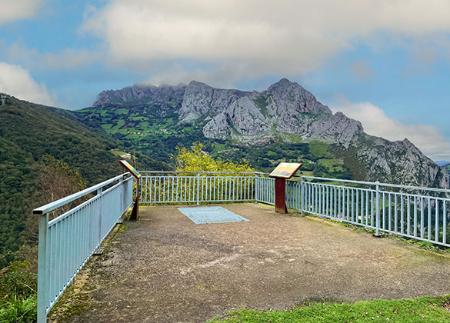
From the Texeo Viewpoint, built in 2015 over the old hoppers, there is a privileged panoramic view of the surroundings. Right next to it there is a recreational area with benches and tables, ideal for taking a break before starting the next stage.
Section 2: Ascent to the Texeo Mines
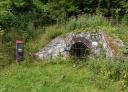
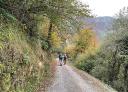
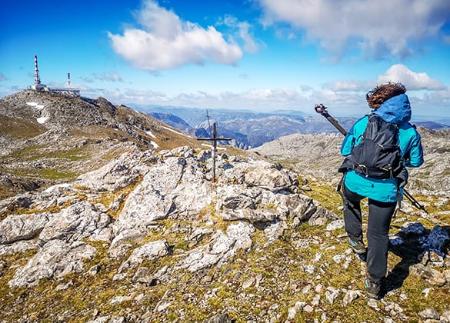
From the viewpoint, the old cobbled path dating back to 1892 starts, which climbs for about 3 km over 500 metres of unevenness until it reaches the different levels of the site. Along the way, you can see the remains of the inclined plane transport, old mine entrances and water tanks such as the Fuente Sayán, as well as an electricity transformation tower.
The highlight is the prehistoric site of the Texeo Mines, considered one of the oldest in Europe. Its age, estimated at over 4,500 years, and archaeological finds (such as antler and stone tools, human remains and ritual offerings to the mountain) show that copper and cobalt have been mined here since the Chalcolithic period. Visitors can see the supporting pillars carved into the rock and blue cobalt seams still visible in the walls. On a higher level, there is also the even older site of El Arrebolléu.
The descent is made along the same path, allowing you to observe the landscape from new perspectives. The route is not signposted, so it requires good physical fitness, orientation and caution, especially in the vicinity of the site.
Basic tips before going into the mountains
- If you go with a dog, always keep it on a leash.
- Avoid approaching livestock.
- If you find mastiffs protecting livestock, do not approach them, do not pet them and do not feed them. Do not allow them to follow you or stray from their herd. They are working.
- Don't leave a trail. Collect all your waste, including organic waste. Nature is not a dumping ground.
- Act with prudence. Plan your route well, take everything you need and make sure it is adapted to your physical capacity.
 More recommendations for planning your route