Archaeological Route through Cabruñana
- Cabruñana Western Asturias, Central Asturias
- Distance: 4.5 kms
- Difficulty: Easy
- Cumulative difference in altitude: +135 m
- Cumulative difference in altitude: --135 m
- Maximum altitude: 495 m
- Minimum altitude: 355 m
- IBP index: 27
- Modality: Families
- Type of route: Circular
- Route type: Mountain
- Return by Train: No
A simple route that links nature, history and spirituality through prehistoric burial mounds, sacred art and a well-preserved rural environment.
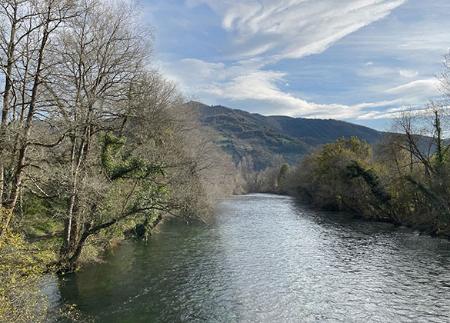
The Cabruñana Archaeological Route invites us to visit one of the enclaves with the greatest strategic and symbolic value in western Asturias. Located on the Cabruñana hill, this circular route passes through an area that was already chosen as a settlement in prehistoric times, due to its privileged location between the valleys of the Nalón and Narcea rivers. The ancient societies that inhabited this place left as a legacy two tomb necropolises, testimony of a human presence linked to the control of the territory, the natural defence of the environment and the use of its resources.
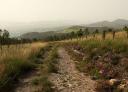
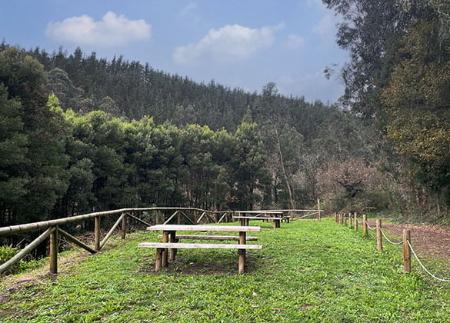
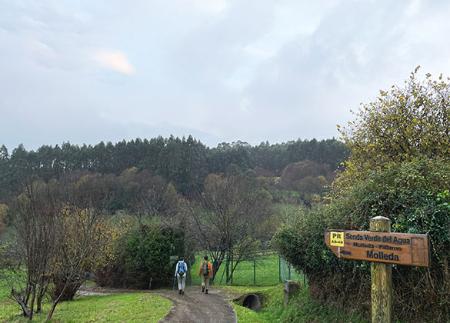
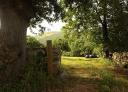
The route, signposted as PR-AS 127, begins next to the national road 634, at a halt where we can park the vehicle in one of the establishments in the area. The route follows a tarmac track to the Cabruñana recreational area, just over a kilometre away, immersed in a landscape that combines pastures and pine and eucalyptus plantations with oak and chestnut groves. This natural mosaic is the habitat of birds such as the woodpecker or the discreet nightjar, difficult to see but present in the thicket.
The first archaeological stop is the necropolis of La Cueña, made up of nine burial mounds with a concave profile, partially hidden by the vegetation. These structures date from the Neolithic and early Bronze Age, and offer silent testimony to ancestral rituals and customs. One hundred metres further on, a crossroads gives us the option of approaching Castiello'l Pedreo, on the right, or ascending to the left towards Llano las Ayalgas.
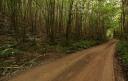
The path continues without major slopes and between the shadows of native trees, until you reach, almost at kilometre 2, the second large necropolis: the Llano las Ayalgas. Here we find four main tumuli that group together around twenty graves organised in small cemeteries. This is one of the most representative tombs in the council of Grado.
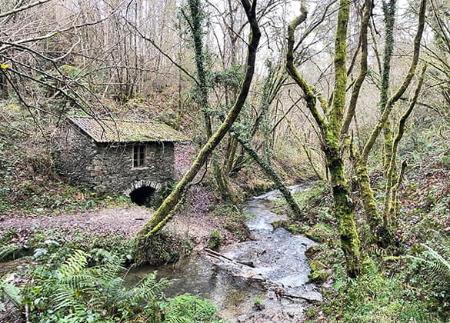
Further on, the path enters a mixed forest with splendid views of the Salas valley and the town of Cornellana, with its characteristic silhouette. At around kilometre 3.6 you cross an old washing place and, shortly afterwards, you cross the national road with caution to reach the last stage of the route: the cemetery of Cabruñana.
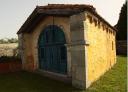
Here the remains of the parish church of Santa María Magdalena are preserved, of which the apse with mural paintings from the 16th and 17th centuries survive. Representations of the archangel St. Michael, the four evangelists, the apostles and the figure of Christ still decorate these walls, offering a symbolic closure to an itinerary that connects landscape, history and spirituality.
The return to the starting point brings an end to this simple but intense route, which combines archaeological value with the enjoyment of nature and the rural heritage of Asturias.
PR-AS 127B
Basic tips before going into the mountains
- If you go with a dog, always keep it on a leash.
- Avoid approaching livestock.
- If you find mastiffs protecting livestock, do not approach them, do not pet them and do not feed them. Do not allow them to follow you or stray from their herd. They are working.
- Don't leave a trail. Collect all your waste, including organic waste. Nature is not a dumping ground.
- Act with prudence. Plan your route well, take everything you need and make sure it is adapted to your physical capacity.
 More recommendations for planning your route