Tranqueru Greenway
- Perlora Central Asturias
- Distance: 10.4 kms
- Difficulty: Easy
- Cumulative difference in altitude: +296 m
- Cumulative difference in altitude: -296 m
- Maximum altitude: 118 m
- Minimum altitude: 6 m
- IBP index: 41
- Modality: Families
- Type of route: Circular
- Route type: Greenway
- Return by Train: No
A route with history, views of the Bay of Biscay and stops at beaches such as Carranques, Madrebona and El Tranqueru. Nature, industrial heritage and tourist memory are intertwined in this path that combines sea, landscape and railway past.
The route begins at the car park of the Ciudad de Vacaciones de Perlora, a unique tourist complex with a marked historical and symbolic character in the council of Carreño. Inaugurated in the 1950s under the impetus of Franco's Vertical Union, this space of almost 36 hectares was conceived as a place of rest for working families from all over Spain. Equipped with chalets, shops, sports facilities and green areas, it came to have 174 dwellings of different types, a chapel, library, open-air theatre and even a hotel: the 'Jacobo Campuzano' Residence. For more than five decades, it was a lively seaside resort. Although today it is in search of new uses, it is still a very popular place, not only because of the four beaches that surround the area, but also because of the recreational areas available for outdoor activities.
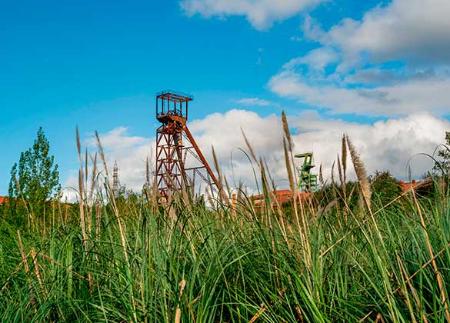
Part of this route follows the route of the old Carreño mining railway, built at the beginning of the 20th century to transport iron ore from the mines in the council to the port of Candás. The line was inaugurated in 1909, and shortly afterwards it also began to offer passenger services.
Popularly known as "El Carreño", this train was of great importance in local life for several decades, until the closure of the mines in the 1960s caused its decline and its definitive closure in 1974. Today, its legacy lives on through the so-called Vía Verde del Tranqueru, which follows part of its original route between tunnels, coves and cliffs. Although one of its sections is currently closed due to the risk of landslides, walking along this path is also a journey through the railway and mining history of the area.
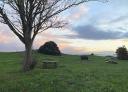
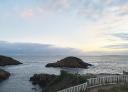
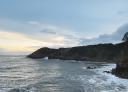
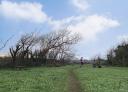
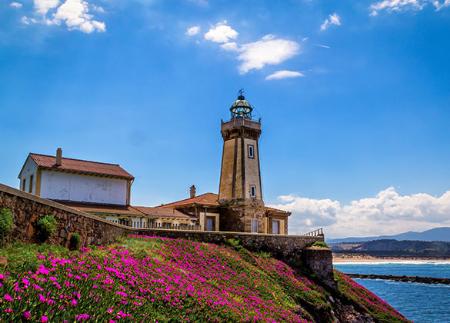
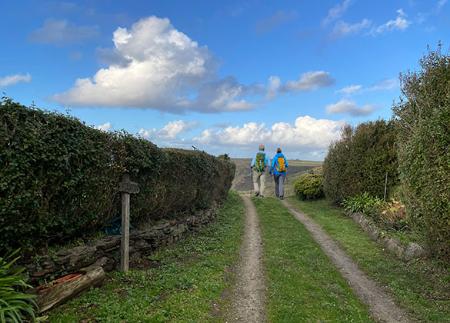
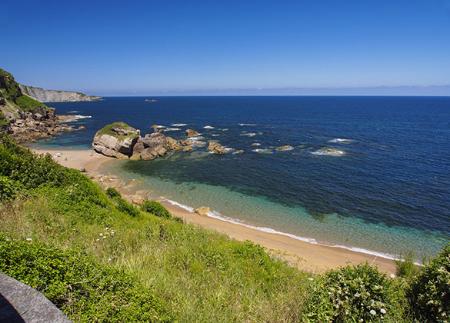
As soon as you start, you reach Huelgues beach, from where you can already make out the Candás lighthouse. From here, the path heads towards the coastline, skirting cliffs and small coves with continuous views of the Bay of Biscay. The route alternates sections between open meadows and wooded areas, advancing towards the Punta de Entrellusa, from where the small island of the same name can be seen.
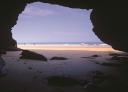
The route continues to the beaches of Carranques and Madrebona, two quiet stretches of sand where it is common to stop for a rest. After crossing a first tunnel excavated in the rock, the route momentarily leaves the coastline. There is a practical reason for this detour: the old path that used to continue along the sea, following the route of the mining railway, is currently cut off at El Tranqueru beach due to the instability of the terrain. To avoid this problematic point, take a detour to the left that allows you to gain height and reach the rural neighbourhood of Dormón.
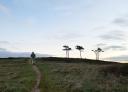
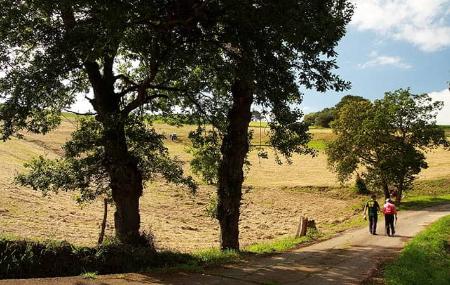
From here, the route skirts this small village in a moderate ascent along the slope of Monte Morís, without crowning it, and then descends towards the beach of El Tranqueru. This stretch, more protected by vegetation, contrasts with the greater exposure to the wind and sun of the rest of the route.
Once you reach the Coastal Path, the path turns right towards Xivares beach, which is wide and open and very popular with surfers. This point marks the end of the outward route.
On the way back, you retrace your steps to Madrebona beach. From there, you take an alternative detour through the interior of the Holiday Village, which gives you the opportunity to walk through the heart of the old residential complex, between landscaped streets and buildings that evoke its intense summer life of the past. Finally, you return to the starting point, thus completing an itinerary that combines nature, sea and historical memory.
- This route partially coincides with the GR-204.
Basic tips before going into the mountains
- If you go with a dog, always keep it on a leash.
- Avoid approaching livestock.
- If you find mastiffs protecting livestock, do not approach them, do not pet them and do not feed them. Do not allow them to follow you or stray from their herd. They are working.
- Don't leave a trail. Collect all your waste, including organic waste. Nature is not a dumping ground.
- Act with prudence. Plan your route well, take everything you need and make sure it is adapted to your physical capacity.
 More recommendations for planning your route