Verdicio - Nieva
- Verdicio, Nieva Central Asturias
- Distance: 12.5 kms
- Difficulty: Easy
- Cumulative difference in altitude: +233 m
- Cumulative difference in altitude: -209 m
- Maximum altitude: 82 m
- Minimum altitude: 4 m
- IBP index: 41
- Modality: Hikers
- Type of route: Crossing
- Route type: Coast
- Return by Train: No
Along the route you will discover enclaves such as the Molín del Puerto, the old Ensidesa cable car or the Xagó dune system. The San Juan lighthouse, witness to the defensive past of the coast, puts the finishing touch to this route full of contrasts.
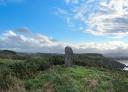
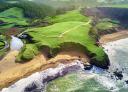
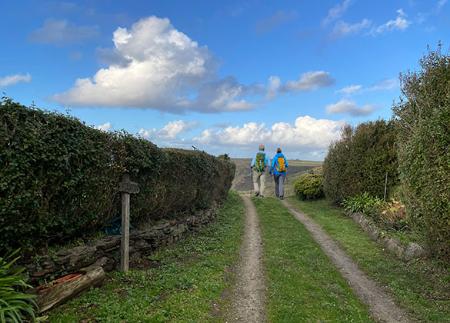
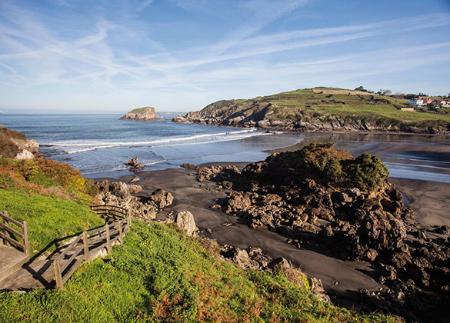
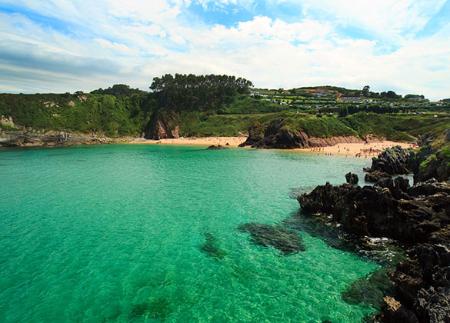
The coastal route from Verdicio to Nieva covers one of the most spectacular and varied stretches of the central Asturian coastline, combining natural landscapes, industrial history and cultural heritage. The route begins at Verdicio beach, delimited by a dune system and the riverbed, which mark the start of a path that climbs towards the beaches of La Carniciega and Aguilera. At this point, the route crosses stretches where archaeological remains stand out, such as the Los Garabetales hill fort, still recognisable by its defensive moat, and from where you can enjoy panoramic views of the imposing Cabo Peñas.
The route continues towards the picturesque Molín del Puerto (Puerto Llampero) and climbs up to the Portazuelos viewpoint, passing by the dark sandy beaches of Riba Pachón. A singular landmark on the route is the old Cabo Negro cable car, a concrete structure that formed part of the Ensidesa slag transport system, built in 1962 to dump industrial waste directly into the sea.
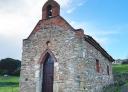
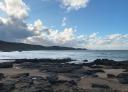
From Cabo Negro, an enclave appreciated today by boulder-climbing enthusiasts, the route heads towards Xagó beach, an extensive sandy strip surrounded by a remarkable dune system and a wetland frequented by waders. The route crosses this beach and passes near the 17th century chapel of San Juan before ascending to the Nieva peninsula.
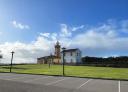
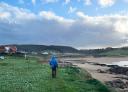
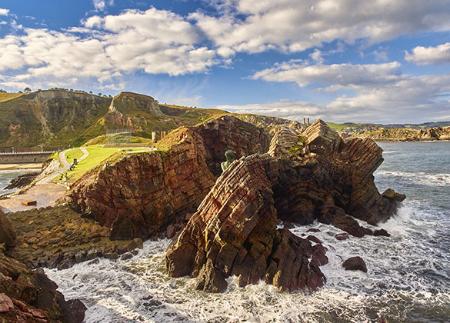
The last part of the route runs through coastal meadows and scrubland until it reaches the viewpoint of the bufones de Nieva, where, if the sea permits, the water gushes out between the rocky crevices like a natural geyser. The path ends in the area around the Avilés or San Juan lighthouse, whose pyramid-shaped tower, in operation since 1863, watches over the mouth of the estuary. At this same point there was an old defensive fortification linked to the castle of Gauzón, from which the maritime entrance to Avilés was protected.
This itinerary, with its rich landscape and heritage, offers a diverse experience between cliffs, beaches, industrial history and coastal biodiversity, ideal for those seeking to discover the essence of the Asturian coastline far from the busiest routes.
- It runs partially through the Cabo de Peñas Protected Landscape and through the Cabo Busto-Luanco SAC and SPA of the Natura 2000 Network.
- The route partially coincides with the PR-AS 025 and GR-204.
Basic tips before going into the mountains
- If you go with a dog, always keep it on a leash.
- Avoid approaching livestock.
- If you find mastiffs protecting livestock, do not approach them, do not pet them and do not feed them. Do not allow them to follow you or stray from their herd. They are working.
- Don't leave a trail. Collect all your waste, including organic waste. Nature is not a dumping ground.
- Act with prudence. Plan your route well, take everything you need and make sure it is adapted to your physical capacity.
 More recommendations for planning your route