Agüeira River Route
- Francos, Pezós/Pesoz Western Asturias
- Distance: 8.12 kms
- Difficulty: Moderate
- Cumulative difference in altitude: +543 m
- Cumulative difference in altitude: -543 m
- Maximum altitude: 322 m
- Minimum altitude: 140 m
- IBP index: 53
- Modality: Hikers
- Type of route: Circular
- Route type: Mountain
- Return by Train: No
A route that combines nature, history and traditional architecture in western Asturias.
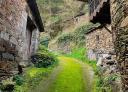
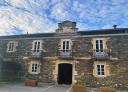
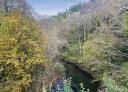
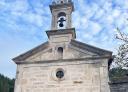
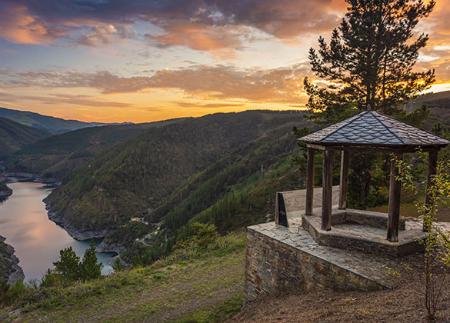
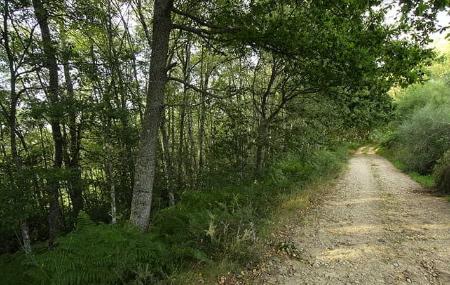
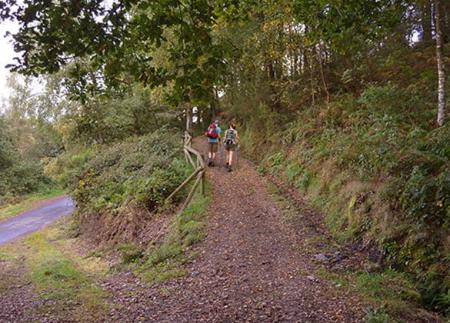
The Agüeira River Route begins in the small village of Pezós/Pesoz, where it is worth visiting the parish church of Santiago, of Romanesque origin, as well as the tower of Pesoz and the Palacio de los Ron, which dominate the valley. From here, the path descends towards the river Agüeira, entering a leafy chestnut wood that accompanies the route with the murmur of the water and the shade of the trees.
The first part of the route follows the river bank until crossing it, at which point the path ascends towards the hamlet of Sequeiros, where some traditional structures can still be seen. From this point, the path takes a detour to the left and descends to the river Ahío, where a wooden footbridge allows you to cross the riverbed next to the remains of the Sequeiros mill, an enclave that reflects the historical relationship between man and the use of the river.
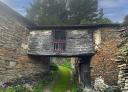
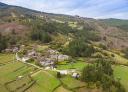
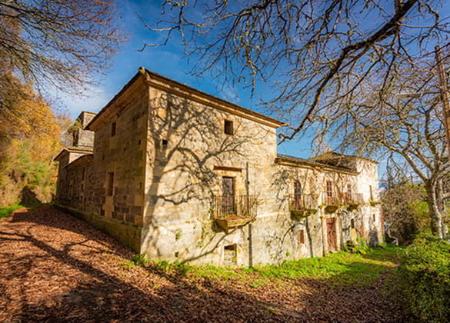
The route continues uphill through pine and chestnut groves until it reaches Argul, a village declared an Asset of Cultural Interest in 2004 due to its unique architecture. The houses in Argul were built on a natural rocky outcrop that allowed the construction of large houses without the need for foundations, but the slope of the hillside made it necessary to create corridors and tunnels to connect the houses without going outside. The use of local materials such as slate, wood and clay characterised the constructions. In addition, the houses were organised around a central courtyard with dovecotes and hórreos (granaries). Famous is the House of Vilar, with a tunnel almost 20 metres long, as well as the House of Juan Alonso Villabrille y Ron, a sculptor at the court of Felipe V. The Chapel of San Antonio, with its Baroque altarpiece adapted to the reduced interior space, completes the architectural ensemble.
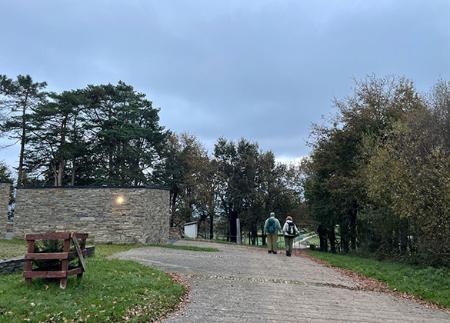
After exploring Argul, the route descends towards the river Agüeira, following an asphalted road that connects with the Argul bridge, a stone construction that marks the return to Pesoz. The last part of the route climbs back up to the starting point, closing a route that unites nature, traditional architecture and the historical legacy of one of the most unique villages in western Asturias.
This route, circular and of moderate difficulty, offers a unique experience for those who wish to discover the river landscape and the cultural heritage of the council of Pesoz.
- It runs partially through the Cuenca del Agüeira SAC of the Natura 2000 Network.
- PR-AS 117
Basic tips before heading out into the mountains
- If you’re taking a dog with you , always keep it on a lead.
- Avoid approaching livestock.
- If you come across mastiffs guarding livestock, do not approach them, stroke them or feed them. Do not allow them to follow you or stray from their herd. They are working.
- Leave no trace. Pick up all your rubbish, including organic waste. Nature is not a rubbish tip.
- Be sensible. Plan your route carefully, take everything you need and make sure it’s suitable for your fitness level.
 Further recommendations for planning your route
- Please note: The route description is for guidance only and reflects the conditions of the route at the time of writing. The condition of the paths, their accessibility and signposting may vary over time due to natural causes, maintenance work, access restrictions or other circumstances. Before setting off, it is advisable to check the current conditions of the route, consult the weather forecast and assess whether it is suitable for each person’s experience and physical fitness.