


10 Fairytale Villages in Asturias
Many towns and villages in Asturias are straight out of a fairy tale. Today we’ll take you on a tour of a brief and varied selection that’s sure to spark your inspiration.
There are many towns and villages in Asturias that seem straight out of a fairy tale; so many, in fact, that they could inspire – and indeed do inspire – fantastic stories that blend reality and dreams to perfection. Perched on a hill, at the bottom of a valley, beside a river or a reservoir, with views of both the sea and the mountains at the same time, right at the foot of towering peaks, dotted with dozens of hórreos and paneras, or bathed by the intense, rolling waves of the Cantabrian Sea…
These are the villages that shape and define that inspirational Asturias, the very one that invites us to savour fully the sensations of the landscape and its people, the one that makes us a little bit artistic and a little bit bohemian, the one that turns us into explorers of time and space.
Today we’re taking you on a tour of a brief but varied selection of 10 fairytale villages in Asturias! Be inspired and dream!
Tañes: The Secrets of Water
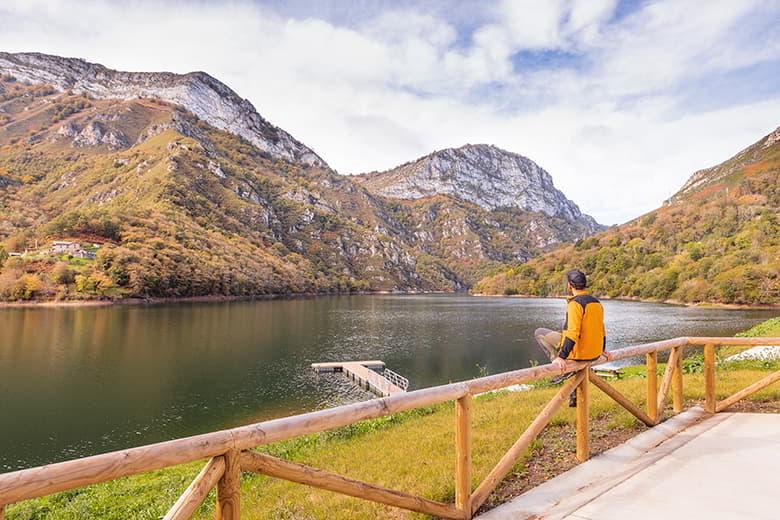
Once upon a time, there was a village that adapted its appearance and way of life to a reservoir, without losing a jot of its original essence and beauty. Once upon a time, there was a village that gave its name to a reservoir, and the reservoir provided water and life to the whole of central Asturias. A village that retains all its charm intact is called Tañes, and it lies within the Redes Natural Park.
Tañes is in the municipality of Caso, in the central-eastern part of Asturias, and forms part of the Redes Biosphere Reserve. Its natural habitat is complemented by the serenity of its surroundings and the warmth of its people.
Wildlife, cheeses, native flora, the power of its reservoir and the murmur of the River Nalón make Tañes a place of legend and fairy tales, and, as one would expect in this magical corner, its collegiate church of Santa María la Real stands on the outskirts of the village, as if perched above the reservoir, its slender silhouette in all its Renaissance beauty reflected in waters that mirror all the greenery of Tañes.
Viḷḷar, coal in its bowels
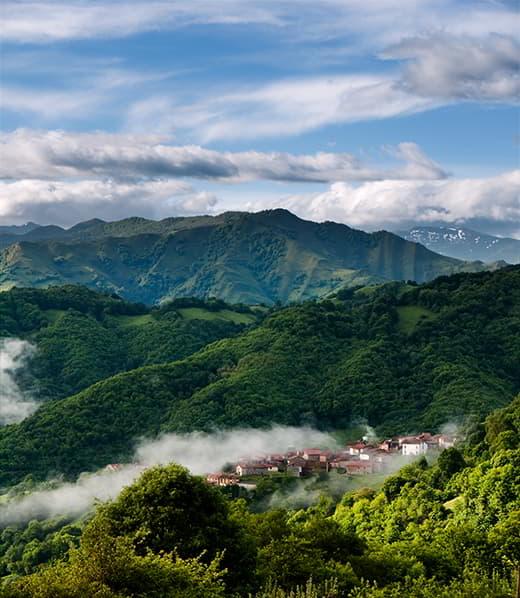
Sometimes stories in Asturias are written in black and green – the colours of coal and the forests – and indeed there are fairytale villages in the mining heart of the Central Mountains of Asturias. One example is Viḷḷar, in the municipality of Mieres.
Surrounded by mountains, this authentic village, where rural life seems to have stood still, boasts a setting of great scenic and geological value, and in the surrounding area you can follow trails to explore former coal and mercury mines.
Furthermore, the surrounding hills offer exceptional views over the Sierra del Aramo, the Las Ubiñas-La Mesa Natural Park, the Pajares area and the Cordal de La Carisa, part of the Redes Natural Park, and also – on very clear days – part of the Picos de Europa National Park.
Banduxu, the sleeping village
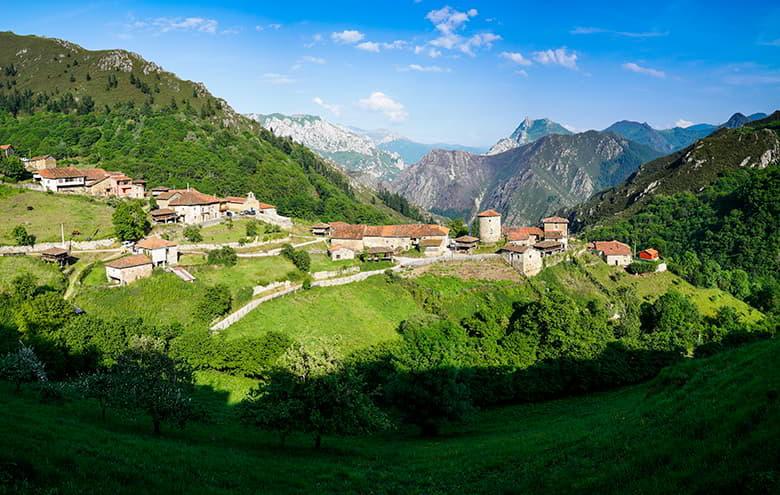
Nestled amongst valleys and mountains, in the heart of Asturias and almost as if by magic, the Middle Ages come to life in the village of Banduxu, one of the best-preserved medieval settlements in the entire Asturian countryside.
A wealth of history and countless travellers have gazed upon its stones and walls, its Torre de Tuñón and the church of Santa María. Centuries of ceaseless activity, and then suddenly silence, eternal tranquillity and total peace.
Banduxu, in Proaza, seems today as though it were slumbering in a never-ending medieval dream. And that feeling will wash over you completely when you reach the village and gaze at it from near or far. Set against a vast green backdrop, this village—unique in Asturias—displays its historical legacy amidst total tranquillity.
Pumares, water, slate and stone
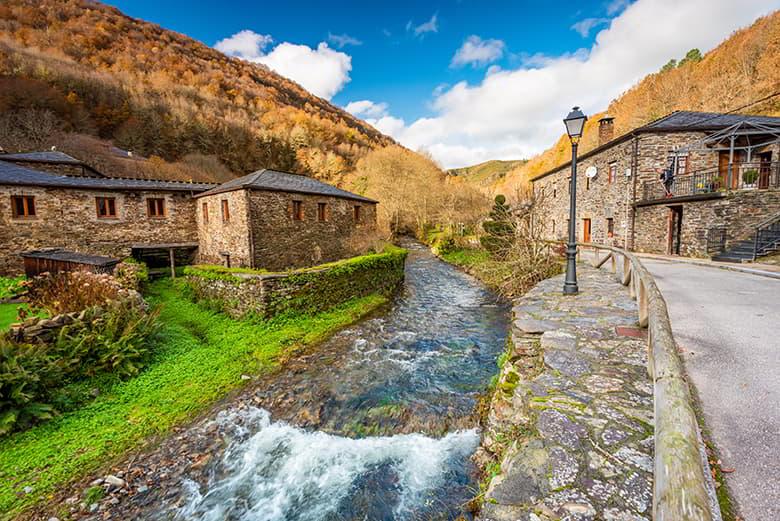
Amidst the land of water-powered mills, fire and iron, the greenest paths and Asturias’ highest waterfall, the village of Pumares will suddenly appear before you, as if plucked from a fantastical setting, in Santa Eulalia de Oscos, one of the municipalities that make up Los Oscos.
Pumares is like a dream carved in stone, black slate and water. It is a spot where the river murmurs sweetly, and where you’ll set off on the path to the famous and mighty Seimeira Waterfall.
You’ll discover the land of blacksmiths and forests, of mills, hammers and fulling mills, of iron craftsmen, amidst a peaceful, multicoloured natural landscape.
Tuña, the ever-present spirit of General Riego
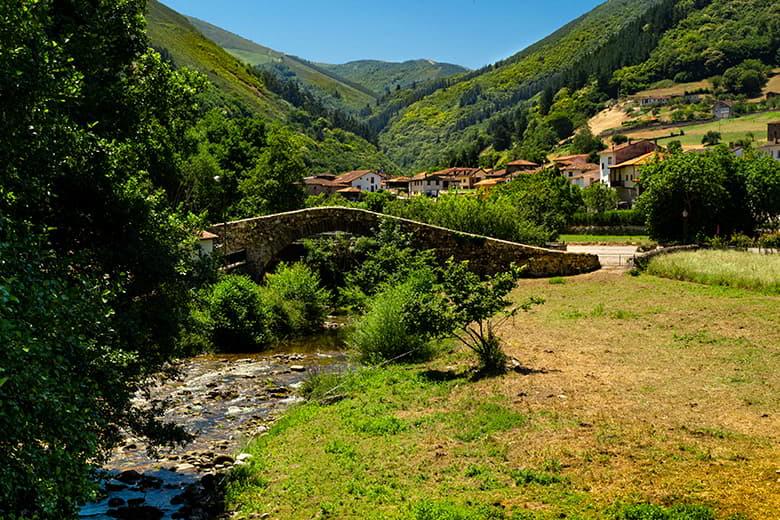
Once upon a time, there was a village in Tineo through which all the gold from western Asturias passed; the Romans had extracted it from the depths of Asturias to sustain one of the greatest empires the ancient world had ever known.
Once upon a time, there was a village in Tineo that gave humanity and history resolute champions of social freedoms, such as General Riego.
Everything in Tuña today seems imbued with the spirit of Riego, and you can still see the house where he was born, as well as a bust and a few murals honouring his memory.
Tuña will take you back in time, with its Roman bridge and its palaces, its tranquillity and its friendly people.
Porto/Viavélez: a pleasant cruise from a Cantabrian port
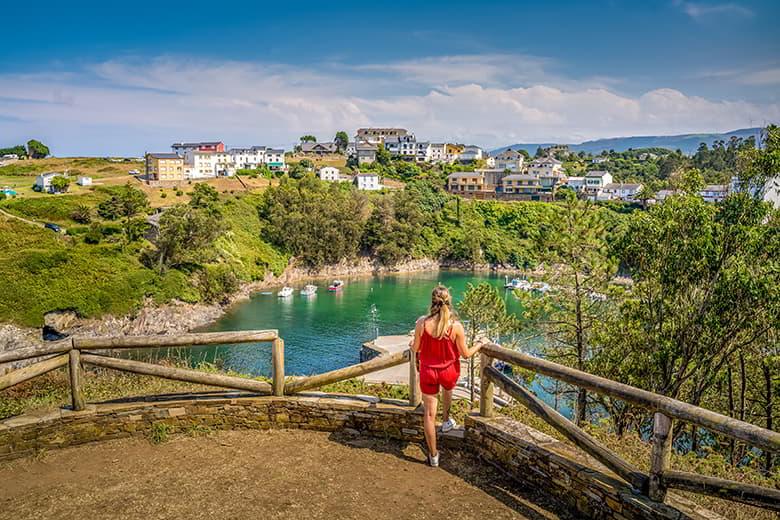
Wind and sea spray, waves and foam, a breakwater and a lighthouse, a small harbour that truly looks like something out of a fairy tale. This is El Porto/Viavélez, one of the most secluded and surprising spots on the western coast of Asturias, situated in the municipality of El Franco.
A haven for fishermen and sailors, for those passionate about the sea, for writers and artists, for lovers of fine seafood cuisine, for walkers and travellers, and for pilgrims, El Porto/Viavélez is a true gift of nature.
Whether the sea is calm or rough, the scenery at El Porto/Viavélez is a real spectacle.
Riodeporcos, far from the madding crowd
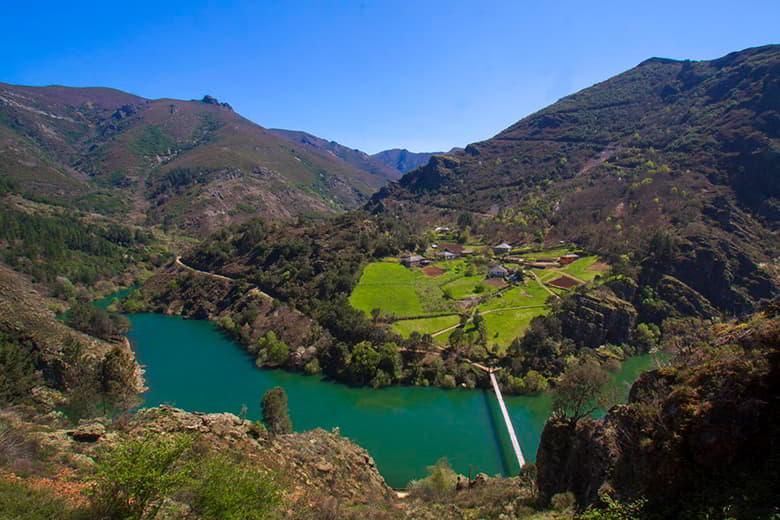
What an enormous privilege it is to arrive in Riodeporcos! Right where the River Navia forms a sort of meander and its surface glistens in the sun, Riodeporcos emerges, as if it were a divine creation.
The footbridge linking this village in Ibias to the rest of the world offers a somewhat old-fashioned and romantic way of reaching the hamlet – which, take note, you won’t be able to reach by car.
Far from the hustle and bustle and nestled in nature, in Riodeporcos any stress will seem like an urban legend.
Espinaréu, searching for the key to the granary
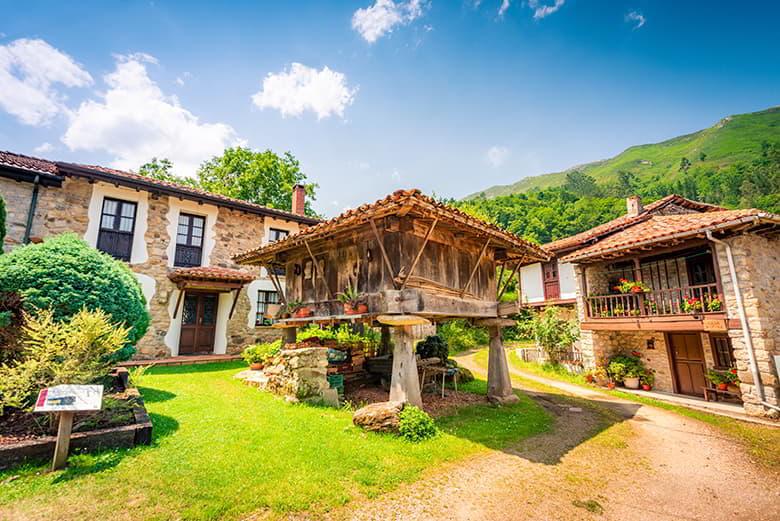
Can you imagine a place that’s a veritable kingdom of hórreos? That place isn’t just in your imagination – it really does exist. It’s in Asturias, in a hamlet called Espinaréu, in Piloña.
Arriving in Espinaréu will impress you not only because of the abundance of hórreos and paneras, but also because they look so splendid and have survived to this day whilst retaining their traditional uses, which are closely linked to the world of harvests and, therefore, to human survival.
Espinaréu is a cosy hamlet, criss-crossed by the waters of the river of the same name, where the hórreos take on a life of their own with their varied decorations and carvings, some of which are polychromatic. It is like travelling to an ethnographic paradise where the mark of time is both intense and extensive.
Bulnes: when the Picos de Europa come into your arms
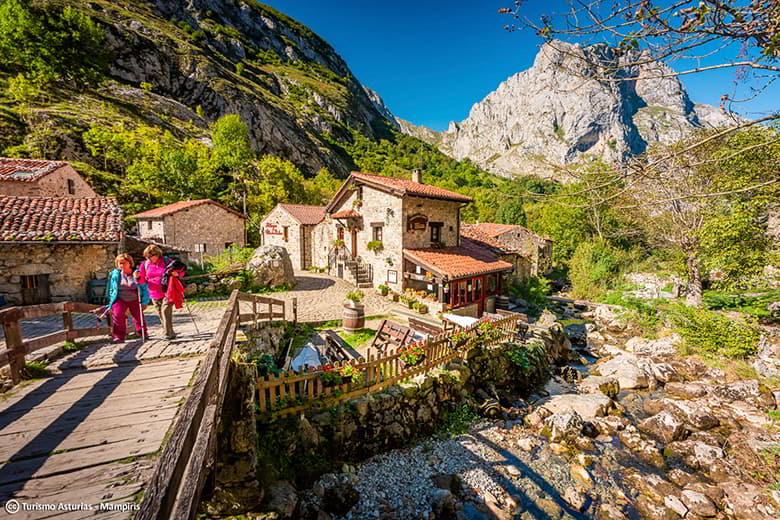
To reach it, you’ll have to take a high-mountain trail, or, if you prefer, a rack railway. When you alight at an altitude of a thousand metres, amidst peaks that literally embrace you, the sense of wonder is immense and you feel as though you’ve crossed a frontier.
The frontier that thousands of mountaineers and climbers have crossed over more than a century of exploration, adventure and hard work. The frontier that hundreds of inhabitants of the Picos de Europa have crossed all their lives in a supreme struggle for survival in the wild.
This is Bulnes, in the heart of the Central Massif of the Picos de Europa, in the municipality of Cabrales. There you will discover an idyllic landscape, a unique cheese such as Cabrales, an upper village with panoramic views, and a way of life that is fading away – the harshness of which in the past is vividly borne out by the austere cemetery (formerly roofed) at the entrance to the village…
Gobiendes, the best viewpoint for sea and mountain views from the Pre-Romanesque period
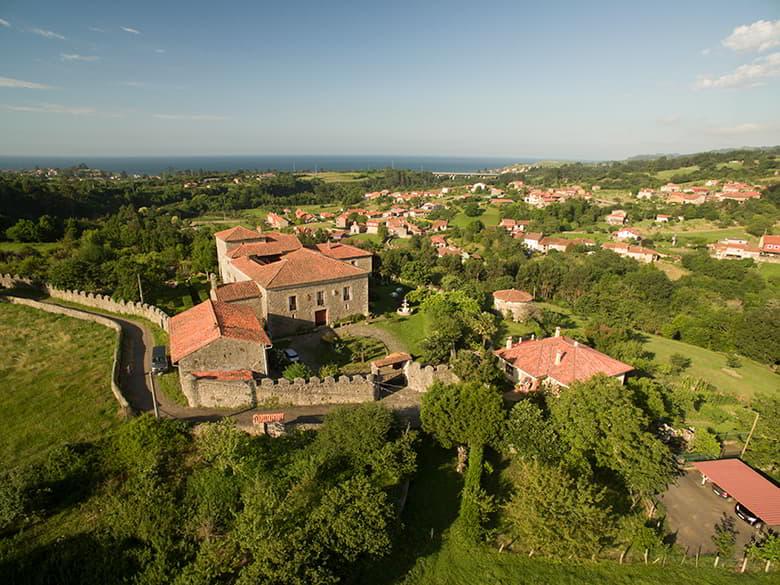
And what about gazing out to sea from a pre-Romanesque church? Gobiendes offers you that very experience from its pre-Romanesque Church of Santiago. Perched on a headland overlooking the coast, Gobiendes looks out onto the Cantabrian Sea on one side and Mount Sueve on the other – the first mountain sailors see as they approach the Asturian coast.
With its town hall and well-maintained houses, Gobiendes, in the municipality of Colunga, is a haven of peace, where you’ll feel the sea breeze and the mountain wind in a unique combination.
What’s more, you’ll be right on the Coastal Way of St James, the oldest route leading to the Cathedral of El Salvador!


