


10 Fairytale Villages in Asturias – Part III
Asturias is a fantastic region, with countless incredible places. Here are 10 picture-perfect villages you’ll never forget.
Asturias is a fairytale land, and as such, it boasts countless incredible places and villages, as if plucked from a fantasy tale. Some lie at the foot of the mountains, amidst ancient forests, on the very banks of historic rivers, along the coast with splendid panoramic views, and some are even unmissable stops on nature and cultural trails.
These are places that speak to us, authentic fairytale villages that have given rise to so many stories, leaving us feeling as though we’re floating in the limbo of the imagination.
Landscapes designed for silence and bustle, for joy and melancholy, for exercise and rest, for sleep and wakefulness. Dreamlike and unique settings that make us feel like the protagonists of an undeniable narrative: to be immensely happy at our destination.
So, to help you explore these paths of dreams and hopes, we suggest you follow Part III of ‘10 Fairytale Villages in Asturias’ closely!
Peñerúes: a keep and a reservoir
Peñerúes, in Morcín, is home to one of the most distinctive and famous towers in the whole of medieval Asturias. Although it now lies in ruins, its silhouette – weathered by the passage of time and the vicissitudes of history, and silhouetted against the sky atop a hill – takes on a special power and character.
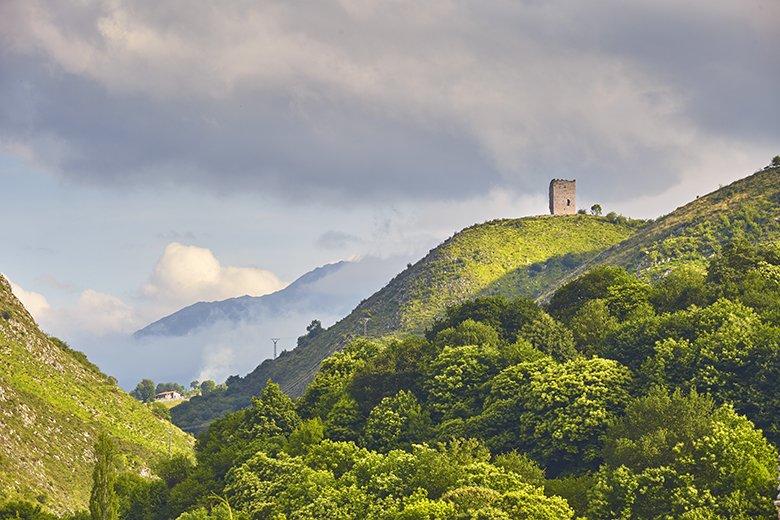
Without a doubt, the Peñerúes keep adds significant historical and scenic value to this village, which has witnessed the passage of time from the serenity afforded by its unstoppable spiral. Of Roman origin, it was renovated during the High Middle Ages by King Ordoño I. Be that as it may, today the keep reminds us of where we come from and stands as a stone testament to the resilience of a people.
Furthermore, Peñerúes stands proudly overlooking the Alfilorios reservoir, one of the most notable in central Asturias, which supplies water to the Asturian capital, Oviedo/Uviéu, and its surrounding areas. Near the reservoir, there is a viewpoint from which one can see Monsacro, a mountain closely linked to the history of the Kingdom of Asturias and of Christianity.
So Peñerúes exudes history and tranquillity from every angle.
Aballe, on the banks of a legendary river
Aballe lies on a gentle plain on the banks of the River Sella. Very close to the town of Cangues D’Onís/Cangas de Onís, and part of the municipality of Parres, this village proudly bears the title of ‘Exemplary Village’ awarded by the municipality in 2013.
And indeed, Aballe is the very embodiment of tranquillity. With its houses adorned with flowers, and its streets lined with hórreos and granaries, Aballe is a haven of peace, enhanced, if that is possible, by the murmur of the Sella, which flows quietly and slowly along its banks.
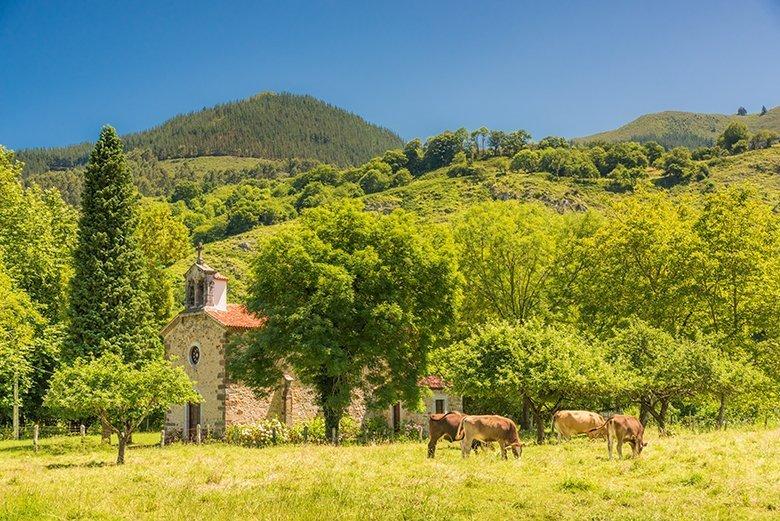
The Caleya cattle bellow to their heart’s content, happy amidst the lush greenery, and the cows do the same. And amidst all this rural scenery, the church of Aballe stands, humble yet imposing, serving as the gateway to a small, exquisite river beach carved out by the River Sella as it flows through the village.
Veneros, the realm of wood
If you were to dream of a kingdom of wood, it would probably be the municipality of Caso, which, together with Sobrescobio, forms the Redes Natural Park.
Caso’s history – both in terms of its people and its landscape – is closely linked to the creation of timber-based industries, and one example suffices to illustrate this: the village of Veneros, where the Timber Museum is located.
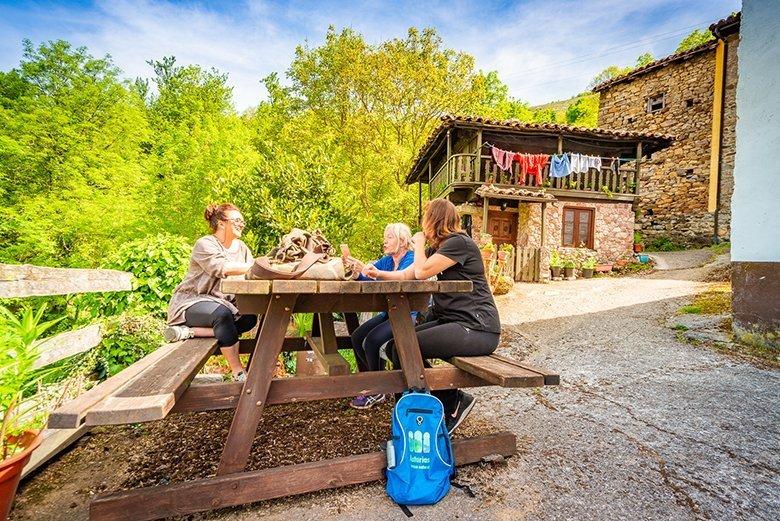
A leisurely stroll through Veneros reveals hórreos and paneras, places to sit back, relax and chat, whilst taking in the lush landscape shaped by Asturias’ longest and most abundant river: the Nalón, which flows close to this village.
Veneros is a hamlet where craftwork has been a way of life for generations. As the birthplace of wooden-shoe makers, the village’s own museum preserves the memory of this craft, which was once a constant feature of daily life.
Niembru, at the foot of a wonderful estuary
The village of Niembru, in the municipality of Llanes, offers one of the most admired and photographed views of all the Asturian landscapes: that of its church and cemetery, at the foot of its estuary.
Indeed, the estuary and harbour of Niembru form one of the most beautiful and striking inlets on the entire Cantabrian coast. At low tide, it becomes a vast sandy beach, and at high tide, a veritable saltwater pool, ideal for all kinds of water sports.
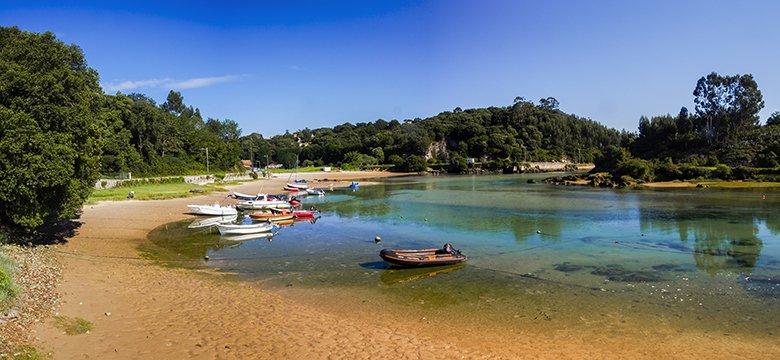
Meanwhile, the village of Niembru winds its way down the hillside, offering a contemplative view of a landscape that you will never tire of.
The reflection on the water of the harmonious ensemble formed by the church and the cemetery takes on a lyrical quality, thanks to its serene visual appeal.
Lliberdón: the village and the bagpiper
Lliberdón is a village in the municipality of Colunga, famous throughout the world for the story of the bagpiper who carried his wife’s village’s name halfway around the world.
The renowned musician, Ramón García Tuero, a native of Villaviciosa, became forever linked to Lliberdón when he married María Carabela. It is here that there is an Interpretation Centre dedicated to his story, as he was one of the most prominent figures in Asturian music of the late 19th and early 20th centuries, who took the traditions and culture of his homeland all over the world, performing before the most distinguished figures of his time.
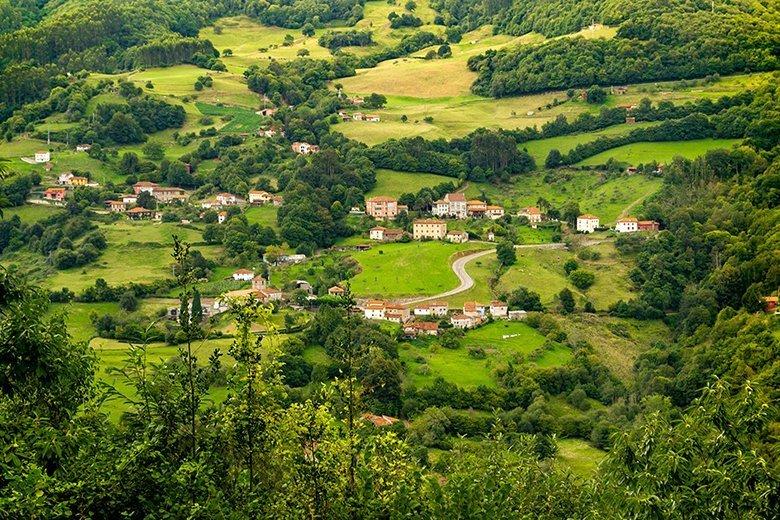
What’s more, a stop in Lliberdón will reveal stately homes and ‘indianas’, traditional taverns steeped in history, tales of the mines and the mountains, and a church square that is a real beauty. And of course, if you visit in August, you mustn’t miss the San Roque festivities, which feature a parade of decorated local carts – a spectacle unique to Asturias.
Navelgas: the Mecca of gold panning
There is a village in the vast municipality of Tineo called Navelgas, which is now one of the world’s leading centres for gold panning (the extraction of gold from a stream using a pan).
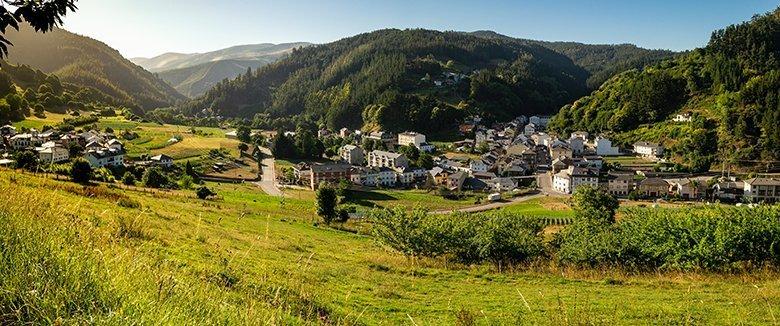
Navelgas’s connection with gold dates back to the Roman Empire, which extracted large quantities of this precious metal from western Asturias.
Navelgas preserves all the memories of that fascinating era; not only is it the gateway to the Gold Route, but it also boasts a charming museum – right by the river – dedicated to this intriguing history, where gold panning activities are also held.
Every summer, this village becomes the capital of gold panning. But Navelgas is well worth a visit at any time of year, thanks to its lively atmosphere and because its historic quarter is a living testament to what the villages of western Asturias were like centuries ago.
Coya, the birthplace of Spanish canoeing
This village in the municipality of Piloña is a place you will find particularly peaceful and idyllic. Coya seems to have been made for relaxation and rest. So it is no coincidence that it has always been, and continues to be, a village teeming with holidaymakers during the summer season.
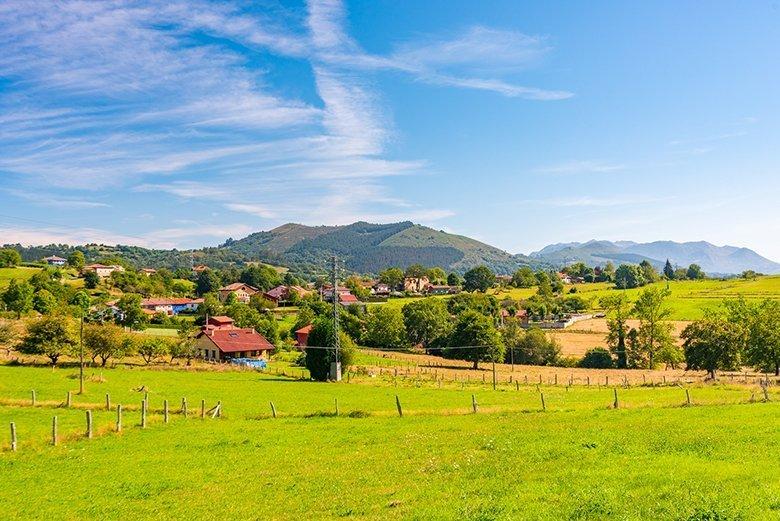
Influenced by the River Piloña, which flows through the area and forms some of its most iconic pools here – such as the Rabión – Coya is a popular destination for canoeing, and this is no coincidence either.
Dionisio de la Huerta, the founder of the International Sella Descent or Canoe Festival, spent every summer of his childhood and youth here, and it was here that he found the inspiration to undertake the first canoe descents of the Piloña and the Sella.
Today, you can admire from the outside what was once Dionisio de la Huerta’s family home, La Huertona, built in the ‘indiana’ style, like others in the village.
The parish church is also a very pleasant spot, with its views and centuries-old trees.
San Cristobo, with silence as its banner
A few kilometres from Villanueva de Oscos lies the hamlet of San Cristobo. It looks as though it has been plucked straight from an old photograph. It is as if the passage of time had come to a standstill, and everything in San Cristobo exudes an air of a bygone era, like a film set crafted with care and great attention to detail.
Perched on a hill, San Cristobo – which forms part of the Ruta del Silencio – offers a magnificent view over a valley covered in dense native woodland. A forest where, as you venture deeper, you come across small rivers, waterfalls and cascades, as if it were the home of a family of xanas, goblins, busgosos and nuberos.
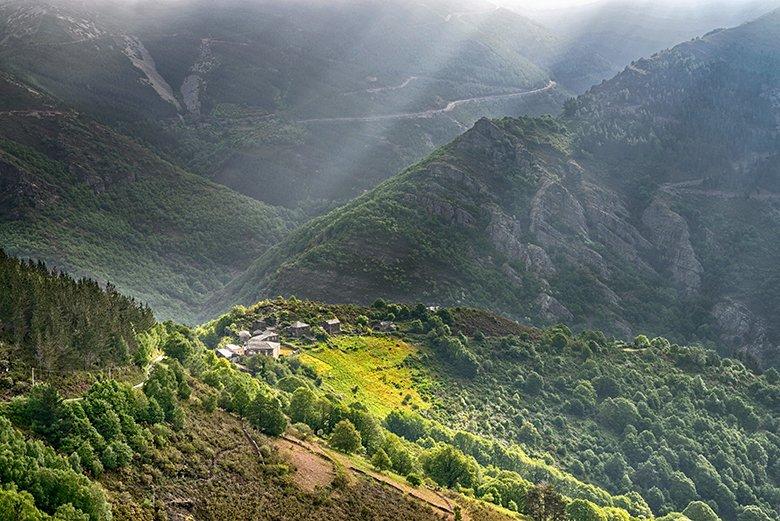
In San Cristobo, everything is stillness and silence; it is a kind of metaphor for oblivion carved in stone and black slate… Only you can break that silence with your presence and your enthusiasm for such a unique place…
Serandías, in the shadow of the River Navia
The village of Serandías, in the municipality of Boal, is like a vast balcony overlooking the River Navia, from which it constantly draws its inspiration. It is therefore no surprise that this village in Boal has been a pioneer in the development of active river tourism in western Asturias, thanks to the canoeing trips and adventures along this iconic river.
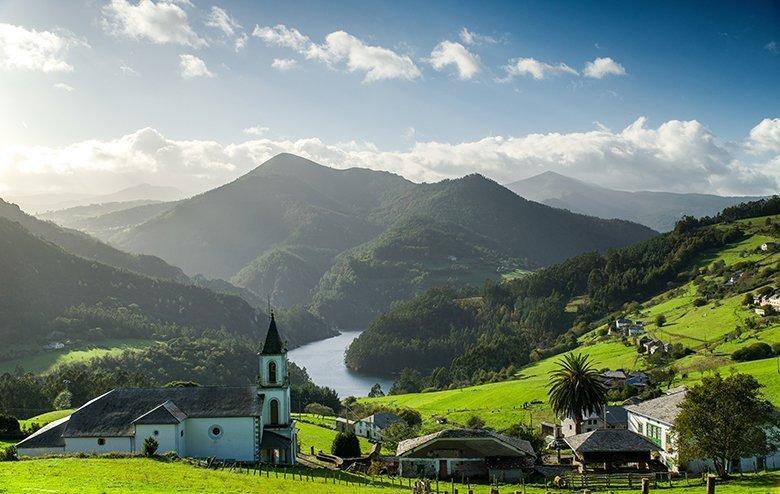
Serandías is one of those places that captivates you not only with its tranquillity but also with its authenticity. Traditional houses with their black slate roofs, meadows, livestock, and the imposing church tower silhouetted against the winding Navia River and its banks on sunny afternoons will give you a sense of the essence of western Asturias.
That’s Serandías: a blend of riverside and mountain village in the heart of the Tierras del Navia-Porcía.
Mual, the gateway to Muniellos
Mual, in Cangas del Narcea, stretches along a narrow, lush valley, surrounded by forests that seem to go on forever. The panoramic view of this unique village is particularly striking from Pico La Chalga or from the Montecín viewpoint, two strategic vantage points from which you can also follow the route of the famous “Puerta de Muniellos” mountain race, which has been held there for over five years and has put this village and its local community on the map in terms of nature, culture and sport.
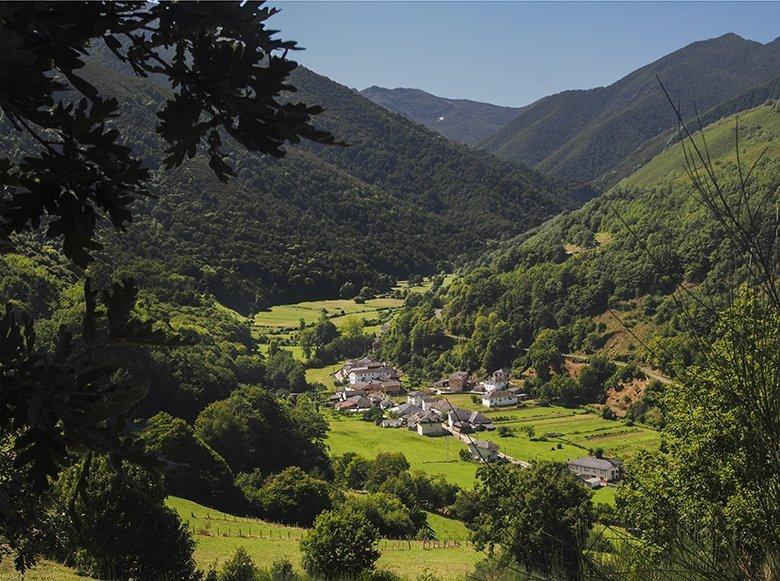
It is no surprise, then, that Mual was named ‘Exemplary Village of Asturias’ in 2018, for embodying the values of community spirit and respect for nature that make it worthy of such an award.
In Mual, it is not only the people who are welcoming, but the surroundings too: the path leading to the Muniellos forest and its visitor centre, the river and its pools perfect for a swim, or the imposing ‘cortinos’ built to protect the bees’ hives from the sweet-toothed bears…
In short, everything in Mual invites you to immerse yourself peacefully in untamed nature.


