Gold Trail
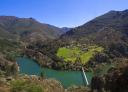
- San Antolin de Ibias, Cecos Western Asturias
- Distance: 8.14 kms
- Difficulty: Moderate
- Cumulative difference in altitude: +383 m
- Cumulative difference in altitude: -383 m
- Maximum altitude: 595 m
- Minimum altitude: 262 m
- IBP index: 57
- Modality: Hikers
- Type of route: Circular
- Route type: Mountain
- Return by Train: No
Nature, memory and rural beauty merge in this serene route that begins and ends in San Antolín de Ibias.
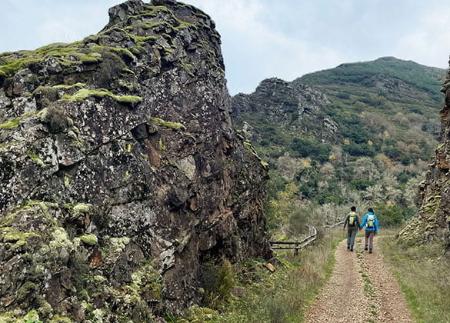
The Gold Trail runs through some of the most representative landscapes of the Ibias valley, combining nature, archaeology and traditional culture. Its name is no coincidence: it was the Romans, in their tireless search for gold in the northwest territories of the peninsula, who transformed the relief of this area, leaving as a legacy ancient mining clearings that today we can discover walking along this peaceful itinerary.
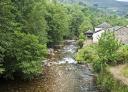
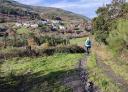
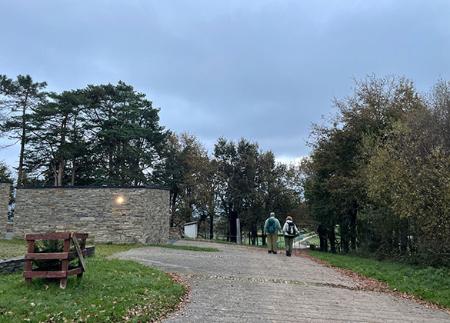
The route begins in San Antolín de Ibias, next to the church of Santa María, very close to the Palloza Interpretation Centre. From here, a path crosses the Ibias river over a bridge and runs parallel to its course in the first sections, between meadows, heathlands and vineyards that reveal the agricultural use of the slopes. In the area of El Trigal, we can see the old vineyard terraces that tell us about the traditional cultivation of steep terrain, today used in part for the production of Tierra de Cangas wine, shared with the neighbouring municipality of Allande.
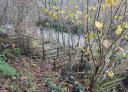
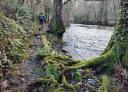
The ascent is gentle and progressive until it reaches a higher point, from where it descends down some rustic stairs to a wooden bridge. On the other side, the path continues close to the river, accompanied by the song of the blackbirds that live among the pools and streams. This stretch of the river is followed by the hamlet of La Pena'l Corvo, a perfectly preserved ethnographic complex that includes a house, granary, mill, stable and a small chapel, a sample of the traditional way of life in Ibias.
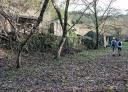
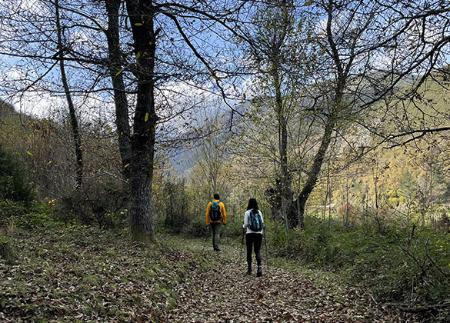
At this point, the route offers a detour to the village of Cecos, recognised as a Pueblo Mágico de España (Magic Village of Spain). This village preserves a remarkable slate architecture and a charming church, as well as offering the walker an authentic experience of rural life. The return to the main crossroads marks the start of the ascent towards Villamayor, along a path shaded by chestnut trees which, in autumn, turn golden. As you gain height, you will see the remains of the ancient Roman gold deposits, the real silent protagonists of this route.
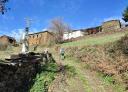
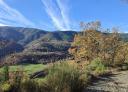
Villamayor rises up with its slate houses and sloping roofs, a village perched in the landscape overlooking the Ibias valley. From here, the path descends again through vineyards and meadows, offering wide views of the valley and allowing us to observe structures such as the "cortines": dry stone enclosures used to protect beehives from bears, key elements of traditional beekeeping in the area.
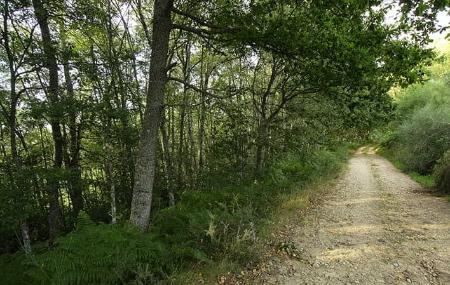
The last part of the route takes us through chestnut groves until we return to San Antolín de Ibias, completing a circuit of low difficulty and great interpretative value. The Gold Trail is much more than a walk: it is a journey through the Roman mining history, through the peasant legacy and through the landscapes that still sustain rural life in this council on the border with Galicia.
- This route partially coincides with the PR-AS 306, the PR-AS 24 and the GR 203.
Basic tips before going into the mountains
- If you go with a dog, always keep it on a leash.
- Avoid approaching livestock.
- If you find mastiffs protecting livestock, do not approach them, do not pet them and do not feed them. Do not allow them to follow you or stray from their herd. They are working.
- Don't leave a trail. Collect all your waste, including organic waste. Nature is not a dumping ground.
- Act with prudence. Plan your route well, take everything you need and make sure it is adapted to your physical capacity.
 More recommendations for planning your route