
The Primitive Way: Grandas de Salime–Fonsagrada
- Grandas de Salime, Fonsagrada (Galicia)
- Distance: 27 kms
- Difficulty: Fácil
- Total ascent: 740 m
- Maximum altitude: 1050 m
- Minimum altitude: 560 m
- IBP index: 45
- Primitive Way of St. James
- Type of bicycle: Road
- Type of route: Linear
- Return by Train: No
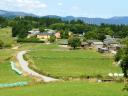
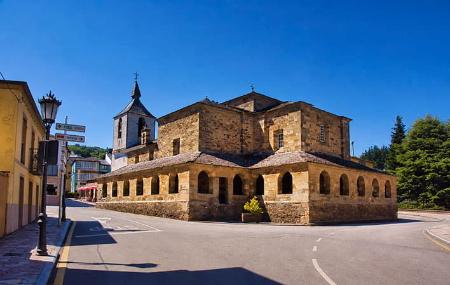
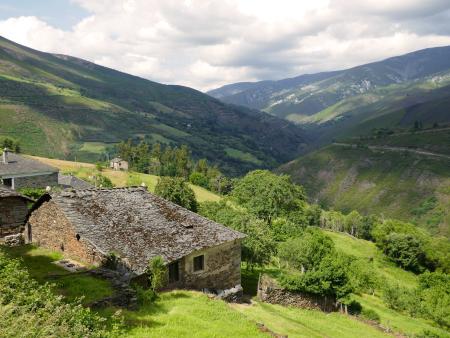
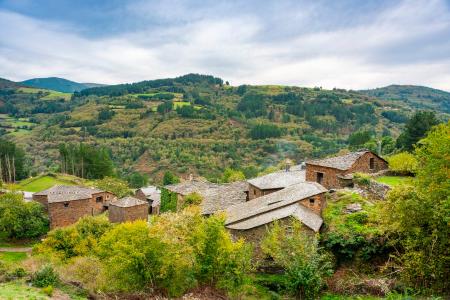
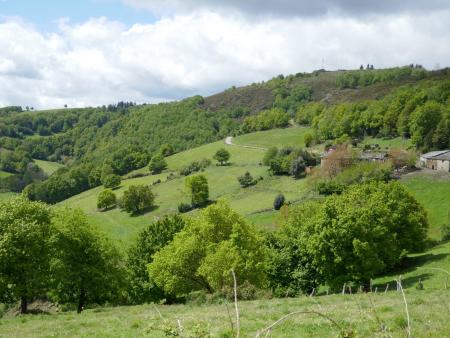
We set off from Grandas de Salime, climbing up towards Cereixeira and passing through pastures interspersed with oak woods, before reaching Castro, a charming little village home to one of the many hostels along the Camino.
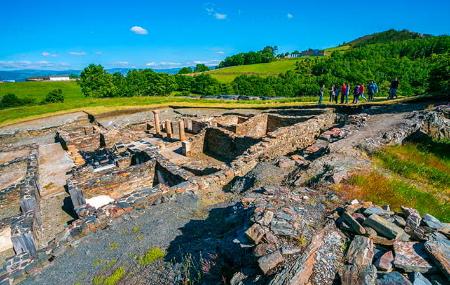
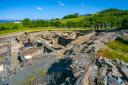
To reach Castro, you need to veer slightly off the main road and climb a short slope that leads into the village. Chao Samartín is one of the key archaeological sites for understanding the origins of the ‘castreño’ phenomenon in the north-west of the Iberian Peninsula, as well as the evolution of the people who lived within its walls and their relations with other communities. The origins of Chao Samartín as a human settlement date back to the Bronze Age when, around 800 BC, the first fortified enclosure was established on its upper plateau. During the Iron Age, its defences were reinforced on several occasions, and in Roman times it became a prosperous administrative centre, until an earthquake destroyed the settlement in the 2nd century AD. You can view a display of the archaeological site, as well as arrange a visit, at the nearby Castro de Chao Samartín Museum.
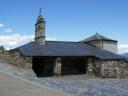
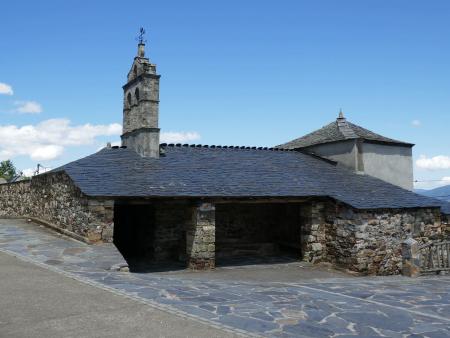
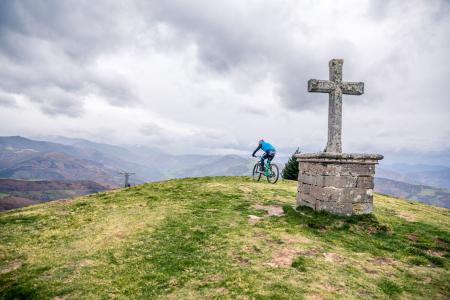
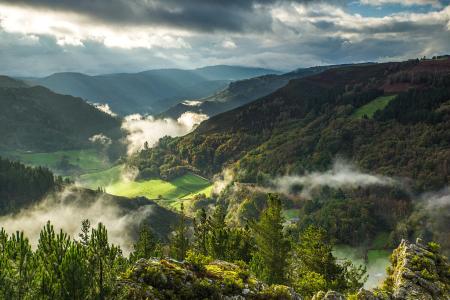
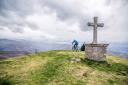
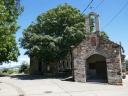
From Castro, we begin the climb up the mountain pass in earnest, and halfway up we reach Penafonte, where you can visit the Church of La Magdalena with its unusual hexagonal apse. We continue until we reach the Puerto del Acebo (1,030 m) and immediately enter Galicia.
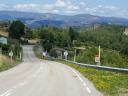
The descent is punctuated by a series of short, steep gradients until we reach the entrance to Fonsagrada, which is on a slope. From here, pilgrims and travellers will each go their separate ways; some will continue on to Santiago, whilst others may return to Grandas de Salime after a short stage rich in nature and history.
Observe the direction of traffic on urban stretches of road.