
The Primitive Route: Tinéu–Grandas de Salime


- Tinéu, Pola de Allande, Grandas de Salime
- Distance: 72 kms
- Difficulty: Muy Dura
- Total ascent: 1750 m
- Maximum altitude: 1148 m
- Minimum altitude: 201 m
- IBP index: 110
- Primitive Way of St. James
- Type of bicycle: Road
- Type of route: Linear
- Return by Train: No
We set off from the village of Tinéu, climbing for around 5.5 km before descending again for a further 4.5 km. From here, we’ll maintain a steady, gentle ascent until we reach the Alto de Lavadoira; after descending from there, we’ll arrive at Pola de Allande. Most of the route passes through pastures, small villages and numerous scattered settlements, becoming more wooded as we approach La Pola.
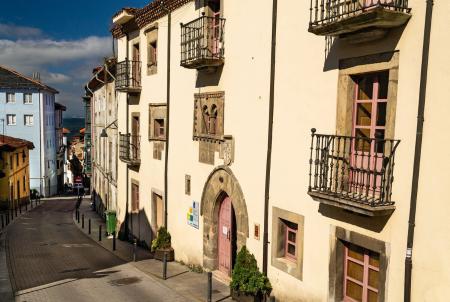
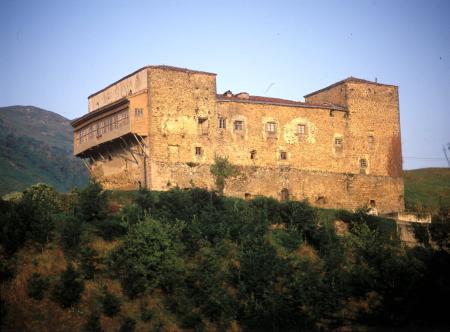
The Cienfuegos Palace dominates Pola de Allande, a testament to its medieval past, whilst the abundance of ‘Indiana’ architecture bears witness to the history of its people, shaped by their overseas travels.
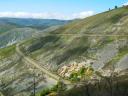
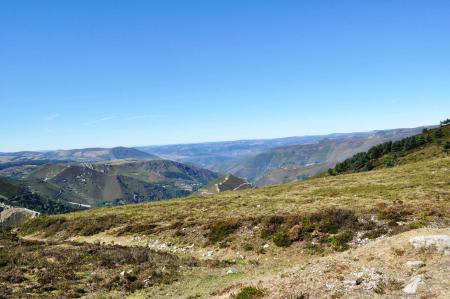
We continue our journey and immediately tackle the 11 km climb to Puerto del Palo (1,146 m), the most challenging stretch of this stage. The climb gradually introduces us to a new, different landscape, where slate and quartzite take centre stage, revealing a change in the colour of the rock, the lack of vegetation at higher altitudes, and the rugged, steep-sided nature of the valleys. A striking example of this can be seen on the descent from the pass, from the Montefurado viewpoint, where you can see the location of the hamlet of the same name as well as a revealing landscape.
We descend the Puerto del Palo, and if we look closely, we can see abundant remains of Roman gold mining, ranging from spoil heaps and cleared slopes to ancient channels used to carry water to the mining sites. It is no coincidence that the name Montefurado itself hints at the area’s former mining splendour.
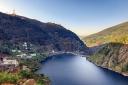
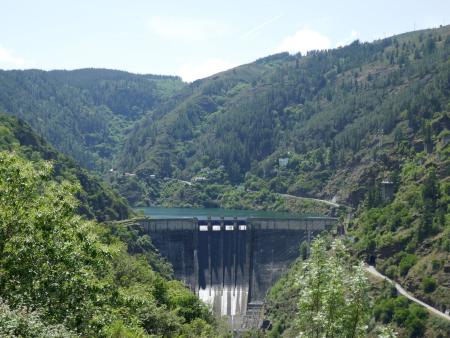
We continue our journey, passing through Berducedo – the gateway to Valledor (which will have to be saved for another trip) – and arrive at the Salime Reservoir dam, a colossal structure for its time, and from where you can still make out the remains of the industrial facility used for its construction on the north-facing slope. All that remains is to climb up to Grandas de Salime, the end of this stage some 6 km away, not forgetting to stop at one of the viewpoints along the ascent.
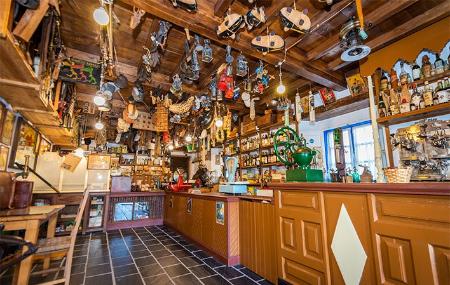
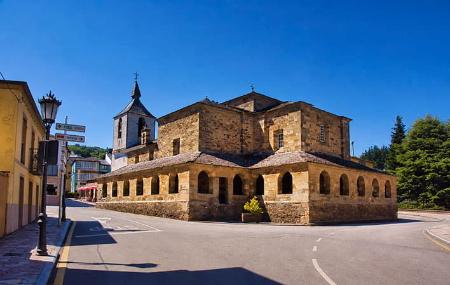
Grandas de Salime is the village that was established after the village of Salime was flooded to create the reservoir. In the centre of the village stands the Collegiate Church of San Salvador, which marks the Way of St James, and nearby is the Ethnographic Museum, one of the most comprehensive and interesting in the whole of Asturias, and certainly well worth a visit.
Observe the direction of traffic on urban stretches of road