
Luarca – Tineo


- Luarca/Ḷḷuarca, Navelgas, Tinéu
- Distance: 66 kms
- Difficulty: Dura
- Total ascent: 1850 m
- Maximum altitude: 801 m
- Minimum altitude: 2 m
- IBP index: 96
- One-day routes,Links
- Type of route: Linear
- Return by Train: No
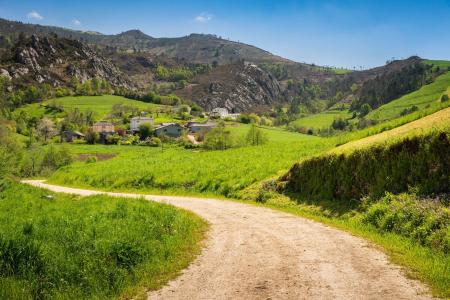
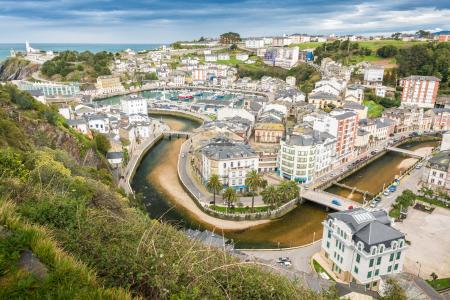
The route begins in Luarca/Ḷḷuarca, following the coastal plain to Caneiru where, weather permitting, you can take a break at the spectacular Cueva beach. We begin to head inland, travelling along the flat Esva river valley on the N-634 to Brieves. From here, the landscape changes: the River Esva and then the River Merás wind their way through a narrow gorge, and the route features some steep gradients that present a greater challenge. Once we reach Merás, we take the AS-351 towards Paredes.
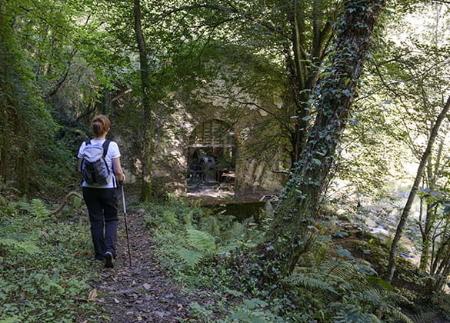
If you have enough time and energy, in Paredes you can walk the route known as Las Hoces del Esva, designated a Natural Monument due to its great geological and scenic interest. It is a narrow gorge carved out of quartzite, well preserved and of significant aesthetic value. The slopes of the gorge are dotted with patches of beech woodland, some afforested areas and a narrow riparian alder grove hugging the riverbed.
We resume our route by following the valley of the River Ubienes to the village of the same name, from where the more challenging climbs begin, leading us to the Entreferto pass; from there, we descend to Naraval, a village in the Tinéu region where we can visit the Vaqueiro Museum of Asturias. After immersing ourselves in the history and customs of the Vaqueira region, we continue our route along a mountain road towards Navelgas, another village of great archaeological interest. Here we can take a break and visit the Gold Museum, where the Asturians, the Romans and legends from our own century bring to life stories of struggle, power, rituals and symbols, whilst also learning the ancient technique of gold panning.
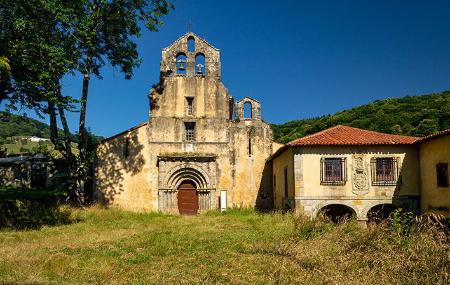
From Navelgas, we continue uphill for about 5 km to the Alto del Forcallao, followed by a descent of about 5 km to Bárzana, where we can visit the Monastery of San Miguel. The church retains two Romanesque doorways and a mullioned window from its original pre-Romanesque structure.
In Bárzana, we take the AS-350 road towards Tinéu. We now have a 10 km climb ahead of us (halfway up, we can visit the Benedictine Monastery of Santa María La Real de Obona, one of the jewels of the Primitive Way of St James), followed by a gentle descent of a further 6 km to reach Tinéu, the end of the route. The town has been designated a Historic Site, and its Museum of Sacred Art is unique in Asturias.
Observe the direction of traffic on urban stretches of road.