
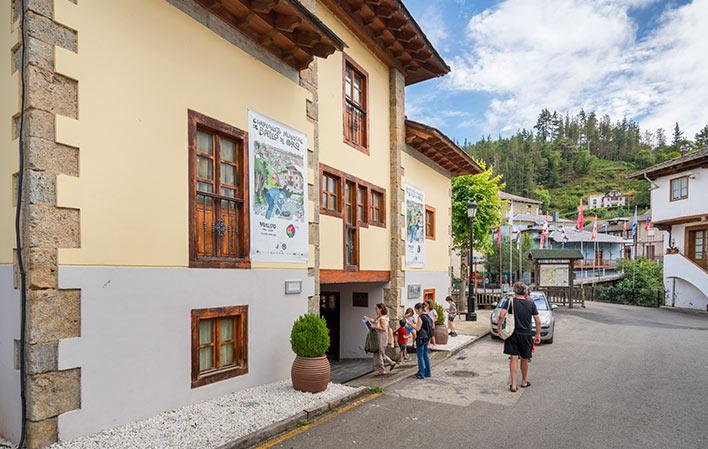
Asturias Gold Museum (MOA)
- Tineo Western Asturias
- Address: Barrio de San Nicolás, Camino de la Iglesia 33873 - Navelgas
- Phone: 985 806 018
- Email: info@museodeloro.es
- Site: Visit
- Schedules and prices: View
History of the Asturias Gold Museum (MOA)
Gold is perhaps the most coveted element in history, the metal whose price, even today, measures the value of almost anything, an inexhaustible source of quests, fevers and riches. The recent history of Asturias is linked to mining and steelmaking, but before the modern era, before industrialisation and mining culture, and even before the Roman Empire, this land already shone for its gold.
The Asturian Castreño settlements of the Iron Age (4th–1st centuries BC) were familiar with and worked the metal. Artefacts from that period, such as gold torques – rigid necklaces – have been preserved, bearing witness to pre-Roman goldsmithing.
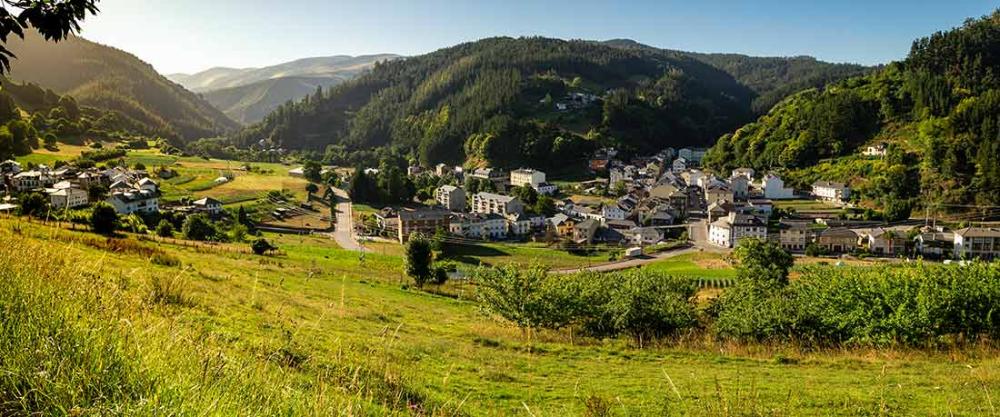
It was the Romans, following their conquest of this territory in the late 1st century BC, who mined the deposits in western Asturias on a large scale during the 1st and 2nd centuries AD. They employed the ‘ruina montium’ technique, diverting watercourses into tunnels excavated inside the mountain to cause controlled collapses and wash away the ore. The result was striking scars on the landscape, with channels, trenches and deposits that can still be seen today.
Across the whole of western Asturias , nearly 500 gold deposits have been found , almost all of which were mined by the Romans.
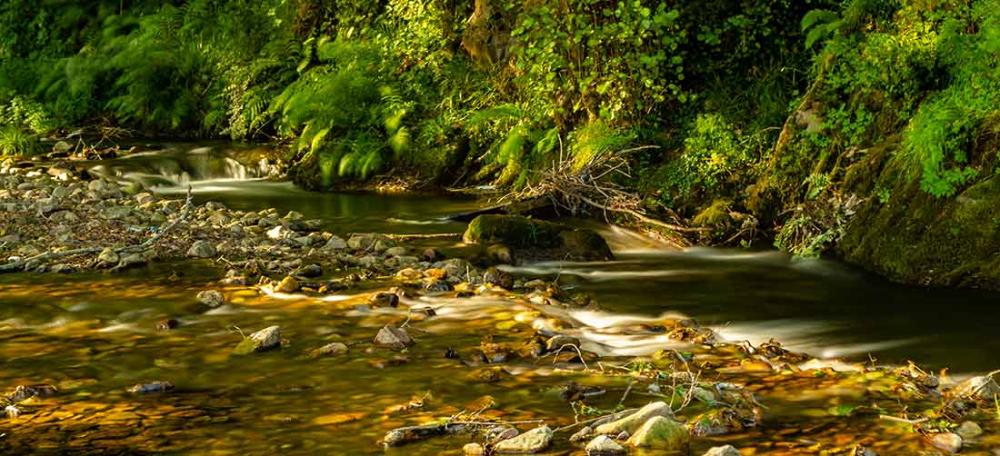
One of the most notable examples is situated in the vicinity of Navelgas, where the Romans’ gold mining operations necessitated one of the largest earthworks documented in Asturias for this type of mining. The opening of two large mining fronts, approximately 900 and 700 metres long, using the technique known as ‘ruina montium’, and the diversion of the River Naraval to supply the hydraulic system, enabled the removal of more than two million cubic metres of earth and rock, artificially shaping the landscape as we see it today.
This long-standing connection between the region and gold mining forms part of the historical identity of the municipality of Tineo, whose coat of arms features a golden lion as a symbol of this heritage. In Navelgas, the Asturias Gold Museum (MOA) was established with the aim of promoting, interpreting and preserving this mining heritage, bringing the history of gold prospecting in Asturias – from its origins right through to Roman times – to the public.
What to see and do at the Asturias Gold Museum (MOA)
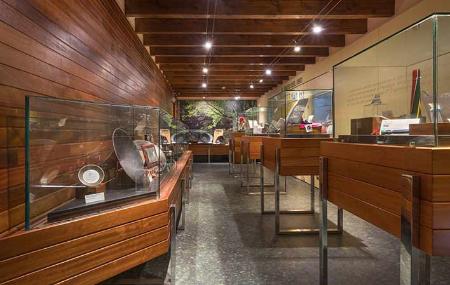
The Asturias Gold Museum (MOA) is housed in the Capalleja mansion, a former three-storey manor house that has been refurbished to accommodate the centre’s exhibition spaces and facilities; it reopened, following its refurbishment, in June 2006.
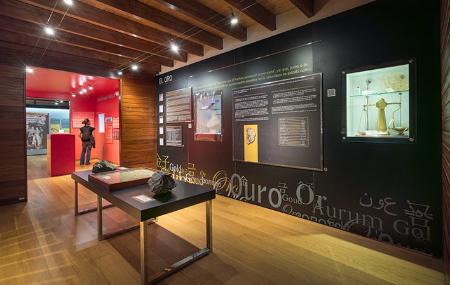
The museum tour is organised into seven galleries that explore the history of gold from the Neolithic period to the present day, combining a global perspective on the metal with its significance within the Asturian context. Throughout the exhibition, the physical properties of gold — its ductility, malleability, lustre and purity — are explained, along with the many uses it has had over time, ranging from goldsmithing and religion to medicine, technology and mining engineering.
The building also houses the Navelgas Tourist Information Office, a multi-purpose hall for conferences, talks and screenings, and two spaces for temporary exhibitions, reinforcing its role as a cultural and educational centre for the region.
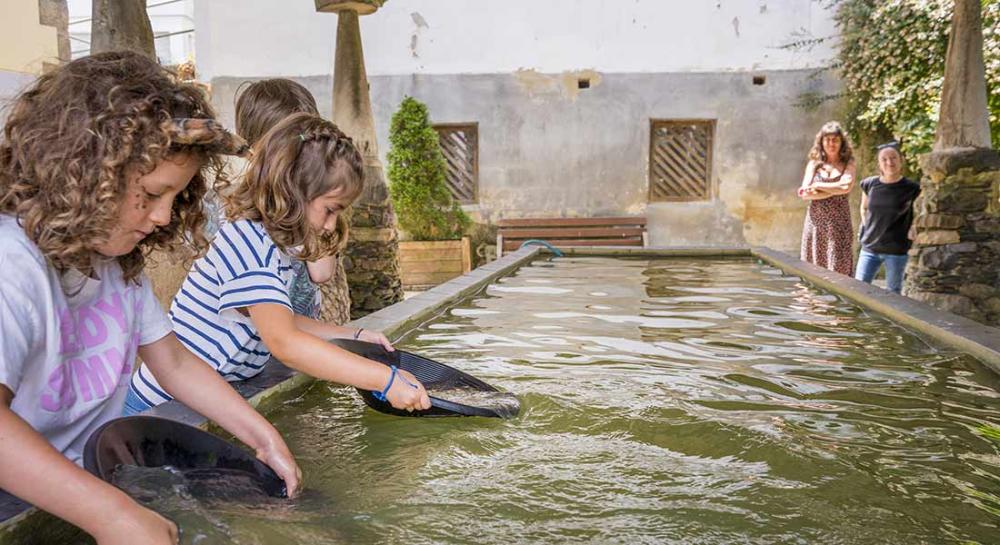
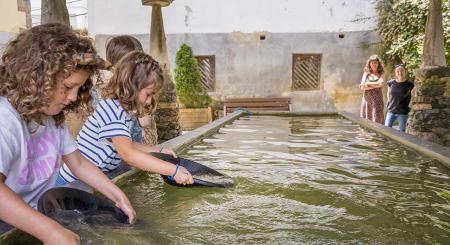
One of the museum’s most unique features is situated at the rear, beneath a century-old bread bin, where gold panning workshops are held . This activity offers a hands-on introduction to a traditional technique of ancient origin, based on separating gold from river sand using a ‘batea’ – a kind of conical container or dish, traditionally made of wood but now often made of plastic or metal.
Filled with sand, the pan is submerged in the water and, through very gentle movements, the sand begins to shift. The gold is trapped beneath the fine sand and its weight prevents it from being carried away. It can then be extracted with dry fingers.
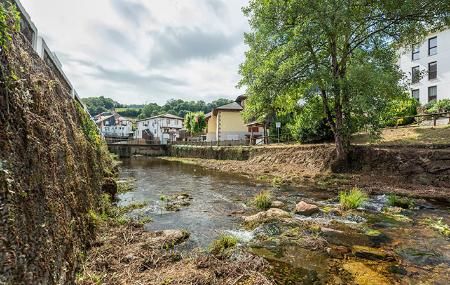
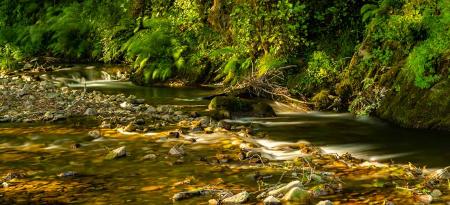
Following the workshop at the museum, the experience can be rounded off with some gold panning on the River Navelgas itself, a practice that harks back to the area’s historic gold mining operations. Since 1999, Navelgas has also hosted the National Gold Panning Championship, an annual event of a recreational and educational nature that has been declared a Festival of Tourist Interest in Asturias.
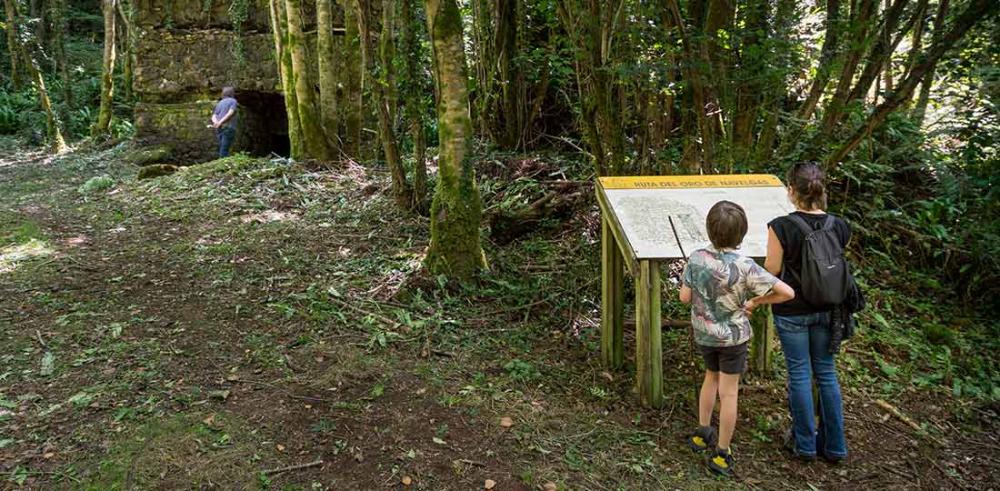
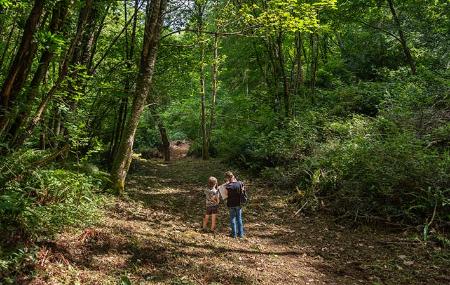
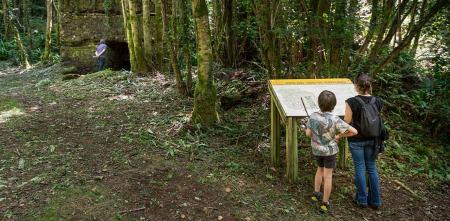
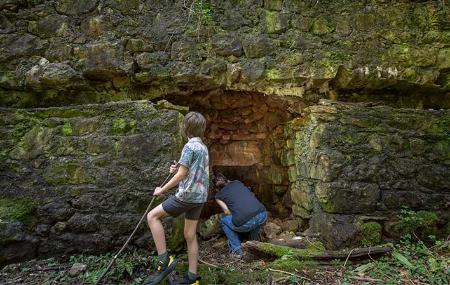
The ‘Ruta de la Huella del Oro’ begins next to the museum; this circular route, approximately 1.5 kilometres long, takes visitors on a tour of various mining sites, such as the remains of the modern La Luarquesa mine, the former laboratory of the company Aurífera Asturiana S.A. and , in particular, the Roman structures associated with gold mining, including canals, trenches, reservoirs and mine shafts excavated two thousand years ago.
Images
Info
As well as its historical and geological exhibits, this museum offers an essential activity to round off your visit, which is available every day: gold panning, with a workshop where ‘beginners’ are introduced to this activity.
Gold panning is a deeply-rooted tradition in this village, which has repeatedly hosted national and international championships in this discipline.
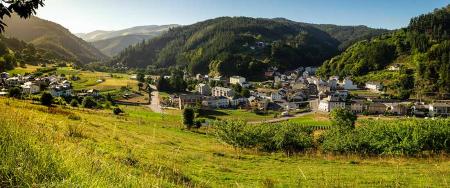
Furthermore, Navelgas is the ‘capital’ of the Valle del Oro, meaning that an exploration of this Asturian ‘golden’ region can be rounded off with a walk to see the abundance of gold deposits, where a variety of extraction methods were used: ranging from gold pans to the exploitation of mines by subsidence, which shaped a unique landscape that remains visible even after many centuries.
Built in:2006
Schedules and prices
- From 2 July to 31 August
Tuesday to Saturday: 11.00 am to 2.00 pm and 4.00 pm to 7.00 pm
Sunday: 11.00 am to 2.00 pm
Closed: Mondays and 1 July - March to June and September to December
Tuesdays and Sundays: 11.00–14.00
Wednesday, Thursday and Friday: 11.00–14.00 and 16.00–18.00
Saturday: 11.00–14.00 and 16.00–18.00 - Bateo Workshop (March to December)
Tuesday to Saturday at 12.00, 13.00, 17.00 and 18.00
Sunday at 12.00 and 13.00 - Closed: Mondays ; 29 August (local bank holiday); 19 and 20 September; 17 and 18 October; 21 and 22 November; 19, 20, 24, 25 and 31 December.
- Standard: €2 .50
- Concession: €1 .50 (children aged 3 to under 12, over-65s, groups of 15 or more, travel agencies and tour operators)
- Free: Wednesdays , children aged 0–3, 18 May (International Museum Day) and 21 July (MOA anniversary)
- Baseball workshop: €5