

Apple Tart
Ingredients
For the dough:
• 280 g flour
• 170 g butter
• 35 g sugar
• 1 egg
For the cream:
• 1 litre of milk
• 7 egg yolks
• 200 g sugar
• 80 g cornflour
• 80 g plain flour
• Cinnamon
• Lemon and orange zest
For the apple decoration:
• 3 apples
• 200 g sugar
• A little butter
Preparation
We’ll start our recipe by making the dough. Mix the flour, butter, sugar and egg together in a large bowl. Mix the ingredients together and knead by hand until you have a smooth, non-sticky dough. Here’s a tip: if the dough remains sticky, gradually add more flour to thicken it.
Once the dough has the desired texture and is no longer sticky, roll it out into a shallow tart tin. Before rolling it out, remember that the base of the tin must be lined with either aluminium foil or baking paper.
Place the pastry in the preheated oven and bake at 180ºC for 10 minutes. Once this time is up, remove it and set it aside for later.
Now we’ll make the cake filling. To do this, place the egg yolks and sugar in a bowl and mix until the ingredients are well combined.
Add the flour and repeat the process; do the same with the cornflour. Pour half a litre of milk into the mixture and stir with a hand whisk.
Bring the other half a litre of milk to the boil with the cinnamon and the lemon and orange zest. Once the milk is boiling, add the mixture and stir with the hand whisk until it thickens.
When the mixture has reached the desired consistency, pour the custard onto the baked tart base and set aside whilst you prepare the apples for the decoration.
Peel and cut the apples into small wedges. Place these wedges in a bowl with sugar and butter, cover with cling film and heat in the microwave. Once heated, arrange the wedges on the tart in any pattern you like until the entire surface is covered.
When you’ve finished, bake the tart for 10 minutes at 150°C.
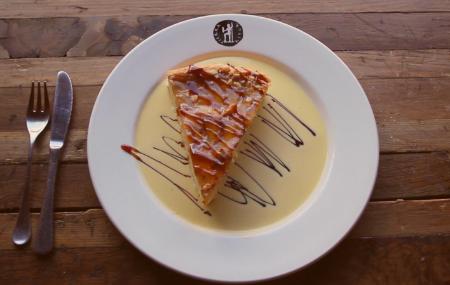
Voilà! We have a delicious apple tart, ready to serve, eat and enjoy!
You can enjoy the apple tart at all the “Tierra Astur” cider houses: Gascona, 1 and Gascona, 9 in Oviedo/Uviéu; Polígono del Águila del Nora in Colloto/Cualloto (Siero); Mariano Pola, 10–12–14, Gijón/Xixón; and San Francisco, 4, Avilés.