
Asturias Iron and Steel Museum (MUSI)
- Langreo Central Asturias
- Address: C/ Hornos Altos (Ciudad Industrial Valnalón), 33930, La Felguera, Langreo, Asturias. - La Felguera
- Phone: 985 678 477
- Email: info@musiasturias.es
- Site: Visit
- Schedules and prices: View
A History of the Steel Industry in Asturias
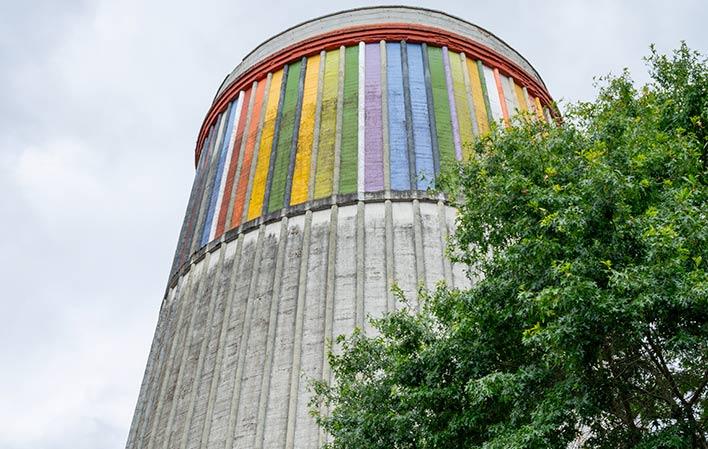
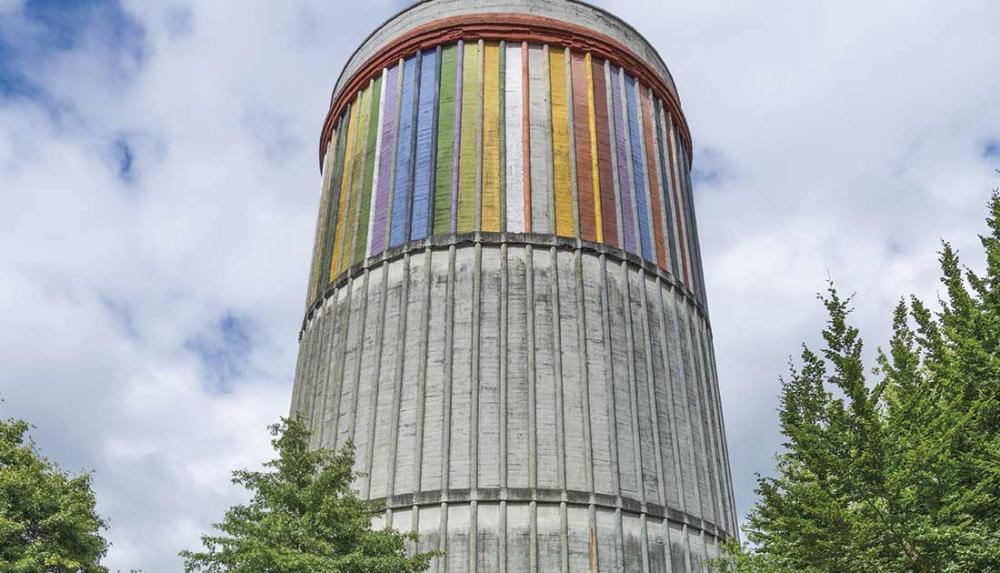
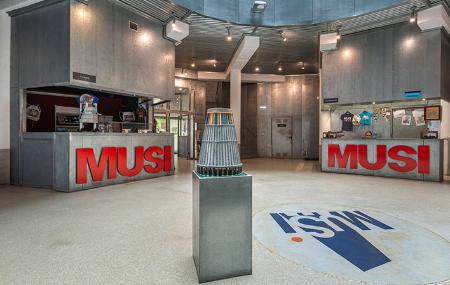
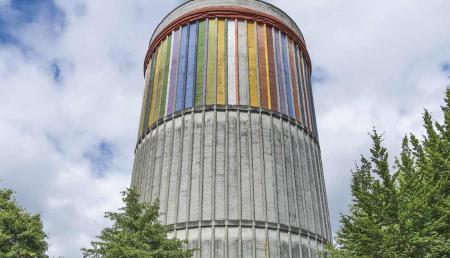
In La Felguera, an old cooling tower stands like a sentinel. Its imposing truncated cone-shaped concrete structure, which houses a circular space spanning three storeys, is decorated at the top with bright colours and crowned by a skylight. For decades, this architectural feature provided ventilation and cool air to the interior of a steelworks that was a symbol of an entire era.
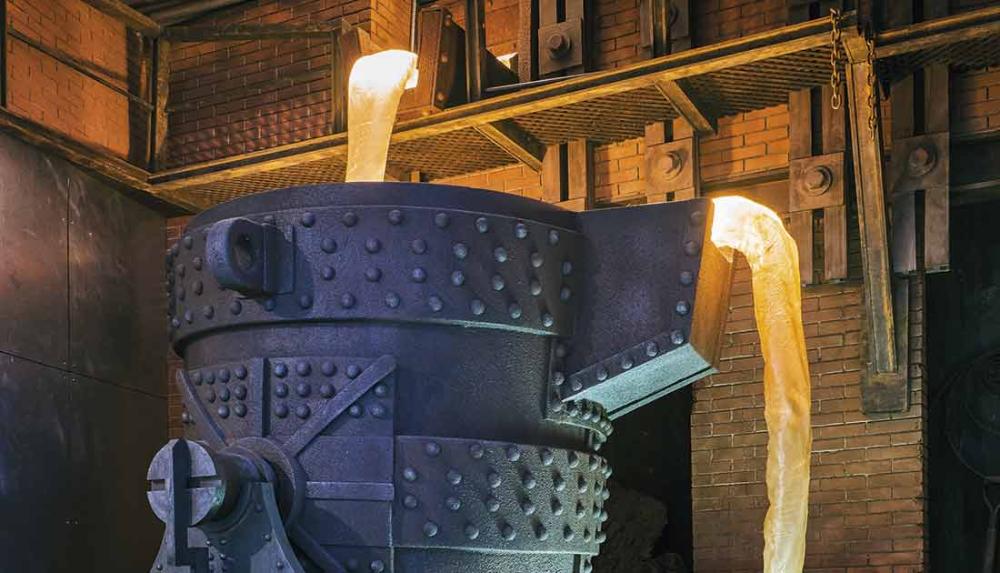
The industrialisation of Asturias began in the late 18th century, when the Trubia Arms Factory (Oviedo) installed coking ovens in Langreo. Coking is the process by which coal is treated at high temperatures, in the absence of oxygen, to remove the volatile components from the mineral and produce coke, a solid, porous material rich in carbon, which is then used to produce cast iron. Without this process, the emergence of the steel industry would not have been possible.
In the mid-19th century, various companies began to establish themselves in the area, drawn by the wealth of mineral resources and improvements to the transport networks.
One of these companies played a pivotal role in the expansion of the iron and steel industry. Duro y Cía, founded in 1859, was reorganised as Sociedad Metalúrgica Duro y Felguera S.A. following a gradual process of growth. Its headquarters, the La Felguera works, was the first large integrated steelworks built in Spain. Langreo thus became the capital of the Spanish steel industry, and the Sociedad Metalúrgica remained the country’s largest producer of coal and steel until the 1920s. The coalfields thus entered a new historical phase.
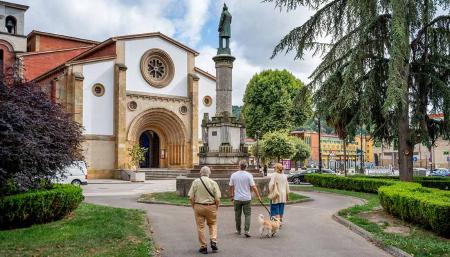
Industrial paternalism led to the construction of housing, churches, schools, hospitals and staff shops ( retail outlets where essential goods could be purchased at reduced prices) for its workers, thereby attracting and retaining the workforce and improving their productivity.
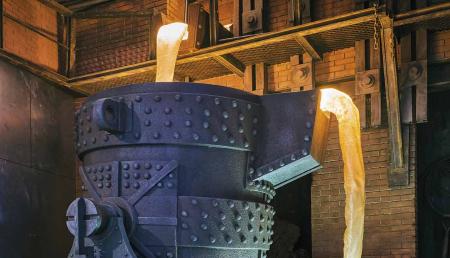
Gradually, the international economic climate, developments in markets and global geostrategy, and technological advances (which prioritised the demand for steel over that for iron) meant that these factories began to leave their heyday behind. To mitigate the sector’s losses, and during the economic development drive of the Franco regime, the steel industry was nationalised, thus bringing to an end an epic historical era of pioneers, inventions, hopes and workers’ enlightenment.
This era of enlightenment culminated in UNESCO’s recognition of La Felguera as a ‘milestone’ of European culture in 1961, reflecting the vibrant cultural and educational life that flourished there during its industrial heyday.
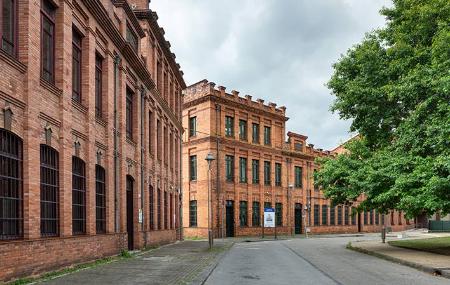
In 1986, most of the La Felguera factory was demolished, with only a few buildings and workshops remaining. The MUSI is housed in one of these.
Images
Info
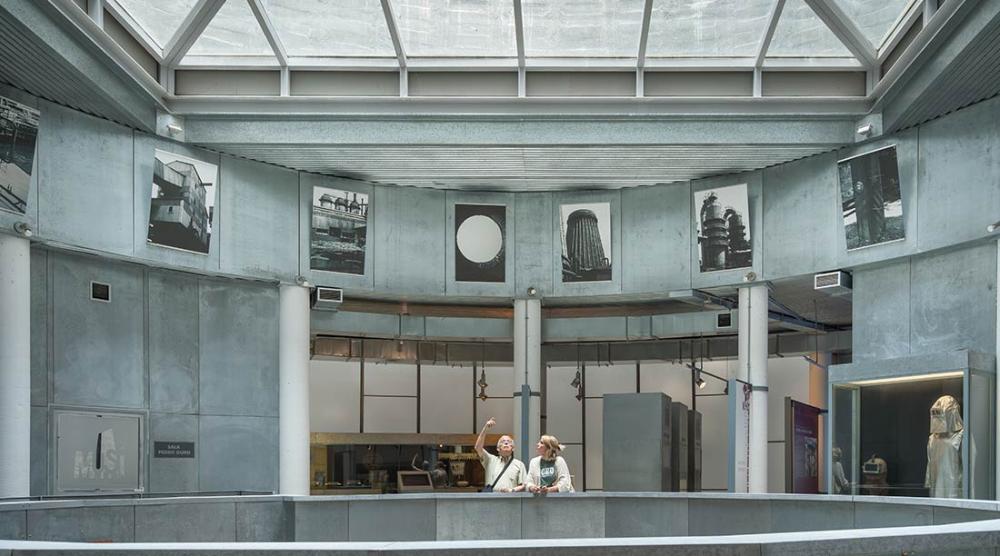
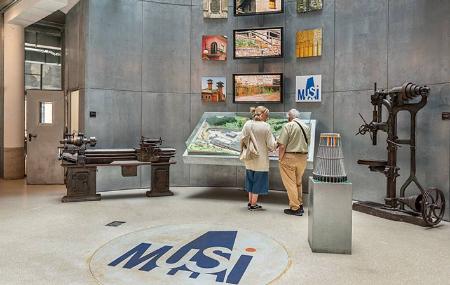
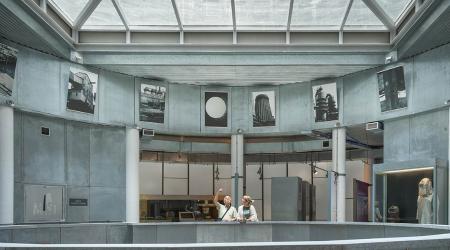
The unique truncated cone-shaped structure, 45 metres high, forms a circular space spread over three storeys and covered by a skylight that offers a breathtaking view of the walls of the great chimney.
A tour of its rooms tells the story of an era and a region shaped by the great industrial venture of Duro y Compañía, which in the mid-19th century established a pioneering steelworks in La Felguera.
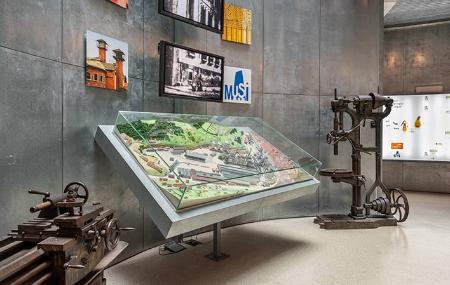
On the ground floor, in addition to the reception area, there is a magnificent scale model of the factory, an exhibition detailing the entire steel-making process, and the audiovisual room, where visitors can watch an explanatory video on steel production.
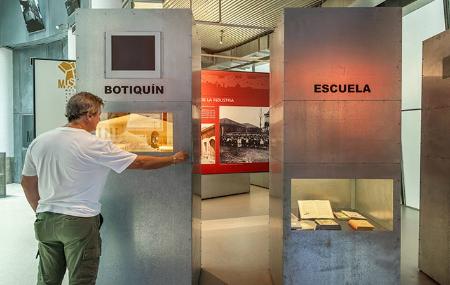
On the first floor, you’ll find display panels and models alongside other artefacts – the collection itself – which give you an insight into the Mining Basins, the birthplace and centre of development not only for mining but also for the steel industry in Asturias throughout the 19th and 20th centuries. On this floor, we can also see Mr Pedro Duro’s office, along with some magnificent 19th-century documents.
Finally, on the lower floor, we’ll find the Bayer Room; an interesting exhibition space featuring panels that trace the history of Aspirin and explain how the German pharmaceutical company established a factory in the municipality of Llangréu/Langreo.
Schedules and prices
- 15 June to 14 September
Visitor Centre: Tuesday to Saturday from 9.45 am to 2.00 pm and 3.45 pm to 7.00 pm; Sundays from 9.45 am to 2.15 pm.
Guided tour: Tuesday to Saturday at 10.00, 13.00 and 16.00; Sundays at 10.00 and 13.00.
Steel Industry Tour: Tuesday to Saturday at 11.00 and 17.00; Sundays at 11.00. - 1 April to 14 June and 15 September to 31 October
Visitor Centre: Fridays and Saturdays from 9.45 am to 2.00 pm and 3.45 pm to 7.00 pm; Sundays from 9.45 am to 2.15 pm.
Guided tour: Fridays and Saturdays at 10.00 am, 1.00 pm and 4.00 pm; Sundays at 10.00 am and 1.00 pm.
Steel Industry Tour: Fridays and Saturdays at 11.00 and 17.00; Sundays at 11.00. - 2 January to 30 March and 1 November to 30 December
Visitor Centre: Saturdays from 9.45 am to 2.00 pm and 3.15 pm to 6.30 pm; Sundays from 9.45 am to 2.15 pm.
Guided tour: Saturdays at 10.00 am, 1.00 pm and 3.30 pm; Sundays at 10.00 am and 1.00 pm.
Steelworks Tour: Saturdays at 11.00 and 16.30; Sundays at 11.00.
- Reception Centre
Adults (aged 12 to 65): €6.00
Concession (children aged 4 to 11, pensioners, over-65s and people with disabilities, subject to proof of eligibility): €4.00
Groups (min. 20 people): €5.00
School/children’s groups: €3.00 - Tours: visitor centre and workers’ housing, or visitor centre and city tour
Adults (aged 12 to 65): €8.00
Concession (children aged 4 to 11, pensioners, over-65s and people with disabilities, upon presentation of valid proof): €6.00
Groups (min. 20 people): €7.00
School/children’s groups: €5.00 - Tour of the reception centre, workers’ housing and city tour
Adults (aged 12–65): €10.00
Concessionary (children aged 4 to 11, pensioners, over-65s and people with disabilities, subject to proof of eligibility): €8.00
Groups (min. 20 people): €9.00
School/children’s groups: €7.00